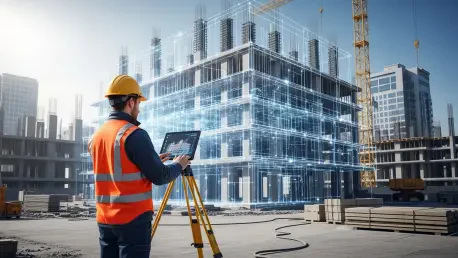

The traditional method of capturing memories as flat, two-dimensional rectangles is rapidly giving way to a reality where every photon and perspective can be preserved as a navigable, volumetric environment. 3D Gaussian Splatting (3DGS) represents a monumental departure from established computer graphics norms, moving away from the rigid constraints of polygon meshes toward a fluid, mathematical representation of light and form. This technology does not merely record a scene; it reconstructs the very essence of a physical space by interpreting video data as a collection of translucent, colored ellipsoids. By bypassing the heavy computational tax of previous volumetric methods, 3DGS has emerged as a transformative force in spatial computing, offering a bridge between the accessibility of smartphone videography and the high-fidelity demands of professional digital twin creation.
The emergence of 3DGS serves as a high-speed alternative to Neural Radiance Fields (NeRF), which, while groundbreaking, often required hours of processing and significant hardware resources to produce viewable results. In contrast, Gaussian Splatting prioritizes real-time rasterization, making it possible to navigate complex scenes with the fluidity of a modern video game. This shift is particularly relevant in the democratization of 3D modeling, where the barrier to entry has traditionally been a combination of expensive laser scanning equipment and specialized technical knowledge. Today, the ability to generate photorealistic environments is moving into the hands of consumers and professional sectors like real estate, where the demand for immersive digital experiences is at an all-time high.
Introduction to 3D Gaussian Splatting
3D Gaussian Splatting is a sophisticated rasterization technique designed for high-fidelity, real-world scene reconstruction. Unlike traditional 3D modeling, which relies on a connected web of vertices and faces known as polygon meshes, 3DGS utilizes mathematical “blobs” or ellipsoids to define volume and appearance. Each of these millions of Gaussians contains data regarding its position, orientation, scale, opacity, and color. When viewed from a specific angle, these blobs overlap and blend together, creating a seamless and photorealistic representation of the original environment. This mathematical approach allows for the capture of complex visual phenomena, such as the soft glow of a lamp or the sharp reflection on a glass surface, which are notoriously difficult to replicate using standard geometry.
The technology gained rapid traction as it addressed the primary limitation of its predecessor, the Neural Radiance Field. While NeRFs use a neural network to predict the color and density of every point in space, 3DGS treats the scene as a collection of discrete, renderable objects. This fundamental change in philosophy allows for significantly faster training times and, more importantly, real-time playback on standard consumer hardware. By shifting the heavy lifting from complex neural queries to high-speed GPU rasterization, 3DGS has effectively turned what was once a research curiosity into a practical tool for industries ranging from cinematography to urban planning.
Core Technical Components and Workflow
Structure-from-Motion and Point Cloud Generation
The journey from a standard video file to a three-dimensional environment begins with a process known as Structure-from-Motion (SfM). During this initial stage, the software analyzes thousands of individual video frames to identify consistent visual features across different perspectives. By tracking these points, the system can mathematically triangulate the exact position and orientation of the camera for every second of the recording. This step is critical because any error in camera positioning will lead to “ghosting” or misalignment in the final model. The output of this phase is a sparse point cloud, which serves as a skeletal map of the scene.
This skeletal map defines the boundaries and the basic layout of the environment, but it lacks any real visual substance. It is essentially a collection of floating dots in a digital void. However, this sparse cloud is vital because it provides the anchor points for the next phase of the process. Without a high-quality SfM foundation, the subsequent Gaussian optimization would have no reference for where to place the visual detail. Modern platforms have refined this process to be remarkably resilient, allowing the software to compensate for slight camera shakes or inconsistent lighting conditions that would have derailed earlier reconstruction methods.
Gaussian Ellipsoids and Real-Time Rendering
Once the sparse point cloud is established, the system populates the space with millions of semi-transparent Gaussian ellipsoids. These blobs are not static; they undergo a rigorous optimization process where their shapes and colors are fine-tuned to match the original video frames. As the algorithm iterates, it splits Gaussians in areas with high detail and removes them in empty spaces, effectively “sculpting” the scene out of mathematical probability. This method is uniquely adept at capturing the subtle nuances of geometry and lighting, as the overlapping nature of the ellipsoids naturally simulates the way light interacts with surfaces and atmosphere.
The true breakthrough lies in how these ellipsoids are rendered. Traditional volumetric methods often struggle with GPU parallelization because they require complex ray-tracing calculations for every pixel. 3DGS, however, uses a tile-based rasterizer that can process millions of Gaussians simultaneously. This efficiency allows for incredibly high frame rates even on modest hardware, a feat that was previously impossible for photorealistic volumetric scenes. By treating the 3D data more like a series of sophisticated 2D “splats” on the screen, the technology achieves a level of performance that makes it suitable for interactive web experiences and virtual reality.
The Role of 360-Degree Capture Hardware
The quality of a 3DGS reconstruction is directly proportional to the density and coverage of the input data, which is why 360-degree cameras have become the gold standard for this technology. Hardware such as the Insta360 series or the Antigravity A1 drone provides a spherical field of view that captures everything in a single pass. This total coverage is essential for eliminating the blind spots that often occur when using standard narrow-angle lenses. When a standard camera misses an angle, the resulting 3D model may have “holes” or regions of low resolution; a 360-degree sensor ensures that every surface is documented from multiple vantage points.
Furthermore, the use of spherical video data simplifies the Structure-from-Motion process. Because the camera sees in all directions at once, the software has a much easier time finding overlapping features to lock onto. This increased data density leads to more stable point clouds and, ultimately, more coherent Gaussian environments. For professionals capturing large-scale sites, the ability to record everything simultaneously reduces the time spent on-site and minimizes the risk of missing critical details. The synergy between 360-degree hardware and 3DGS algorithms is what has truly moved the needle toward a consumer-ready workflow.
Emerging Trends and Platform Innovations
As the underlying mathematics of 3DGS have matured, the focus has shifted toward accessibility through cloud-based processing platforms. Services like Splatica have emerged to simplify the complex command-line scripts and high-end hardware requirements that once restricted the technology to researchers. These platforms allow users to upload raw 360-degree footage and receive a finished, interactive 3D scene in return. By abstracting the technical hurdles of GPU optimization and algorithm tuning, these innovations are fueling a trend toward “zero-effort” 3D modeling, where the user’s primary role is simply to walk through a space with a camera.
Another significant innovation is the integration of automated AI training to improve the aesthetic quality of the scenes. One of the most persistent challenges in 3D reconstruction is the presence of moving objects, such as people or vehicles, which can create unsightly streaks or blurred “artifacts” in the final model. New processing pipelines now include sophisticated “inpainting” and removal tools that can identify and erase dynamic elements, leaving behind a clean, static environment. Additionally, the move toward web-based “fly-through” visualizations means these scenes can now be shared via a simple URL, making them as portable and accessible as a standard YouTube video.
Real-World Applications and Use Cases
In the realm of real estate and architecture, 3DGS is revolutionizing how properties are presented to potential buyers. Traditional 360-degree “virtual tours” are often just a series of static panoramic photos that the user jumps between. With Gaussian Splatting, the user can actually “walk” through the space with full six-degrees-of-freedom, viewing the interior from any height or angle. This provides a level of immersion that feels far more natural and informative, allowing for a true sense of scale and light that static images simply cannot convey. It is the difference between looking at a picture of a room and standing inside it.
Aerial surveying and the preservation of heritage sites have also seen massive benefits from this technology. Drones equipped with 360-degree cameras can fly around large landmarks, capturing thousands of high-resolution data points in a single flight. This data is then used to create digital twins of historical buildings or natural beauty spots, preserving them in a photorealistic state for future generations. For personal archiving, enthusiasts are using 3DGS to create digital replicas of their own homes or favorite travel locations. These “beauty spots” serve as high-tech time capsules, allowing individuals to revisit their personal history in a way that feels tangibly real.
Technical Hurdles and Market Obstacles
Despite the impressive visual results, there remains a high cost of entry that may deter casual users. Most high-quality processing platforms rely on subscription-based models, which can be expensive for those who only wish to create an occasional scene. Furthermore, the reliance on specialized hardware, such as high-resolution 360 cameras or FPV drones, adds another layer of financial commitment. While smartphone apps are beginning to appear, they often lack the processing power or sensor quality to match the fidelity of dedicated hardware setups, leading to a fragmented market where the best results are still locked behind a paywall.
There are also persistent visual artifacts that prevent 3DGS from being a perfect mirror of reality. In complex scenes with thin structures, such as tree branches or wires, the ellipsoids can sometimes struggle to resolve the fine geometry, resulting in a “patchy” or “painterly” look. These artifacts can be distracting and may limit the technology’s use in high-end VFX work where absolute precision is required. Furthermore, software compatibility remains a hurdle; different web browsers and hardware configurations may struggle to render large scenes, and exporting these models into traditional 3D software for further editing is still a cumbersome process with significant limitations.
Future Outlook and Potential Breakthroughs
The trajectory of 3D Gaussian Splatting suggests a future where the technology is integrated directly into mainstream consumer devices. We can expect to see major drone manufacturers, such as DJI, incorporating 3DGS-optimized flight modes and on-board processing into their ecosystems. As mobile processors become more powerful, the current multi-hour wait times for scene generation could be reduced to mere minutes, potentially allowing for “near-instant” 3D previews while still on-site. This would drastically improve the efficiency of professional workflows and make the technology more appealing to the average hobbyist.
The long-term impact on the development of virtual reality and the “metaverse” cannot be overstated. As it becomes easier to produce photorealistic environments, the digital worlds we inhabit will shift away from the “cartoony” aesthetics of current social VR platforms toward a more grounded, realistic appearance. This transition will be vital for applications like remote work, where a realistic digital twin of an office can provide a much-needed sense of presence. As the algorithms continue to refine how they handle lighting and movement, the gap between captured video and a fully interactive 3D world will eventually vanish entirely.
Final Assessment and Summary
3D Gaussian Splatting effectively closed the historical gap between static video and interactive 3D modeling by offering a speed and fidelity that were previously unattainable. The shift from traditional geometry to mathematical ellipsoids allowed for a more nuanced representation of light, making it a superior choice for those who value photorealism over structural simplicity. While the technology remained tethered to specific hardware and subscription models, the results consistently delivered a “wow factor” that justified the investment for professionals in the real estate and heritage sectors. The ease with which complex environments were turned into shareable digital assets signaled a major shift in how spatial data was consumed and distributed across the web.
The maturation of cloud-based platforms and 360-degree sensors streamlined a once-impenetrable technical process into something accessible to a wider audience. Although visual artifacts and software compatibility issues persisted, they were viewed as growing pains of a rapidly evolving field rather than fundamental flaws. The technology stood as a ready-to-use solution for those needing immersive digital twins, though hobbyist adoption was still tempered by the initial hardware requirements. Ultimately, the transition from two-dimensional capture to volumetric reconstruction felt inevitable, and 3D Gaussian Splatting secured its place as the primary engine driving that transformation.