
The implementation of Ethernet-APL technology at the Zhanjiang site illustrates how combinatorial innovation between owners and vendors can mitigate the risks of unproven technologies. This specific instance serves as a microcosm for the broader challenges inherent in industrial megaprojects, where the sheer scale of construction—often exceeding $20 billion—resembles the creation of a metallic city rather than a simple industrial plant. These sites are not merely collections of equipment but integrated ecosystems requiring the perfect synchronization of thousands of personnel, diverse international contractors, and complex automation systems. The financial and operational stakes are so immense that the margin for error effectively disappears upon the first shovel hitting the ground. In high-stakes process industries, such as petrochemical manufacturing, the integration of dozens of world-scale plants into a single site creates a dense web of dependencies that can overwhelm even the most experienced project managers. Consequently, these projects frequently fall victim to the Iron Law of Project Management, a statistical reality suggesting that over 91 percent of such endeavors will either exceed their budgets, miss their deadlines, or fail to deliver on their functional promises. This phenomenon highlights a fundamental disconnect between the optimistic planning phase and the chaotic reality of execution, where technical ambiguity and shifting dependencies often lead to catastrophic delays. However, emerging strategies from successful global projects suggest that this law is not an absolute destiny, but a challenge that can be overcome through strategic leadership.
Automation: The Central Nervous System of Industry
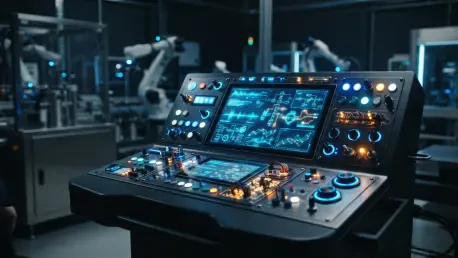
Industrial automation acts as the central nervous system for modern chemical facilities, controlling the twenty-four-hour operations essential for continuous production. In an environment where chemicals are processed at extreme temperatures and pressures, the automation system is responsible for maintaining the delicate balance required for both safety and efficiency. If this system fails or experiences a glitch during the critical startup phase, the consequences are immediate and severe. Materials can become trapped in process lines, leading to rapid degradation or solidification, which then necessitates dangerous and expensive cleaning procedures. This inherent risk places automation on the critical path for plant startup, meaning any delay in the control system directly translates to a delay in generating revenue from the entire facility. Unlike physical structures like steel beams or concrete foundations, automation logic is invisible and highly complex, making it one of the most difficult elements to manage within a megaproject framework. The successful delivery of these systems is therefore not just a technical requirement but a foundational necessity for the operational integrity of the entire industrial complex.
The unique challenge of automation projects lies in their extraordinary complexity, involving a vast array of stakeholders ranging from owners and specialized technology vendors to multiple engineering, procurement, and construction contractors. Each of these entities often operates with different priorities, corporate cultures, and technical standards, creating a fragmented environment where communication breakdowns are common. Research indicates that failures in these massive projects are rarely the result of a lack of available technology; rather, they stem from a lack of a cohesive execution strategy and the failure to build sustainable local capabilities. Managing the synchronization of global supply chains and the inevitable carryover work from the engineering phase to the construction site is essential to prevent a project from succumbing to the Iron Law. To avoid these pitfalls, project leaders must move beyond traditional management techniques and adopt a more integrated approach that treats automation as a unified program rather than a series of disconnected hardware purchases. This requires a shift in mindset where the focus is on the long-term operational outcome rather than short-term construction milestones.
Case Studies: Sadara and Zhanjiang
The Sadara Petrochemicals complex stands as a landmark achievement in the world of industrial construction, representing a $20-billion investment that established the largest chemical complex ever built in a single phase. Located in Saudi Arabia, the site features twenty-six integrated plants and introduced fourteen entirely new manufacturing capabilities to the region, creating a sophisticated industrial hub where none existed before. The scale of the project necessitated a pioneering integrated automation approach, which served as a template for subsequent global megaprojects. By centralizing the automation strategy, the project team was able to maintain consistency across a vast array of proprietary and licensed processes, ensuring that the various units functioned as a single, cohesive entity. The successful completion of Sadara proved that the Iron Law could be challenged through disciplined adherence to standardized workflows and a commitment to early engagement with technology partners. It demonstrated that the complexity of a massive integrated site could be managed if the automation backbone was designed with a clear, site-wide philosophy from the very beginning.
Building upon the lessons learned from previous projects, the BASF Zhanjiang Verbund site in China represents the next evolution of this model, functioning as a global role model for smart manufacturing. Developed through the current period of 2026, the site features a massive steam cracker and a wide array of downstream plants integrated through advanced digital technologies. One of the most significant innovations at Zhanjiang was the comprehensive use of digital twins for virtual commissioning and operator training simulators. These digital replicas allowed the project team to test control logic and train operators in a virtual environment long before actual chemicals were introduced to the physical equipment. This proactive approach drastically reduced the risks associated with the startup phase and allowed for the identification of potential bottlenecks in a safe, simulated setting. The automation scope was immense, integrating dozens of control systems and safety platforms into a unified architecture. By leveraging these advanced digital tools, the Zhanjiang project was able to maintain a high level of predictability and safety, setting a new standard for how digital innovation can be used to mitigate the risks inherent in world-scale industrial projects.
Transitioning: Project to Program Management
A fundamental lesson derived from these megaprojects is the absolute necessity of transitioning from traditional project management to the more robust framework of program management. While project management typically focuses on the execution of individual, isolated tasks and specific scopes of work, program management emphasizes broader coordination, governance, and long-term business outcomes. In the context of a $20-billion chemical complex, managing each plant as an independent project creates silos that can lead to catastrophic integration failures. A program-level approach allows leaders to orchestrate the efforts of diverse international contractors and navigate the complexities of local regulatory requirements with a unified strategy. This oversight is crucial for ensuring that the automation systems across different plants are compatible and that the overall site functions as intended. By focusing on the interdependencies between different units, program managers can identify risks that might be invisible at the individual project level, allowing for more proactive and effective mitigation strategies.
Successful delivery of such a program requires a quality known as phronesis, or practical wisdom, which enables leaders to make sound judgments under conditions of extreme pressure and technical ambiguity. In the high-stakes environment of a megaproject, managers are constantly faced with conflicting data and shifting priorities that cannot be resolved through simple adherence to a manual. Phronesis allows them to navigate these challenges by drawing on experience and a deep understanding of the project’s ultimate goals. By viewing the megaproject as a cohesive program rather than a collection of isolated units, managers can ensure that the automation backbone remains integrated and functional throughout the construction and commissioning phases. This holistic perspective is what allows a project to maintain its momentum even when faced with unforeseen technical obstacles or supply chain disruptions. Ultimately, the shift to program management provides the governance structure and strategic alignment necessary to drive a megaproject toward a successful conclusion while keeping the focus on the final operational state of the facility.
Early Engagement: The Strategy of FEED
A recurring theme in the history of successful megaprojects is the observation that projects do not typically go wrong during the construction phase; rather, they start wrong during the initial planning stages. This highlights the critical importance of the Front-End Engineering and Design, or FEED, phase, where the fundamental architecture of the project is established. Engaging a Main Automation Vendor or Main Automation Contractor during this early stage is a strategic move that pays significant dividends throughout the project lifecycle. By involving the automation partner before the basic design is finalized, owners can develop robust hardware and software standards that are applied consistently across the entire site. This early involvement also enables the creation of prototypes in a safe, low-cost environment, allowing the team to test new technologies and configurations before mass procurement begins. This proactive approach ensures that the automation system is built on a solid foundation, reducing the likelihood of expensive changes and rework later in the project when the costs of modification are exponentially higher.
This methodology follows the core principle of thinking slow to act fast, where a heavy investment of time and resources in the planning phase leads to a much smoother and faster execution during construction. By establishing standardized tools, communication protocols, and functional specifications early on, the project team can avoid the confusion and delays that often plague large-scale industrial developments. When the automation vendor is treated as a strategic partner from the outset, they can provide valuable insights into how to optimize the system for both performance and maintainability. This collaborative planning process allows for the identification of potential risks and the development of mitigation strategies long before they can impact the critical path. In contrast, projects that delay the engagement of their automation partners often find themselves struggling to integrate disparate systems and facing significant delays during the commissioning phase. The discipline to invest in thorough early engineering is one of the most effective ways to break the Iron Law and ensure that a megaproject stays on track and within budget.
Modularization: The Lego Approach to Scale
Managing a complex of twenty-six plants is an nearly impossible task if every individual unit is treated as a unique, custom-engineered build. To overcome this challenge, successful megaprojects utilize a modular Lego approach, which involves creating repeatable and standardized designs for hardware cabinets, software applications, and testing procedures. This systematic workflow transforms the project from a series of bespoke engineering challenges into an industrial-scale assembly process. Each module follows a rigorous pattern of specification, design, prototyping, and certification, ensuring that every component meets the project’s high standards before it reaches the construction site. By treating the project as a collection of standardized building blocks, the team can drastically reduce the amount of custom engineering required for each plant unit. This not only speeds up the design process but also improves the overall quality and reliability of the automation system, as each module has been thoroughly tested and proven in a controlled environment.
Modularization effectively front-loads the engineering effort into the creation of robust, reusable concepts, which makes the subsequent execution phase much more predictable and faster. When a standard design is used across multiple plants, the lessons learned during the implementation of the first unit can be immediately applied to the next, creating a continuous improvement loop that reduces both risk and cost. This industrialization of project delivery ensures that the massive scale of the megaproject becomes a series of manageable, repeatable tasks rather than a daunting collection of unique problems. Furthermore, modular designs are much easier to maintain over the long term, as spare parts and maintenance procedures can be standardized across the entire facility. This approach also simplifies the training of operators and maintenance technicians, as they only need to learn a single set of standards that are applied throughout the site. By embracing modularity, project leaders can turn the complexity of a world-scale industrial complex into a strategic advantage, driving efficiency and consistency across every phase of the project.
Core Team: The Guardians of Standardization
Maintaining consistency across a megaproject that involves multiple engineering, procurement, and construction contractors requires the presence of a dedicated, program-level core team. This team serves as the guardians of the project’s standards, responsible for maintaining a comprehensive standards library and ensuring that every participant adheres to the established procedures. Without this central oversight, the various contractors would naturally gravitate toward their own internal practices, leading to a fragmented and inconsistent automation system that would be a nightmare to integrate and maintain. The core team acts as a bridge between the owner’s requirements and the contractors’ execution, providing the coaching and technical support necessary to keep everyone aligned. They are responsible for reviewing designs, auditing engineering work, and arbitrating technical conflicts, ensuring that the overall site philosophy is never compromised for the sake of short-term progress.
In addition to their role in standardization, the core team is vital for aligning schedules and maintaining common key performance indicators across the different plant clusters. By centralizing the monitoring of progress, they can identify potential delays in one area that might impact the rest of the project, allowing for proactive resource allocation and problem-solving. This high-level coordination is essential for ensuring that the various units of the plant integrate seamlessly into a single, functioning industrial complex. The core team also serves as a repository for institutional knowledge, capturing lessons learned throughout the project and ensuring they are shared across all the different teams. This alignment is particularly crucial during the commissioning phase, where the integration of multiple systems requires a high degree of precision and cooperation. By providing a stable point of reference and a unified technical vision, the core team enables the project to maintain its integrity despite the chaotic and fast-paced nature of world-scale construction.
Cultural Foundations: Collaboration and Innovation
The technical success of a megaproject is inextricably linked to the quality of the relationships between the owner, the engineering contractors, and the specialized vendors. A collaborative culture based on mutual trust and a no-fault, no-blame mindset is essential for navigating the inevitable challenges that arise during a project of this scale. When problems occur, a culture of blame leads to defensive behavior and information silos, which only serve to exacerbate the issues and cause further delays. In contrast, a collaborative environment encourages teams to raise concerns early and work together to find the best possible solution for the project as a whole. This relationship triangle—consisting of the owner, the contractors, and the vendors—must operate on the principle of a best-of-project mindset, where individual corporate goals are secondary to the successful delivery of the facility. Building this culture requires a significant investment of time and leadership effort, but the payoff in terms of reduced conflict and improved problem-solving is immense.
A standout example of this collaborative spirit is the concept of combinatorial innovation, where stakeholders join forces to solve a technical challenge that neither could address alone. During the development of the Zhanjiang site, this was demonstrated in the creation of a new standard for high-speed Ethernet communication in hazardous areas. The owner provided the operational insight and requirements, while the automation vendor contributed the deep engineering expertise needed to design a physical solution. Together, they moved through a structured process of definition, design, prototyping, and certification to create a new, project-proven technology that could be mass-produced for the entire site. This partnership turned a significant technical risk into a standardized building block, demonstrating that innovation is most effective when it is driven by a shared commitment to project success. By fostering an environment where innovation is encouraged and supported, project leaders can overcome technical hurdles that would otherwise stall progress and threaten the project’s viability.
Strong Owner: The Architect of Delivery
The most decisive factor in determining the success or failure of a megaproject is the presence of a capable, engaged, and demanding owner. Project history is littered with examples of weak owners who attempted to delegate all accountability along with the project scope, only to find themselves facing massive cost overruns and technical failures. In contrast, strong owners like those at the Sadara and Zhanjiang sites take an active role in architecting the delivery model itself. They do not merely hire contractors; they establish the rules of engagement, define the technical philosophy, and set the standards for execution. By creating internal centers of expertise and dedicated automation taskforces, these owners ensure that they have the technical depth to oversee the project effectively and arbitrate the complex technical conflicts that inevitably arise. This active leadership is essential for maintaining the project’s long-term vision and ensuring that decisions made during the pressure of construction do not compromise the future operational integrity of the plant.
Strong owners also bring decades of operational experience to the table, providing a crucial reality check for the engineering and construction teams. They understand how the plant will need to function twenty years after construction is complete, and they use this perspective to guide the design and implementation of the automation systems. Furthermore, a strong owner provides the governance structures necessary for rapid decision-making, which is vital for maintaining momentum in a fast-moving megaproject. When technical or contractual issues arise, the owner must be able to resolve them quickly and provide clear direction to the rest of the team. This prevents the formation of decision queues, where progress stalls because teams are waiting for guidance from above. By taking full ownership of the project’s strategy and execution, a strong owner creates the environment of accountability and discipline needed to break the Iron Law and deliver a world-scale industrial asset that meets all its performance and safety goals.
Heuristics: Seven Principles for Success
To successfully navigate the complexities of world-scale projects and break the Iron Law, leaders should adhere to a set of seven key heuristics grounded in historical data and practical experience. The first and perhaps most important principle is to hire a master builder—a leader who has successfully managed projects of similar scale and complexity in the past. Technical knowledge is important, but the practical wisdom gained from previous successes and failures is what allows a leader to guide a team through the chaos of a megaproject. Secondly, getting the team right is essential, which means prioritizing continuity between the design and implementation phases. When the people who develop the standards are the same ones who oversee their rollout, the project benefits from a deep understanding of the underlying logic and a commitment to seeing it through to completion. The third principle is to build with Lego, emphasizing modularity and standardization to turn a massive undertaking into a series of manageable, repeatable tasks.
The remaining principles focus on the mindset and strategic approach of the project leadership. Thinking slow to act fast is a vital heuristic that encourages a heavy investment in the planning and FEED phases to avoid expensive rework later. Leaders must also take an outside view, using data from previous similar projects to ground their expectations in reality rather than falling into the trap of thinking their project is unique. Acknowledging that the biggest risk is often internal—specifically the optimism bias that leads teams to underestimate costs and timelines—is the sixth principle, necessitating a disciplined approach to risk management. Finally, the principle of making friends and keeping them friendly emphasizes the importance of relationship capital. Investing in strong, collaborative bonds with contractors and vendors ensures that when things go wrong, the team can work together effectively to find a solution. By following these seven principles, project leaders can create a robust framework for success that mitigates the inherent risks of world-scale construction and leads to a predictable, high-quality outcome.
Future Paradigms: Evolving Industrial Delivery
While projects like Sadara and Zhanjiang have set a high bar for success, the industry must continue to evolve to meet the challenges of the coming years. One of the primary areas for improvement is the elimination of expensive carryover work, where engineering tasks and design changes bleed from the home office into the construction site. This carryover is a major source of disruption and cost, and future projects must address its root cause by ensuring that design information is mature and stable before site work begins. Another critical evolution is the establishment of common data languages during the FEED stage. Currently, information often arrives from different contractors in various formats, requiring a massive effort to translate and verify. By moving toward a shared, semantically coherent data model, the industry can ensure that information flows as usable data rather than static documents, improving both the speed and accuracy of project execution. This digital transformation is essential for managing the increasing complexity of modern industrial facilities.
Furthermore, as the industry moves through 2026 and beyond, the introduction of new technologies like high-speed Ethernet and advanced analytics will require even deeper levels of early engagement and collaboration. While Artificial Intelligence offers significant potential to accelerate specific tasks, it is not a panacea for a flawed delivery model. If an AI is fed inconsistent or incomplete data from a fragmented project team, it will only produce errors at a much higher speed. Therefore, the successful integration of technology must be preceded by a well-designed execution strategy that prioritizes standardization and relationship capital. Breaking the Iron Law of Project Management is not a one-time achievement but a continuous process of learning and adaptation. Successful projects of the past have provided a blueprint, but future leaders must build upon these lessons with discipline and practical wisdom. The industrial complexes of the future will be safer, more efficient, and more predictable if the industry remains committed to the principles of modularity, strong leadership, and collaborative innovation. In conclusion, the industrial sector realized that overcoming the Iron Law was entirely possible through a combination of rigorous planning and the courageous application of new management philosophies. These efforts ensured that world-scale projects reached their full potential, providing the essential infrastructure for global development while maintaining the highest standards of safety and fiscal responsibility.