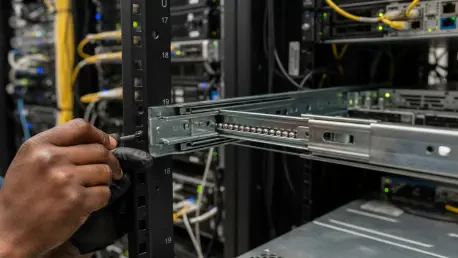

The physical limitations of modern server rooms are becoming as critical as the code running within them, as the sheer mass of artificial intelligence hardware begins to redefine what it means to scale a facility. In this roundup, infrastructure specialists, mechanical engineers, and data center operators offer their perspectives on how specialized hardware—specifically telescopic slides, mounting brackets, and cable management—determines the ability to grow. As power and weight per rack continue to climb, the industry is shifting its focus from simple real estate acquisition toward the structural integrity of the mechanical layer. This analysis explores the technical strategies that allow enterprises to support next-generation workloads without collapsing under the weight of their own innovation.
Redefining Infrastructure: The Shift from Square Footage to Mechanical Integrity
The traditional metric for data center success was once the total square footage of a facility, but industry leaders now argue that “compute density” has rendered floor space a secondary concern. As artificial intelligence accelerators and high-performance graphics processing units become the standard, the primary challenge is no longer how many racks can fit in a room, but how much power and weight a single rack can reliably sustain. Federal data suggests a massive surge in energy consumption, with U.S. data center usage reaching 192 terawatt-hours in 2024 and projected to reach nearly 649 terawatt-hours by 2030. This growth represents a pivot from horizontal expansion toward vertical, dense integration that requires a fundamental rethinking of physical support systems.
Infrastructure specialists observe that average rack power densities have shifted from traditional levels into the 10 kW to 30 kW range. This increase in power is directly proportional to an increase in hardware weight, as specialized cooling heat sinks and power supply units add significant mass to every server chassis. Consequently, the mechanical components that house this equipment—once viewed as simple commodity hardware—are now considered the primary gatekeepers of scalability. Without a robust physical foundation, the most advanced software in the world remains limited by the physical strength of the steel and aluminum that holds the processors in place.
Moreover, the transition toward high-density environments has created a need for specialized rack architectures that go beyond basic storage. Modern facilities are increasingly adopting standardized frameworks like the Open Rack V3 specification to ensure that different hardware generations can coexist. This standardization is not just about compatibility; it is about future-proofing the mechanical layer so that when the next wave of high-density chips arrives, the physical infrastructure is already equipped to handle the load. By focusing on mechanical integrity from the start, organizations can prevent the “stranded capacity” that occurs when a facility has available power but lacks the structural strength to install new equipment.
Engineering the Backbone of High-Density Deployment
Overcoming the Cantilever Challenge in Heavy-Duty Rail Systems
One of the most technical hurdles in high-density deployment is the physical behavior of a server chassis during maintenance. Mechanical engineers point toward the “cantilever challenge,” where a fully extended server acts as a beam supported only at one end. As chassis weight increases, the physics of this extension introduces significant risks of deflection or “sag.” Research indicates that even a minor structural bend can lead to the misalignment of delicate blind-mate connectors or permanent damage to the slide rail assembly. To mitigate this, designers are moving toward heavy-duty ball-bearing slides that offer high dynamic load ratings, ensuring that equipment remains perfectly level even when pulled out for servicing.
The distinction between static and dynamic loads is a recurring theme among infrastructure experts. While a rail might be rated to hold a certain weight when the rack is closed, the stresses applied during movement are where the majority of mechanical failures occur. High-density servers require rails that can withstand the torque generated by extension without compromising the integrity of the internal components. By utilizing precision-engineered telescopic slides, data center managers can ensure that a single technician can safely service a 100-pound server without the risk of the hardware jamming or bending the rack frame.
Furthermore, the longevity of these mechanical systems is critical for scaling. In high-traffic environments where maintenance cycles are frequent, the wear and tear on friction-based slides can lead to metal fatigue and eventual failure. Engineers emphasize the use of high-strength alloys and advanced lubrication systems within the slides to reduce friction and maintain smooth operation over thousands of cycles. This focus on the “dynamic” life of the hardware ensures that the data center remains operational and that maintenance does not become a bottleneck for growth.
The Paradox of Chassis Width and Structural Strength
As manufacturers pack more processing power and specialized cooling into servers, chassis designs are becoming increasingly wide to maximize internal real estate. However, the standard 19-inch rack frame remains a fixed constraint, creating what designers call the “narrow width paradox.” To accommodate a wider server, the mounting hardware must become thinner, yet it must also be stronger to support the increased weight of the internal components. This mechanical conflict requires the use of sophisticated metallurgy and hybrid material configurations that provide maximum rigidity within a very narrow cross-section.
Standardization bodies like those overseeing the Open Rack V3 specifications are working to address this by defining tighter tolerances for mounting hardware. By reducing the space consumed by the rails, more room is made available for the airflow and cooling systems required to keep high-density chips from overheating. Designers are increasingly turning to high-tensile steel and specialized aluminum alloys that offer superior strength-to-weight ratios. These materials allow for the creation of ultra-slim slide rails that can support the massive weight of an AI-optimized server while fitting into the restricted gaps of a standard cabinet.
In addition to material science, the engineering of the rail profile itself has evolved. Specialized cross-sectional designs, such as I-beam or C-channel geometries, are utilized to provide the necessary stiffness without adding bulk. This precision engineering ensures that the rack can accommodate the widest possible equipment while maintaining the structural safety margins required for high-density environments. As enterprises look toward 2027 and beyond, this balance between internal space and external support will remain a central focus of hardware procurement.
Adapting to Architectural Flux Through Flexible Mounting
While standardization provides a baseline, real-world data center environments often require a high degree of adaptability. Mounting brackets serve as the essential interface between the stationary rack and the moving hardware, and their design can dictate how quickly a facility can pivot to new technology. Innovations such as toolless, depth-adjustable brackets and “joggle bend” designs allow engineers to bridge the gap between varying cabinet depths. This flexibility is vital when repurposing existing rack space for non-standard power distribution units or liquid cooling manifolds that were not part of the original facility design.
Infrastructure consultants note that the ability to modify mounting configurations without extensive downtime is a key competitive advantage. For example, a recessed bracket design can allow for the installation of equipment in restricted spaces where clearance is minimal, preventing the need for costly custom rack modifications. By utilizing universal mounting systems that are compatible with both EIA-310 and newer standards, organizations can maintain a heterogeneous hardware environment. This adaptability prevents “vendor lock-in” and allows for a more modular approach to scaling.
Moreover, the use of high-quality bar nuts and various attachment options ensures that the hardware remains securely fastened regardless of the specific hole pattern in the rack. This might seem like a minor detail, but at scale, the time saved by utilizing toolless integration can add up to hundreds of man-hours during a large-scale deployment. Flexible mounting solutions ensure that the physical infrastructure can keep pace with the rapid lifecycle of the digital components it supports, allowing for seamless upgrades as new server generations are released.
Mitigating Thermal Dams with Integrated Cable Management
Scaling density is as much a thermal challenge as it is a structural one. As more hardware is packed into a rack, the resulting volume of power and data cables can create “thermal dams” that obstruct the exhaust of hot air. When airflow is blocked, cooling systems must work harder, leading to increased energy costs and a higher risk of hardware throttling or failure. Advanced mechanical design addresses this by incorporating articulated cable management arms and specialized retractors that ensure cables move in a controlled, predictable manner during server extension.
Material selection for these management systems is also a point of discussion among environmental specialists. In environments sensitive to fire safety, flame-retardant plastics are preferred, while high-traffic or harsh environments may require the durability of corrosion-resistant aluminum or steel. By choosing materials that align with the specific needs of the facility, designers can protect the longevity of the cabling and the hardware it connects. Well-organized cabling not only improves airflow but also makes it easier for technicians to identify and service individual components, reducing the likelihood of accidental disconnections.
Furthermore, the integration of vertical raceways and 1U/2U cable retractors allows for a clean, streamlined exhaust path behind the servers. This organization is essential for the effectiveness of modern cooling strategies, such as hot-aisle containment or rear-door heat exchangers. When cables are managed precisely, the data center’s cooling infrastructure can operate at peak efficiency, allowing for higher densities without the need for additional air conditioning capacity. This synergy between mechanical cable management and thermal performance is a critical component of a scalable high-density strategy.
Strategic Frameworks for Implementation and Optimization
To effectively scale a data center, organizations must transition from a reactive maintenance mindset toward a proactive engineering strategy. Adopting standardized rack frameworks is the first step in ensuring long-term interoperability and reducing the costs associated with custom modifications. Industry experts suggest that the most successful facilities are those that treat the rack as a dynamic system rather than a static piece of furniture. This involves prioritizing “dynamic” load ratings and ensuring that all mechanical components are tested for the specific stresses they will encounter during their operational lifespan.
Engaging in an “engineering-to-engineering” partnership with hardware manufacturers allows for rapid prototyping and the development of custom-tailored solutions. This collaboration is especially important for enterprises deploying unique AI hardware footprints that may not fit traditional off-the-shelf solutions. By working directly with designers who understand the nuances of metallurgy and mechanical stress, data center teams can create bespoke rail and mounting systems that meet their exact requirements without the need for massive minimum order quantities. This level of precision ensures that the infrastructure is built to support the specific weight and thermal profile of the equipment it houses.
Moreover, the implementation of these strategic frameworks allows for a more efficient allocation of resources. By reducing the time and labor required for installation and maintenance, organizations can redirect their focus toward optimizing software and data operations. The goal of a proactive mechanical strategy is to make the physical infrastructure “invisible”—to create a system so reliable and adaptable that it never becomes a limiting factor in the deployment of new technology. This comprehensive approach to mechanical design provides the physical resilience necessary to sustain growth in a rapidly evolving digital landscape.
Final Perspectives: Hardware as the Ultimate Scaling Limit
The transition toward high-density infrastructure required a fundamental shift in how engineers perceived the rack. Stakeholders prioritized the mechanical integrity of telescopic slides and mounting systems, recognizing that the integration of high-density chips necessitated a bottom-up redesign of the physical frame to prevent structural failure. By prioritizing dynamic load ratings over static metrics, organizations ensured their facilities remained resilient during maintenance cycles. Designers realized that the physical strength of a steel rail or the airflow clearance in a rack was often the actual limit of growth, rather than the software running on the servers.
Developers understood that the path toward sustainable growth involved specialized engineering partnerships rather than simple off-the-shelf purchases. These collaborations enabled rapid prototyping and allowed smaller labs to benefit from the same mechanical precision as larger hyperscalers. The focus shifted away from the simple acquisition of square footage and moved toward maximizing the compute capacity of every vertical inch. Ultimately, the industry found that the durability and flexibility of the rack-mount hardware determined whether a facility could survive the physical stresses of modern artificial intelligence hardware. Moving forward, the industry adopted a mindset where the mechanical layer served as the foundational pillar for all future digital innovation.