
In the high-stakes environment of professional gaming where a single frame of movement dictates the winner of a million-dollar prize pool, the underlying technical infrastructure has become more critical than the manual dexterity of the athletes themselves. The days when a casual 50-millisecond delay was considered acceptable have long since vanished, replaced by an era where elite competition demands near-zero latency and absolute network stability. As esports matures into a multibillion-dollar industry, the engineering required to sustain these digital spectacles has moved toward the level of precision typically reserved for high-frequency financial trading or aerospace systems. Today, a discrepancy as small as 5 milliseconds can ripple through a match, altering the physics of a virtual world and potentially costing a team a world championship title. This intense pressure has forced organizers to abandon standard consumer-grade solutions in favor of custom-built architectures that prioritize throughput, security, and raw processing power above all other considerations.
Engineering for Massive Scale and High-Density Environments
Managing the immense traffic generated by global events like the Counter-Strike 2 championships or the Esports World Cup requires a radical departure from traditional networking strategies used by standard internet service providers. When concurrent viewership numbers climb past the one-million mark, relying on generic public cloud instances becomes a liability rather than an asset due to the unpredictable nature of shared resources. Instead, organizers are deploying massive, dedicated server clusters that are specifically tuned to handle tens of thousands of network requests every second without breaking a sweat. These high-density environments are the backbone of modern tournaments, ensuring that the heavy load of spectator data and global broadcast feeds never interferes with the game state itself. By isolating the competitive environment from the public-facing distribution network, engineers create a digital fortress where the only variable is the performance of the players, effectively shielding the integrity of the match.
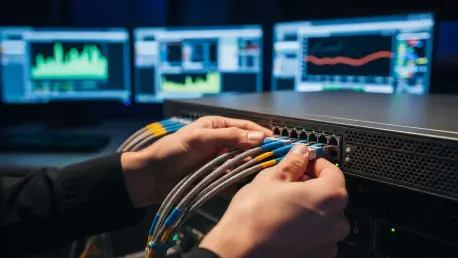
Within the physical confines of the tournament venue, the technical requirements diverge sharply from even the most advanced home office or gaming setups available to the public. While a high-end consumer router might brag about reaching 1 Gbps, a professional Local Area Network at an international event typically operates on a backbone of 10 to 100 Gbps to support the incredible data density of modern gaming. This colossal bandwidth is not just for show; it is a functional necessity to simultaneously manage uncompressed high-definition video streams, real-time player telemetry, and rigorous anti-cheat monitoring systems that scan for unauthorized software in real time. Orchestrating such a complex array of server racks requires specialized teams of systems engineers who monitor every byte of data to prevent bottlenecks that could lead to packet loss. Every cable and switch is tested for performance redundancy, ensuring that the high-speed data flow remains constant throughout the multi-day competition, providing a seamless experience for the viewers.
Optimizing Hardware Performance and Reducing System Latency
Minimizing latency, commonly referred to as ping, remains the primary engineering hurdle because any perceptible delay between a physical input and an on-screen action can lead to immediate elimination in professional play. To achieve the necessary millisecond-level response times, organizers have transitioned to placing game servers in extreme physical proximity to the players, often housing them in mobile data centers located directly inside the arena. This physical closeness is augmented by sophisticated software protocols such as Anycast routing, which determines the most efficient path for data to travel across the local network to reduce transit time. Furthermore, Quality of Service configurations are applied to prioritize game-critical packets over less sensitive data like background updates or internal chat logs. This layered approach to traffic management ensures that the game engine receives player inputs with the lowest possible jitter, while hot-spare redundancy systems stand by to take over instantly if a primary server encounters hardware failure.
The physical hardware powering these events is fundamentally different from standard workplace computers, as it is engineered to handle extreme processing peaks for several days without thermal throttling. Tournament servers are equipped with enterprise-grade processors such as AMD EPYC or Intel Xeon chips, which are paired with high-frequency DDR5 memory and NVMe storage solutions to eliminate any possibility of a data bottleneck. This high-performance infrastructure is typically segmented into dual environments: one cluster dedicated solely to the low-latency gaming environment and another specialized for the intensive demands of the global broadcast suite. Modern event technology has moved toward a plug-and-play mobile configuration, allowing these sophisticated rigs to be housed in modular racks that can be shipped across the globe. This allows technical crews to establish a world-class broadcast and gaming hub in any venue within a matter of days, ensuring that the same high standards are maintained whether the event is held in Europe or Asia.
Integrating Edge Computing and Advanced Security Protocols
To address the inherent geographical disadvantages faced by teams competing in online leagues from different continents, the industry has aggressively adopted edge computing technologies. By decentralizing the server structure and processing game data at local nodes closer to the players, organizers can significantly level the playing field by equalizing the connection speeds for all participants regardless of their location. This technological shift also facilitates the integration of massive data analytics, allowing tournament organizers to process billions of data points in real time to generate advanced broadcast metrics. These statistics, such as win-probability percentages and detailed player efficiency graphs, have become integral to the modern viewing experience by providing fans with deeper strategic insights as the action unfolds. The marriage of edge processing and big data not only improves the competitive fairness of the matches but also transforms the way spectators consume the sport, turning complex digital interactions into narratives.
As the visibility of global esports increases, the digital field has become a target for various malicious activities, making robust cybersecurity a fundamental pillar of event infrastructure. Distributed Denial of Service attacks pose a persistent threat to live competitions, capable of causing devastating lag spikes or total disconnections that could ruin the flow of a multi-million-dollar event. To counter these threats, technical teams implement sophisticated multi-level traffic filtering systems that act as a digital sieve, identifying and neutralizing suspicious data packets before they can reach the core network. These security measures are designed to be invisible to the players and the fans, operating in the background to ensure that the digital turf remains secure from external interference. By establishing these comprehensive defenses, the industry ensures that the final outcome of any given championship is determined solely by the strategic prowess and mechanical skill of the human competitors rather than the disruptive efforts of outside actors.
Developing Regional Hubs for Technical Consistency
Looking ahead, the focus of esports infrastructure began shifting toward the creation of standardized regional gaming hubs that could serve as permanent fixtures for international leagues. This movement was driven by the need to reduce the logistical overhead and environmental impact of shipping massive hardware arrays across oceans for every individual tournament stop. By establishing fixed technical centers in key geographic zones, organizers managed to improve consistency in network performance and provided a more stable environment for training and competition alike. This approach also allowed for better integration with local fiber-optic providers, ensuring that high-speed connectivity was baked into the local infrastructure rather than being a temporary fix. Furthermore, these regional hubs became breeding grounds for technical talent, as the industry required an ever-growing number of specialized network architects who understood the unique demands of high-performance gaming, moving toward a global network of dedicated arenas.
The path forward for the industry required a deliberate commitment to cross-platform standardization and the adoption of advanced network monitoring tools to ensure transparency in competitive play. Industry leaders focused on developing universal protocols for latency reporting, which helped in building trust between the athletes and the organizers regarding the fairness of the digital environment. Investing in sustainable power solutions for high-density server racks became a priority as the energy demands of massive events continued to scale upward alongside viewership. These initiatives proved that the technical foundation of the sport was just as important as the talent displayed on the screens, leading to a more resilient and professional ecosystem. By prioritizing the continuous refinement of hardware and the expansion of secure edge networks, the esports community successfully built a framework that could support the next generation of interactive entertainment. This foundation ensured that the digital arena remained a space where human potential was amplified by technology.