
The relentless pressure to feed an expanding global population has forced the agricultural industry to reconsider its historical reliance on manual labor and anecdotal observations in favor of precise digital intelligence. This immense pressure has catalyzed a shift in how farmers perceive technology, moving away from experimental gadgets toward integrated digital frameworks that provide actionable insights across every acre. At the heart of this revolution is LoRaWAN, which has matured from a specialized sensor protocol into a robust infrastructure layer capable of connecting the most remote farming operations. Unlike previous iterations of smart farming that relied on patchy cellular coverage or expensive satellite links for every individual node, the current model utilizes a localized gateway architecture. This foundational network allows for the simultaneous management of soil moisture, livestock health, and equipment telemetry. By leveraging unlicensed spectrum, growers are building private, secure networks that offer unprecedented visibility into their daily operations without relying on external providers.
Overcoming Traditional Connectivity Barriers
Solving Power and Geographic Constraints: Rural Environments
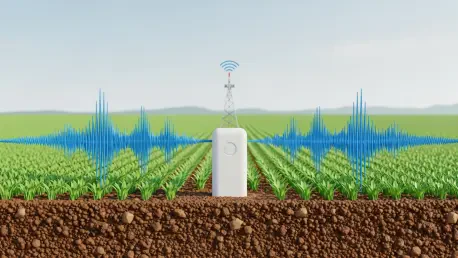
Rural environments present unique hurdles that often render conventional wireless technologies like Wi-Fi or standard cellular networks ineffective due to distance and interference. Most agricultural assets are located in dead zones where cellular signals are weak or non-existent, and monitoring points typically lack access to a steady power grid. LoRaWAN addresses these hurdles through its low-power wide-area network design, which prioritizes long-range signal penetration and extreme energy efficiency. This architecture allows devices to operate on battery or solar power for years without any manual maintenance, which is essential for large-scale operations. By using sub-gigahertz radio frequencies, the signal can travel through dense foliage and over rolling hills, reaching sensors that were previously impossible to connect. This reliability ensures that farmers receive a continuous stream of data regardless of the topographical challenges of their land, providing a level of visibility that was once unattainable for even the most well-funded estates.
The ability to maintain a connection without a constant power supply fundamentally changes how technology is deployed in remote landscapes and mountainous regions. In current farming operations, the focus has shifted toward installing sensors that can withstand the elements while requiring zero intervention for the duration of their lifecycle. LoRaWAN achieves this by using a communication protocol that minimizes the time a device is awake and consuming energy, allowing it to remain dormant between transmissions. This efficiency is a critical factor for monitoring moving assets like livestock or transient environmental factors like flash flooding in remote irrigation channels. Because the gateways can be placed in strategic high-altitude locations, they provide coverage for thousands of acres with minimal hardware overhead. This streamlined approach to connectivity has effectively bridged the digital divide for rural communities, turning vast stretches of previously dark land into data-rich environments that support more intelligent, resource-efficient farming methods across the globe.
Transitioning from Isolated Pilots: Scalable Infrastructure
Historically, many smart farming projects failed to scale because the costs associated with connecting new devices were prohibitively high and required complex technical setups. The current strategy championed by industry leaders emphasizes a shared network layer where a single infrastructure investment can support dozens of different use cases across the same property. Once a farmer installs a gateway for one specific purpose, such as irrigation control, they can incrementally add weather stations, tank level sensors, and security monitors to the same existing network. This fundamentally changes the economics of agricultural technology by spreading the initial cost of the infrastructure over multiple applications. It removes the friction of starting new projects, as the connectivity layer is already present and ready to accept new nodes. This shift from isolated pilot programs to a unified infrastructure has allowed growers to build comprehensive digital ecosystems that evolve alongside their operational needs, ensuring that every piece of data collected contributes to the farm’s bottom line.
The global viability of this connectivity standard is further reinforced by a massive and diverse ecosystem that includes over six hundred and fifty certified devices from various manufacturers. This wealth of hardware options ensures that growers are never locked into a single vendor and can choose the best tools for their specific climate and crop requirements. Whether a producer needs ruggedized pH sensors for acidic soils or GPS trackers for wide-ranging cattle, the interoperability of the LoRaWAN standard allows these components to work together seamlessly. This diversity is essential for addressing the specialized needs of different agricultural sectors, from viticulture to dairy farming, where the environmental conditions vary wildly. One of the most significant technological breakthroughs involved the integration of satellite-backed LoRaWAN, which provided a critical backhaul for ground-based gateways. This hybrid model successfully bridged the gap in global rural connectivity, allowing data to be transmitted from the most remote corners of the planet, effectively making geography irrelevant to digital access.
Industry leaders successfully identified that the path forward for smart agriculture required a commitment to open standards and rugged, long-lasting hardware design. By focusing on devices optimized for low data volumes rather than high-speed broadband, manufacturers created a sustainable model for the demanding rural environment. Connectivity providers shifted their focus toward offering managed rural coverage and strategic gateway placement, moving the industry toward a state where data-driven operations became the standard. Stakeholders learned to prioritize the collection of high-quality, actionable data over the sheer quantity of sensors, ensuring that every piece of technology contributed directly to operational efficiency. This shift empowered global producers to maximize their yields while significantly reducing their environmental footprint through precision resource management. Ultimately, the transition to this unified digital infrastructure provided the necessary tools for the industry to thrive in an increasingly complex and demanding global food landscape.