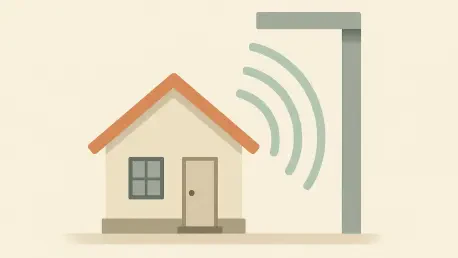

The physics of lower-frequency radio waves allows Suzi signals to bend around physical obstacles, drastically reducing the dead zones commonly found in older stone houses and industrial buildings. This development marks a definitive turning point for residential and industrial automation, as the smart home industry moves beyond the constraints of the 2.4 GHz spectrum. While Zigbee has long been celebrated for its low power consumption and reliable mesh networking, it has often faced criticism for its limited range when confronted with dense materials like masonry or steel. The Connectivity Standards Alliance recognized these challenges and introduced Suzi as a strategic expansion within the Zigbee 4.0 framework. By officially opening the certification program in September 2026, the CSA has signaled to manufacturers that the era of Sub-GHz interoperability is no longer a distant concept but a functional reality. This shift enables a new class of devices that can maintain stable connections across expansive properties without requiring an excessive number of signal repeaters.
Evolution of the Standard
The transition to Zigbee 4.0 and the subsequent rollout of the Suzi extension represent a comprehensive overhaul designed to meet the demands of modern connected environments. Throughout 2026, the industry has seen a rapid shift toward standards that prioritize both interoperability and physical reliability. This evolution is not merely a technical update but a response to the growing density of wireless devices in urban areas, where the 2.4 GHz band has become increasingly unreliable. By establishing a formalized certification process, the Connectivity Standards Alliance ensures that new products meet stringent criteria for performance and security. This structured approach allows developers to build with confidence, knowing that their hardware will function seamlessly within the broader Zigbee ecosystem. As the first certified software stacks reach the market, the emphasis is shifting toward creating a unified experience that simplifies the deployment of complex automation systems in both residential and light commercial settings.
Building on the Foundation of Zigbee 4.0
Security enhancements in Zigbee 4.0 represent a monumental shift in how modern dwellings protect sensitive data against increasingly sophisticated digital threats. By integrating advanced encryption standards and more rigorous authentication protocols, the standard provides a fortress-like environment for every connected node within the mesh. Beyond the security layer, the introduction of revamped commissioning processes addresses a long-standing pain point for both installers and tech-savvy homeowners. Batch commissioning stands out as a particularly efficient feature, allowing for the simultaneous pairing of dozens of devices with a single command. This departure from the tedious one-by-one pairing method of previous generations drastically reduces the time required to set up large-scale installations. As the complexity of automated homes grows, such streamlined workflows become essential for maintaining a positive user experience while ensuring that every device remains securely tethered to the authorized network.
Backward compatibility remains a cornerstone of the new standard, ensuring that the transition to Zigbee 4.0 does not force users to abandon their existing investments. The architecture is specifically designed to allow Zigbee 3.0 devices to coexist with newer hardware, providing a stable migration path for homeowners who have already deployed extensive sensor networks. This approach prevents the fragmentation that has occasionally hindered other smart home protocols, fostering a sense of continuity within the community. While older devices cannot gain the native Sub-GHz capabilities of Suzi without physical hardware changes, they still benefit from the improved management and security features of the 4.0 network controllers. This dual-layer functionality allows users to upgrade their central hubs to gain Suzi support while keeping their established interior lighting and sensor arrays intact. The strategy highlights a commitment to long-term sustainability and consumer confidence, as early adopters are not penalized for their prior participation in the ecosystem.
Direct Communication and Compatibility
The integration of Zigbee Direct serves as another vital pillar of the 2.4 GHz and Sub-GHz synergy, utilizing Bluetooth Low Energy to bridge the gap between smartphones and the mesh network. This functionality removes the traditional requirement for a dedicated gateway for every minor interaction, allowing users to configure and maintain their devices directly through mobile applications. For installers, this means that initial setup and diagnostic troubleshooting can be performed on-site with minimal overhead, significantly increasing efficiency. By leveraging the ubiquity of Bluetooth, Zigbee Direct makes the technology more accessible to casual users who may not yet be ready to commit to a full home automation hub. This direct-to-device communication path acts as a gateway for broader adoption, lowering the entry barrier while maintaining the robust benefits of a mesh topology. It effectively combines the convenience of modern consumer electronics with the industrial-grade reliability of the Zigbee protocol.
Maintenance and long-term device management have also been significantly improved through the latest standard updates. The ability for smartphones to communicate directly with nodes allows for more intuitive firmware updates and local configuration changes without taxing the primary network bandwidth. This localized control is especially beneficial in environments where the central controller might be located far from the target device, such as in large estates or multi-story buildings. Furthermore, the protocol ensures that these direct interactions remain secure, employing the same high-level encryption found throughout the rest of the Zigbee 4.0 stack. As users interact more frequently with their smart environments, the responsiveness of the system becomes a critical factor in overall satisfaction. By reducing the latency associated with routing every command through a central hub, Zigbee Direct provides a snappy, immediate feel to the user interface, reinforcing the idea that smart home technology should be as effortless as flipping a physical switch.
Technical Advantages of Sub-GHz
The transition to Sub-GHz frequencies involves more than just a change in radio channels; it is a fundamental shift in how automation signals navigate the physical world. While 2.4 GHz has served the industry well for local interactions, its reliance on a higher frequency makes it susceptible to signal attenuation and interference from common household objects. By shifting to the 868 MHz band in Europe and the 915 MHz band in North America, Suzi leverages the inherent properties of longer wavelengths. These waves are less likely to be absorbed by obstacles and can travel much further using the same amount of power. This efficiency is particularly important for battery-operated sensors that must operate for years without maintenance. As the demand for comprehensive outdoor coverage grows, the technical superiority of Sub-GHz becomes the primary driver for innovation, allowing the smart home to extend beyond the walls of the main residence and into the surrounding property with unprecedented reliability and ease.
Overcoming Distance and Physical Obstacles
One of the most significant hurdles in residential automation has been the inability of high-frequency signals to penetrate thick construction materials effectively. Modern buildings often utilize reinforced concrete and energy-efficient glass, both of which can act as barriers to 2.4 GHz radio waves, leading to inconsistent performance and frustrating offline status messages. Suzi addresses this by utilizing wavelengths that are physically better suited to diffraction, allowing them to bend around corners and pass through dense masonry with far less energy loss. This capability ensures that a single coordinator can maintain a stable link with sensors located in remote corners of a basement or behind several layers of drywall. For homeowners living in historic properties with thick stone walls, this technology represents the first real solution to the connectivity issues that have previously required a dense and expensive network of signal repeaters to achieve even basic coverage levels.
In addition to wall penetration, the extended range of Sub-GHz technology opens up new possibilities for large-scale outdoor automation that were previously impractical. A standard 2.4 GHz signal often struggles to reach the edge of a typical suburban lot, let alone the boundaries of a multi-acre estate or a detached workshop. Suzi bridges this gap by providing a communication range that can span several hundred meters in open space, allowing for the seamless integration of gate sensors, driveway alarms, and peripheral security cameras. This expanded footprint is achieved without the need for high-gain antennas or complex mesh configurations, simplifying the installation process for both professionals and do-it-yourself enthusiasts. By providing a reliable connection to the very edge of the property, Suzi ensures that the smart home ecosystem is no longer confined to the interior of the house, creating a truly unified environment that encompasses the entire living space regardless of physical distance.
Reducing Interference and Noise
The 2.4 GHz spectrum is notoriously crowded, shared by everything from Wi-Fi routers and Bluetooth headsets to microwave ovens and cordless phones. This congestion often leads to packet collisions and signal degradation, which manifest as delayed responses or failed automation triggers in a smart home environment. By migrating critical automation traffic to the 800 and 900 MHz bands, Suzi escapes this digital noise, operating in a much quieter part of the radio spectrum. This move drastically improves the signal-to-noise ratio, ensuring that commands are received clearly on the first attempt without the need for frequent retransmissions. For high-density living situations, such as apartment complexes or urban townhomes, this shift is revolutionary. It allows dozens of independent networks to operate in close proximity without stepping on each other’s signals, maintaining the high performance and low latency that users expect from a professional-grade home automation solution.
Reliability in urban environments is further enhanced by the way Sub-GHz signals interact with the surrounding electromagnetic landscape. Because there are fewer consumer devices operating in these lower frequency bands, the background floor of interference is significantly lower, which allows sensors to maintain a stable connection even at the limits of their range. This stability is crucial for safety-critical applications, such as water leak detectors or smoke alarms, where a missed signal could have serious consequences. The shift to a less populated frequency also means that the network is less likely to experience the sudden drops in performance that can occur when a neighbor installs a powerful new Wi-Fi mesh system. By carving out a dedicated space for home automation, the Suzi standard provides a level of predictability that was previously difficult to achieve. This predictability translates directly into user trust, as the system becomes a reliable utility that functions consistently regardless of the wireless activity happening in the vicinity.
Strategic Next Steps for Home Integration
The successful launch of the Suzi certification program throughout 2026 demonstrated that the home automation industry was ready to move past the limitations of the 2.4 GHz spectrum. By prioritizing physical range and material penetration, developers created a framework that finally allowed smart technology to function reliably in diverse architectural environments. The industry recognized that for automation to become a standard feature in every home, it needed to be as robust as the wired systems it sought to replace. This maturity was reflected in the arrival of the first dual-band coordinators, which allowed a graceful transition from older standards to the new Sub-GHz reality. Homeowners who adopted these hybrid systems found that they could maintain their existing interior devices while expanding their reach to the farthest corners of their properties. The shift also forced a recalculation of market strategies, as the traditional advantages held by proprietary protocols were neutralized by the open and interoperable nature of the Zigbee 4.0 ecosystem.
Looking toward the immediate future, homeowners and professional installers should prioritize the deployment of dual-band hardware to ensure long-term compatibility and network resilience. While existing Zigbee 3.0 devices will continue to function, the real power of the modern smart home lies in the extended reach and reliability provided by the Suzi extension. It is recommended that users begin by upgrading their central network coordinators to models that support both 2.4 GHz and Sub-GHz frequencies, as this provides the necessary infrastructure for future device additions. When planning outdoor expansions or security upgrades, choosing Suzi-certified sensors will eliminate the need for costly signal repeaters and ensure a more responsive system. Furthermore, as the Matter protocol continues to integrate with Zigbee-based transports, staying within the certified ecosystem will guarantee that these devices can communicate with broader platforms like Apple Home or Google Home. Taking these proactive steps today will create a stable, high-performance foundation that is capable of supporting the next decade of innovations in the rapidly evolving landscape of home automation.