
Despite its impressive editing performance, FilmCraft faces a significant bottleneck during the export phase, where render times for a short clip can take forty minutes or longer. This glaring efficiency gap contrasts sharply with the software’s otherwise stellar performance, highlighting the complexities of building a professional-grade non-linear editor from the ground up for the Linux platform. Historically, the Linux operating system has stood as a powerhouse for server management and development, yet it remained a desert for creative professionals requiring high-end video tools. For years, creators were forced to endure a creative tax, migrating to macOS or Windows to access industry-standard suites like Adobe Premiere Pro or Final Cut. While proprietary solutions like DaVinci Resolve eventually arrived on Linux, they often brought rigid hardware requirements that alienated many users. FilmCraft, developed by ArtCraft, now enters this space as an ambitious open-source challenger designed to eliminate these barriers once and for all.
Hardware Compatibility: Breaking the Proprietary Chain
One of the primary hurdles for professional video editing on Linux has been the restrictive hardware requirements of established tools. DaVinci Resolve is a power-house in the industry, but its heavy dependence on proprietary Nvidia drivers and specific GPU architectures often leaves users with AMD-based systems struggling for stability. This hardware gatekeeping has effectively locked out a large portion of the Linux community who prefer open-source drivers and hardware-agnostic environments. For many independent filmmakers, the cost of switching to an entirely different GPU ecosystem just to run a specific piece of software is prohibitive. This technical friction has long prevented Linux from being seen as a viable first-choice operating system for serious post-production. The lack of native support for diverse hardware configurations created a fragmented experience where only a subset of high-end workstations could provide the necessary performance for editing.
FilmCraft addresses this head-on by providing a stable, high-performance environment that runs smoothly on AMD hardware without the need for specialized proprietary setups. By removing these technical friction points, the software opens the door for a more diverse range of creators to produce high-quality content on their own terms. This shift represents a significant move toward a more inclusive creative landscape where the choice of hardware does not dictate the quality of the final product. During testing on systems powered by Ryzen processors and Radeon graphics cards, the software maintained fluid playback and responsive interface interactions. This democratization of professional tools ensures that users are no longer tethered to a specific brand of silicon to achieve cinematic results. The ability to utilize the full potential of open-source drivers within a professional creative workflow is a breakthrough that many Linux enthusiasts have been anticipating for years.
Modern Foundations: Leveraging Rust and Artificial Intelligence
The technical foundation of FilmCraft is a major factor in its impressive performance, as it was built using the Rust programming language. Known for its memory safety and speed, Rust allows the application to handle resource-heavy tasks like video manipulation with a level of efficiency rarely seen in open-source projects. This choice of language prevents the common crashes and memory leaks that have plagued older video editors written in less secure languages. Because video editing requires constant, high-speed access to large data files, the underlying architecture must be incredibly robust to avoid stuttering during high-resolution playback. Furthermore, the use of modern compilation techniques ensures that the software can scale effectively across multi-core processors. This architectural integrity provides a professional-grade foundation that allows the software to feel as responsive as expensive proprietary suites, even when managing complex timelines with dozens of overlapping video and audio tracks.
The developers at ArtCraft also utilized artificial intelligence to reverse-engineer the intuitive workflows of industry giants, resulting in a familiar yet modern user interface. User experience starts with a remarkably fast installation process via the Craft Launcher, which can get the software up and running in under a minute. This immediacy is a breath of fresh air compared to the bloated installation cycles of traditional professional suites that often require multiple reboots and complex license activation steps. Once launched, the editor feels snappy and responsive, reflecting a design philosophy that prioritizes the user’s time and system resources. The interface is clean and avoids the cluttered menus that often intimidate newcomers, yet it retains the depth required for advanced projects. This combination of a high-performance backend and an intelligent frontend suggests a new era for open-source development where usability is just as important as technical capability.
Professional Capabilities: Handling Complex Media Workflows
Despite being a newcomer to the scene, FilmCraft does not shy away from advanced production requirements, such as handling high-bitrate log footage. This flat color profile, favored by professionals for its dynamic range, is often a stumbling block for free software, yet FilmCraft imports and processes it without error. The inclusion of professional-grade codec support suggests that the software is aimed squarely at those who need more than just basic cutting tools. Editors can confidently import footage from high-end cinema cameras and expect the colors and metadata to be preserved accurately throughout the editing process. This level of technical sophistication is rare in the open-source world, where software often struggles with proprietary video containers and specialized compression formats. By focusing on these professional needs, ArtCraft has positioned its tool as a legitimate contender for creators who previously felt restricted by the limitations of free tools.
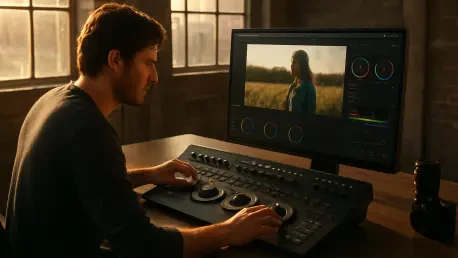
The editing experience is further enhanced by a robust set of features, including face detection for skin tone optimization and a variety of camera motion effects. These tools allow for a high degree of creative control, mimicking the drag-and-drop ease of Adobe Premiere while maintaining the stability of a native Linux application. For many, the ability to perform complex edits while running other resource-intensive applications in the background is the ultimate testament to the software’s underlying stability. Even with several web browser tabs and image manipulation programs open, the video preview remains smooth and consistent. This multitasking capability is essential for modern workflows where editors often need to jump between different tools for motion graphics or sound design. The software also includes a layer-based color correction system that allows for rapid adjustments, enabling users to transform raw footage into a polished final product with minimal effort and high visual fidelity.
Strategic Positioning: Emulating the Industry Standard
One of the most tactical decisions made by the ArtCraft team was to model the software’s workflow after Adobe Premiere Pro. This makes the transition for industry veterans nearly effortless, as they do not have to relearn the basic mechanics of their craft or memorize an entirely new set of keyboard shortcuts. By cloning the layout and logic of the world’s most popular editor, FilmCraft positions itself as the logical migration path for professionals moving to Linux. This approach lowers the barrier to entry significantly, allowing a creator to open a project and feel immediately at home with the timeline, bin management, and effect controls. The software provides a bridge between the proprietary world and the open-source ecosystem, ensuring that the move to a free operating system does not require a sacrifice in productivity. This familiarity is a powerful incentive for small studios looking to reduce their dependence on expensive annual software subscriptions.
The emergence of FilmCraft signaled a new chapter for the Linux creative ecosystem, where professional tools became accessible to everyone. By providing a platform that was both powerful and hardware-agnostic, ArtCraft empowered a generation of editors to work on their terms. This project demonstrated that a high-performance, cross-platform editor was not only possible but ready for real-world application. The success of the tool encouraged more developers to bring high-end creative solutions to the open-source community, slowly dismantling the barriers that once hindered professional work on Linux. For editors who long felt like second-class citizens, this software offered a legitimate path toward professional independence. It proved that the community could build tools that rivaled the best in the industry, provided they focused on modern architecture and user-centric design. This shift allowed creators to focus on their art rather than fighting with their tools or their operating system.
Future considerations for those adopting this platform involved a strategic shift in hardware investment and workflow planning. Users were encouraged to support the project by reporting bugs and contributing to the development of better hardware-accelerated encoding plugins. The primary takeaway was that while the software offered incredible editing performance, the rendering bottleneck required users to plan their deadlines with additional lead time. Creative professionals successfully integrated this tool into their pipelines by using it for the intensive creative phase and offloading final exports to dedicated machines or overnight batches. This proactive approach allowed them to benefit from the software’s strengths while mitigating its current developmental weaknesses. As the project matured, it became clear that the path forward for Linux editing was one of community collaboration and technical innovation. The lessons learned from this rollout provided a blueprint for future open-source endeavors aiming to disrupt established proprietary markets.