
Oscar Vail is a seasoned technology expert who has spent years dissecting the intersection of high-end robotics, open-source infrastructure, and consumer electronics. With a professional focus on how emerging materials and refined software architectures influence the devices we carry every day, Vail brings a specialized perspective to the evolving world of wearables. His deep interest in the nuances of hardware manufacturing and global supply chains allows him to look beyond the surface of retail leaks and marketing buzz. In this discussion, we explore the intricate engineering of the latest premium smartwatches, the efficiency of modern wearable processors, and the logistical strategies that dictate how and where new technology reaches the hands of consumers.
Hardware leaks suggest a shift toward materials like “Evergreen Titanium” and an IP69 rating. How do these build choices impact daily durability compared to standard IP68 devices, and what specific engineering challenges come with maintaining water resistance in premium metal finishes?
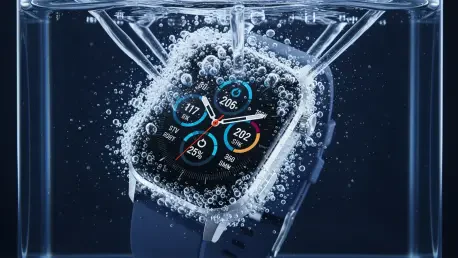
The shift toward an IP69 rating represents a significant leap in consumer durability, moving beyond the simple submersion protection found in IP68 devices to withstand high-pressure, high-temperature water jets. When you look at the leaked model number OPWWE261, the inclusion of “Evergreen Titanium” isn’t just about the striking aesthetic of a greenish band paired with a silver finish; it is a statement on material resilience. Engineering a watch to maintain this seal requires precise tolerances where the metal chassis meets the 1.5-inch display, as titanium expands and contracts differently than glass under thermal stress. Most users don’t realize that the sensory luxury of a dark gray colorway often hides complex gaskets designed to survive the 80-bar pressure tests required for that IP69 certification. It is a grueling manufacturing process that ensures the device survives not just a swim, but the aggressive force of a localized power wash or steam cleaning.
Modern wearables are increasingly adopting 1.5-inch LTPO AMOLED displays while retaining processors like the Snapdragon W5 Gen 1. How does this hardware combination balance the power demands of high-resolution screens, and what performance benchmarks should users prioritize when evaluating this specific internal setup?
The synergy between a 1.5-inch LTPO AMOLED screen and the Snapdragon W5 Gen 1 is essentially a balancing act between visual vibrance and thermal efficiency. With a crisp 466 x 466 resolution, the display demands a significant number of pixels to be refreshed constantly, which could easily drain a smaller battery if not for the LTPO technology’s ability to drop the refresh rate to nearly zero during idle moments. Users should prioritize “frame-to-wake” latency and smooth scrolling through the interface as their primary benchmarks for this setup. When you strap on a watch with these specs, the visual depth of the dark blue band against the dark gray finish is complemented by the snappy responsiveness of a processor that was built specifically for this form factor. It provides a tactile, fluid experience where the hardware doesn’t feel like it’s struggling to keep up with the high pixel density.
Many upcoming smartwatches are launching with Wear OS 5.0 despite seeing almost no increase in physical battery capacity, such as a 646 mAh cell. How does the software architecture bridge the gap to ensure multi-day use, and what specific background processes usually drain these small batteries?
It is fascinating to see the engineering choice to move from a 648 mAh cell in the previous generation to a slightly smaller 646 mAh capacity in the new model while expecting better performance. Wear OS 5.0 acts as the critical bridge here, utilizing more aggressive “doze” modes and background process limitations to ensure that the tiny loss in raw milliamp-hours doesn’t translate to shorter runtimes. The primary culprits for battery drain are usually persistent GPS polling and heart-rate sensors that “fire” too frequently, but the new software architecture optimizes how these sensors report data to the Snapdragon W5 Gen 1. You can feel the difference in the device’s heat signature; a well-optimized OS keeps the watch cool against your skin even when tracking an intensive workout. This efficiency is the only way a 646 mAh battery can realistically support a high-brightness 1.5-inch AMOLED display for more than a single day of heavy use.
Initial distribution for new tech often targets the UK and EU before reaching a wider global audience. What logistical hurdles determine these specific regional rollouts, and how do localized market trends influence the selection of bundled strap colors and finishes?
The rollout to the UK, EU, and Poland is a calculated move dictated by complex certification timelines and importation logistics visible on the leaked retail packaging. For instance, receiving the QC certification on March 30 was a vital milestone, signaling that the device had passed the rigorous safety and mass-production standards required for European distribution. Logistically, companies must navigate different “importer” labels and regional disclaimers, which is why you see specific lists of countries on the back of the box before a global launch is announced. Market trends also dictate the “Evergreen Titanium” and silver finish choices, as European consumers often gravitate toward sophisticated, muted tones like dark blue and greenish-gray for professional environments. This step-by-step process—from mass production in late March to localized bundling—ensures that the supply chain can meet specific regional demands without overextending inventory.
Tech brands frequently release “refresh” models that offer minor internal tweaks rather than radical redesigns. Under what circumstances does an incremental upgrade offer better value than waiting for a major overhaul, and what specific hardware features typically drive a consumer’s decision to switch?
An incremental refresh offers the most value when the manufacturer focuses on refining the “quality of life” features, such as moving to a more durable IP69 rating or improving the display technology to LTPO. If a consumer is coming from a watch that is two or three years old, these “minor” tweaks—like the jump to the 466 x 466 resolution or the Snapdragon W5 Gen 1—actually represent a massive leap in daily usability. The decision to switch is often driven by the physical condition of the current device and the allure of a new aesthetic, like the silver finish seen in the latest leaks. While the change from a 648 mAh to a 646 mAh battery might seem negligible on paper, the cumulative effect of a newer OS and a more efficient screen often makes the “refresh” model feel more reliable than a radical, unproven redesign. It is about buying into a matured version of a product where the kinks of the previous generation have been polished away.
What is your forecast for the OnePlus Watch 4?
I forecast that the OnePlus Watch 4 will be positioned as a “refined workhorse” that prioritizes build quality and software stability over experimental features. Given that it was already in mass production around March 30, we are looking at a device that is ready to hit the market with a very high level of fit and finish. If the brand maintains a competitive price point, the combination of the “Evergreen Titanium” look and the IP69 durability will make it a top contender for users who want a premium-feeling Android wearable without the typical flagship price hike. Success will ultimately depend on whether Wear OS 5.0 can truly make that 646 mAh battery last long enough to satisfy power users, but the hardware foundation looks incredibly solid for a 2024 release.