
The first Linux kernel patch for Razor Lake defines Family 18 Model 6, providing the necessary hooks for future power management and performance counters. This foundational step by Intel signals a clear roadmap for a processor architecture that industry analysts do not expect to reach store shelves until 2028. By initiating support now, the company is ensuring that the complex machinery of the Linux kernel is fully prepared to handle the silicon long before it leaves the fabrication plants. This early enablement work reportedly also encompasses Coral Rapids, a future family of Intel server processors, suggesting a synchronized effort to bridge consumer and enterprise computing environments under a unified architectural umbrella. While the technical specifics remain guarded, the sheer timing of this submission highlights a proactive approach to ecosystem readiness that has become increasingly vital in an era of rapid hardware cycles and high-stakes competition for data center and desktop dominance.
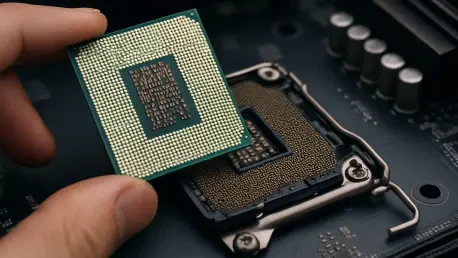
The desktop hardware community has taken a particular interest in these developments because Razor Lake-S is widely expected to utilize the LGA 1954 socket introduced with the Nova Lake-S family. This potential for socket longevity represents a significant pivot for a manufacturer that has historically been scrutinized for frequent platform changes. If Razor Lake indeed maintains compatibility with boards designed for its predecessor, it could provide much-needed stability for enthusiasts and system integrators alike. With Intel currently holding a substantial 70.1% share of the desktop market according to Mercury Research, the decision to offer a consistent socket strategy could be a calculated move to defend its position against a resurgent AMD, which currently occupies 29.9% of the market. This scenario creates a compelling narrative of a market leader leveraging platform continuity as a primary competitive advantage to retain its massive user base during the transition to next-generation standards.
1. Functional Scope: Comprehensive Detailed Contents of the Initial Razor Lake Patch Implementation Project
The primary function of this first patch is to define the CPU family and model identifiers, which serve as the essential baseline for all future software interactions with the processor. This allows the Linux kernel to recognize the silicon once it is manufactured and installed in a system, providing a target for more complex updates. Without these identifiers firmly established in the mainline kernel code, subsequent patches for power management, advanced error handling, or performance monitoring would have no place to attach. The submission essentially builds the directory structure into which all future technical capabilities will be filed, making it the most critical, albeit less glamorous, part of the development lifecycle. This process ensures that when the first engineering samples begin testing, the operating system already possesses a fundamental understanding of the chip’s identity and its place within the broader Family 18 hierarchy.
Reports identify Razor Lake as Family 18, Model 6, and include specific identifiers for the L, U, and S variants within the submission. These various model numbers, such as Model 10 for the S-series, allow the kernel to distinguish between desktop, mobile, and ultra-low-power configurations that might require different thermal or frequency management strategies. Notably, neither Phoronix nor Wccftech reported any performance-related data, such as clock speeds or core counts, within this specific code block. This level of restraint is typical for Intel’s early enablement phase, as it allows the company to begin the lengthy process of merging code into the mainline kernel without disclosing proprietary hardware details that could be used by competitors. By keeping the initial disclosure limited to identification codes, Intel maintains its strategic secrecy while simultaneously fulfilling the technical requirements of the open-source community that maintains the backbone of modern server infrastructure.
2. Traceability and Timing: The Significance of November 13
The patch was submitted by Intel engineer Tony Luck on November 13, 2026, marking the official start of the public review process for this upcoming architecture. This specific date provides a concrete milestone that the tech community can use to track the development pace of Razor Lake as it progresses toward its expected 2028 debut. It is important to note that submission is not the same as integration; kernel patches undergo public scrutiny on mailing lists and may undergo several revisions before being accepted into a stable release by the kernel maintainers. This transparent methodology is a hallmark of the Linux development world, where even the largest corporations must submit their work for peer review. The timing of this submission suggests that Intel is moving with deliberate speed to ensure that its 2028 timeline remains achievable, particularly as software verification often takes as much time as the hardware design itself.
Attributing the work to a specific, named engineer like Tony Luck provides a traceable public record that adds a layer of accountability and legitimacy to the roadmap. This transparency allows the broader tech community, including rivals and developers at cloud service providers, to verify the progress of Intel’s architectural plans through official kernel mailing lists. Relying on these public records is far more reliable than parsing anonymous leaks or marketing slides, as the code itself must eventually function in a real-world environment. For industry observers, this paper trail serves as a vital health check for Intel’s long-term execution, proving that the move toward Family 18 is a tangible engineering project rather than a theoretical marketing concept. The act of submitting this code two years ahead of the hardware’s release highlights the complexity of modern silicon and the necessity of building a software foundation that is both robust and flexible.
3. Defining the Variants by Establishing Specific Model Identification Numbers and Categorizing Various Target Segments
The identifiers provide the most concrete information regarding the upcoming hardware, clearly delineating how Intel plans to segment the Razor Lake family across different markets. All variants currently fall under the Family 18 designation, which is represented as 0x12 in the hexadecimal notation commonly used by kernel developers. Within this family, the specific model numbers serve as a roadmap for the product stack: Model 6 is the baseline Razor Lake, while Models 7, 9, and 10 represent the L, U, and S variants, respectively. This structured approach suggests that Intel is preparing a comprehensive rollout that will simultaneously address different computing needs, from lightweight portable devices to high-performance desktop towers. The existence of these distinct IDs indicates that Intel expects the kernel to handle each variant with specific optimizations, reflecting the diverse thermal envelopes and performance targets inherent in a modern processor lineup.
The “S” suffix found in Model 10 is particularly relevant to the desktop market, as it typically denotes high-performance parts destined for enthusiast and gaming systems. Since the Nova Lake-S family is tied to the LGA 1954 socket, Razor Lake-S is widely assumed to be its desktop successor, potentially continuing the use of that same physical interface. However, it is vital to remember that the Linux patch itself does not mention physical sockets or mounting brackets; it is concerned purely with the logical identification of the chip by the operating system. The L and U designations suggest different mobile segments, likely targeting thin-and-light laptops or tablets where power efficiency is the primary concern. The unexplained gap at Model 8 remains a point of curiosity for analysts, though it is not uncommon for certain model numbers to be reserved for internal testing or specific niche products that may never see a broad commercial release.
4. Enterprise Synergy: Coral Rapids and Server Integration
Coral Rapids, Intel’s future server architecture, is being developed alongside Razor Lake in this same kernel effort, signaling a strategic alignment of consumer and enterprise roadmaps. This simultaneous enablement suggests that Intel is streamlining its engineering processes so that shared kernel infrastructure can support both product lines with minimal duplication of effort. In the world of high-performance computing, this synergy is crucial because it allows innovations in power management or instruction set architecture to propagate through the entire ecosystem more quickly. By merging the groundwork for Coral Rapids and Razor Lake, Intel is signaling to enterprise partners that its next generation of server silicon will arrive with the same level of software maturity as its consumer counterparts. This unified approach reduces friction for cloud providers and data center operators who must manage massive fleets of diverse hardware through a single, consistent operating system.
Early Linux support is critical for the server market, where the operating system holds a dominant position in nearly all cloud and enterprise environments. To compete effectively with future AMD EPYC architectures, Intel must ensure its silicon is compatible with the latest kernel features and security protocols long before the hardware ever reaches a data center rack. The inclusion of Coral Rapids in the November 13 patch highlights the competitive pressure Intel faces to maintain its standing in the lucrative server space. Cloud providers require months, if not years, of lead time to qualify new hardware and integrate it into their global infrastructure, making these early patches a prerequisite for commercial success. As server chips grow more complex with increased core counts and advanced accelerators, the importance of having a stable, well-supported kernel cannot be overstated, as it directly impacts the total cost of ownership and the speed at which new services can be deployed.
5. Understanding the Software Development Lifecycle and the Strategic Reasons Why Digital Patches Often Precede the Release of Physical Hardware
Chip manufacturers post Linux patches years in advance due to the inherently slow and deliberate nature of kernel development and distribution. A piece of code merged into the mainline kernel today may take several months to reach the standard stable releases used by enthusiasts, and it can take even longer to filter down into enterprise-grade versions like Red Hat Enterprise Linux or Ubuntu LTS. If a vendor waits until the hardware is finished to begin software integration, they risk launching a product that is effectively unusable on the most popular operating systems for its first several months on the market. Early action ensures that the hardware is functional and optimized on the day it launches, providing a seamless experience for early adopters and preventing negative reviews based on software instability. This “day-zero” readiness has become a benchmark for quality in the semiconductor industry, as users increasingly expect their hardware to work perfectly across all platforms immediately.
This strategy also serves as a critical signal to original equipment manufacturers and software partners that the roadmap is moving forward as planned. A model identifier in the mainline kernel provides a level of technical credibility that a simple marketing slide or a press release cannot match, as it represents verified code that has passed through the hands of independent maintainers. For companies like Dell, HP, and Lenovo, seeing these early patches gives them the confidence to begin their own long-term product planning and thermal design work. Furthermore, it allows the broader software ecosystem—from game developers to virtualization specialists—to begin considering how they might utilize the features of Family 18. By seeding the kernel now, Intel is essentially building the environment in which Razor Lake will eventually live, ensuring that the software world is not caught off guard by the arrival of new architectural paradigms or performance capabilities in 2028.
6. Analyzing the Reported 2028 Launch Window
Current industry reports suggest a 2028 release for Razor Lake hardware, a timeline that reflects the increasing complexity of manufacturing advanced semiconductors at sub-nanometer scales. This window should be viewed as a general planning horizon rather than a firm, immovable deadline, as the journey from the first kernel patch to a mass-market retail product is fraught with potential challenges. Manufacturing delays, shifting market conditions, or unforeseen architectural bottlenecks can easily move a launch date in either direction. However, the presence of the patch in late 2026 confirms that the project has moved past the purely theoretical stage and is now a high-priority engineering task. Because Razor Lake is the direct successor to Nova Lake, its arrival is also heavily dependent on the successful rollout and market performance of that preceding generation, making the 2028 target a best-case scenario for a steady, incremental roadmap.
Maintaining a clear and predictable launch window is essential for corporate customers who operate on multi-year hardware refresh cycles. If a large enterprise knows that a significant architectural shift is coming in 2028, it can budget its capital expenditures and plan its infrastructure upgrades accordingly. For the average consumer, however, the 2028 target serves more as a reminder of the long lead times involved in modern technology. It suggests that while Nova Lake will be the primary focus for the next several years, Intel is already deep into the development of the “next next” thing. This long-term visibility is a double-edged sword; while it builds anticipation and shows a commitment to innovation, it also puts immense pressure on the company to deliver on its promises. Until Intel provides an official launch schedule through its formal investor relations channels, 2028 remains the most plausible estimate based on the current pace of kernel enablement and historical development cycles.
7. Platform Continuity: Confirming the Long-Term Stability and Performance of the LGA 1954 Socket Infrastructure
While much of the information regarding Razor Lake remains speculative, the existence of the LGA 1954 socket is significantly better documented through various technical channels. Internal Intel test tools have confirmed this socket for the Nova Lake-S family, providing a solid foundation for the name and physical characteristics of the upcoming desktop platform. This documentation is crucial because it gives motherboard manufacturers and cooling solution providers a set of physical dimensions and pin layouts to work with long before the final silicon is ready. The transition to LGA 1954 represents a departure from current standards, necessitating new motherboard designs and potentially new mounting hardware for existing coolers. This physical change is often the most significant hurdle for users during an upgrade, as it dictates whether they can carry over their existing investment in high-end cooling and chassis components.
It is vital to distinguish between the confirmed status of the socket for Nova Lake-S and the inferred status for Razor Lake. While the socket itself is a documented reality, its use for the latter family is currently based on industry inference and the typical patterns of platform longevity rather than official documentation. Leaked images of Nova Lake-S hardware suggest a physical design that includes specific notch placements and pin arrangements that prevent backward compatibility with older Intel motherboards. This clean break allows Intel to implement more robust power delivery and expanded data paths that were not possible on the previous LGA 1700 or LGA 1851 interfaces. If the company follows through with using this same interface for two or more generations, it would provide a stable anchor point for the desktop market, allowing the LGA 1954 ecosystem to mature and offering users a clearer path for future upgrades without the need for a total system overhaul.
8. Strategic Implications: Assessing Socket Longevity
The expectation that Razor Lake will reuse the LGA 1954 socket is prevalent in tech reporting and represents a potential shift in Intel’s platform strategy. Historically, Intel has often changed sockets every two generations, sometimes even faster, which has been a point of contention for builders who value longevity. If Intel maintains the LGA 1954 platform through 2028 and beyond, it would align the company more closely with the approach taken by AMD, whose long-lived AM4 and AM5 sockets have become a major selling point for budget-conscious and enthusiast builders. This strategy suggests that Intel is prioritizing ecosystem stability as a way to combat the perception of planned obsolescence. However, “expected reuse” remains the most accurate term until an official statement is released, as sockets are always subject to change if there are major shifts in power delivery requirements or if a new memory standard suddenly demands a different pin configuration.
For the broader market, the potential for a long-lived socket has profound implications for the resale value of motherboards and the overall cost of ownership for a high-end PC. A motherboard capable of supporting three or four generations of processors is a significantly more attractive investment than one that becomes obsolete after only eighteen months. This longevity allows users to start with a mid-range Nova Lake chip and eventually upgrade to a high-end Razor Lake processor years later, effectively doubling the life of their initial platform investment. From a manufacturer’s perspective, a stable socket reduces the need for constant redesigns of entry-level and mid-range boards, allowing them to focus on adding features like faster networking or improved aesthetics. While the technical requirements of 2028 hardware are still being finalized, the groundwork laid by the LGA 1954 socket appears robust enough to handle the increased data rates and power demands that the Family 18 architecture will likely require.
9. Market Dynamics: Examining Intel’s Historic Market Dominance and the Growing Competitive Challenges from AMD
Intel’s current 70.1% desktop market share gives it a dominant position that provides the financial and technical leverage needed to plan these multiyear roadmaps. However, this dominance is constantly challenged by performance metrics in specific, high-visibility segments like gaming and content creation. For example, AMD’s Ryzen 7 9800X3D has shown significant leads over Intel’s current Core Ultra offerings in gaming benchmarks, creating a performance gap that Intel must bridge with its future architectures. The early Linux patches for Razor Lake are a vital part of this counteroffensive, as they demonstrate to the market that Intel is not standing still and is actively working on the next leap in performance. This public display of progress is essential for maintaining the confidence of both casual consumers and enterprise partners who might otherwise be tempted to switch platforms in search of the highest possible frame rates or throughput.
The competitive landscape of 2028 will likely be defined by more than just raw clock speeds, with a heavy emphasis on specialized accelerators and power efficiency. By seeding the kernel early, Intel is ensuring that its upcoming chips can leverage the latest advancements in artificial intelligence and machine learning that are being integrated into modern operating systems. While these patches do not immediately affect daily sales or stock prices, they are essential indicators of a company’s operational health and its ability to manage a complex global supply chain. Investors look to these technical milestones as proof that the company’s massive research and development budget is being translated into tangible future products. As the desktop market continues to evolve, the ability to deliver consistent architectural improvements while maintaining a stable platform will be the primary metric by which both Intel and AMD are judged by the global community of PC builders.
10. Comparative Readiness: Intel Versus AMD Development
Both major chipmakers utilize early Linux enablement as a core part of their hardware release strategy, but their public disclosures and methods often differ in significant ways. Intel’s current focus with Razor Lake centers on foundational identifiers, establishing the “what” and “where” of the hardware years before it arrives. In contrast, recent Linux work from AMD, such as the GFX13 patches for the RDNA 5 graphics architecture, often involves thousands of lines of complex code detailing specific functional blocks and architectural changes. This difference in approach can be attributed to the varying needs of CPU and GPU enablement; while a processor needs a basic identity to begin booting, a modern graphics card requires an immense amount of driver code just to display an image. Both companies, however, share the same goal: ensuring that their future products are not hamstrung by a lack of software support on the day they hit the market.
For enterprise planners and system administrators, Intel’s early patches provide a reliable way to forecast hardware availability and plan for the next several years of infrastructure growth. Seeing a Family 18 identifier in the kernel now allows a data center architect to start asking questions about memory support and PCIe lane counts that will be relevant for their 2028 deployments. AMD’s more detailed disclosures provide a clearer picture of immediate capabilities, which is often more useful for developers who need to optimize their code for current or near-future hardware. This constant back-and-forth in the open-source community creates a virtuous cycle of improvement, as each company’s submissions push the kernel to become more flexible and efficient. Ultimately, the winner in this readiness race is the end user, who benefits from an operating system that is constantly evolving to take full advantage of the most advanced silicon the industry can produce.
11. Historical Context: The Evolution of Socket Cycles
Intel has a varied and sometimes controversial history regarding socket longevity, with some platforms supporting multiple generations of significant upgrades and others being retired after a single release cycle. For instance, the transitions from LGA 1151 to LGA 1200 and then to LGA 1700 each represented a major shift that required new motherboards, often for reasons related to refined power delivery for high-core-count chips. This inconsistency is exactly why the current reports of LGA 1954 longevity are being met with a mixture of cautious optimism and healthy skepticism by the enthusiast community. History has shown that even the best-laid plans for socket reuse can be derailed by sudden changes in technology, such as the move from DDR4 to DDR5 memory, which made previous pin layouts physically incompatible with new memory controllers.
In contrast, AMD has historically gained immense favor and a loyal following by maintaining sockets like AM4 for over half a decade, allowing users to upgrade from initial 1000-series chips all the way to the 5000-series on the same board. If Intel successfully adopts a similar multi-year strategy for LGA 1954, it would directly address one of the primary criticisms from DIY PC builders and system integrators. By offering a stable platform that spans from Nova Lake through Razor Lake, Intel could reclaim the “value” narrative that AMD has successfully used to grow its market share among enthusiasts. The challenge for Intel is balancing this desire for longevity with the need to implement cutting-edge features that may require more pins or different electrical characteristics. As we look toward 2028, the success of the LGA 1954 socket will be a major test of Intel’s ability to provide a platform that is both technologically advanced and consumer-friendly.
12. Actionable Insights Concerning Technical Verification and the Implementation of Future Monitoring Protocols
Users who are currently running Linux can view the family and model of their own processors to better understand the notation used in the recent Razor Lake patch. By executing a simple command like lscpu | grep -E 'CPU family|Model:', one can see the decimal identifiers that the operating system uses to manage the hardware. For additional confirmation or to see how the kernel views individual cores, accessing /proc/cpuinfo provides a wealth of technical data. While Razor Lake will not appear in these outputs for several years, practicing with these tools today helps demystify the process of kernel enablement. It allows enthusiasts to see exactly how the “Family 18 Model 10” designation will eventually show up on a future system, bridging the gap between a raw code submission and the finished product sitting on a desk.
The investigation into Intel’s future plans was summarized by the initial kernel submissions that established the Family 18 identifiers, marking a crucial step in the roadmap toward 2028. This early groundwork confirmed the existence of multiple Razor Lake variants and suggested a synchronized development cycle with the Coral Rapids server family. Although technical specifications like core counts and clock speeds remain unconfirmed, the act of seeding the Linux kernel provided a transparent look at the company’s long-term execution health. Moving forward, the most effective strategy for hardware enthusiasts and enterprise planners is to monitor the mainline kernel mailing lists for successive patches, which will likely add more detailed functional support as the silicon nears production. While the prospect of socket reuse on LGA 1954 offers a compelling reason for platform stability, the most prudent approach remains to base current purchase decisions on verified performance data rather than unconfirmed future compatibility. Following the progress of these code merges allows the community to stay informed about the evolving capabilities of next-generation silicon, ensuring that the transition to the 2028 hardware era is supported by a robust and well-documented software ecosystem.