

What happens when living spaces shrink to the size of a shoebox, yet the need for cleanliness remains as critical as ever, demanding innovative solutions for urban dwellers? In urban environments where every square inch is a battleground for functionality, a new contender emerges with a promise to
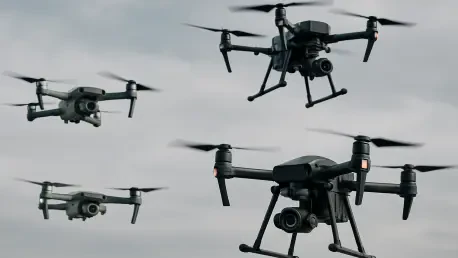
Imagine a scenario where drones hover high above a construction site, seamlessly passing tools to each other mid-air, executing intricate tasks in environments too dangerous for human workers, a vision that is no longer a distant dream but a tangible reality thanks to the pioneering FlyingToolbox

In a world where businesses are racing to streamline operations and harness the power of artificial intelligence, a German-based startup has emerged as a potential game-changer with a staggering $180 million funding round, valuing the company at $2.5 billion. This significant financial boost
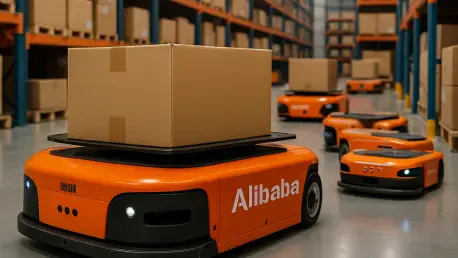
In a groundbreaking stride toward shaping the future of technology, Alibaba Group, a titan in the global tech landscape, has launched a dedicated Robotics and Embodied AI Group, marking its bold entry into the fast-evolving world of physical artificial intelligence applications. This strategic

Imagine a vast, uncharted underwater world where critical infrastructure like offshore energy platforms and subsea cables lies hidden beneath turbulent waves, requiring precise and safe inspection methods that traditional approaches struggle to deliver. The maritime industry is on the cusp of a

In the rapidly evolving landscape of machine learning, the ability to streamline complex workflows remains a critical challenge for data scientists and engineers aiming to maximize efficiency, and imagine a system where an intelligent agent not only handles data generation and model training but