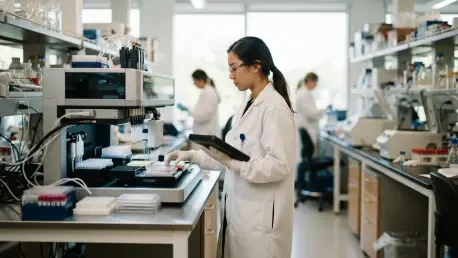

Personalized medicine is being driven forward by 4D bio-printing, which enables the creation of customized drug delivery systems tailored to specific patient needs. This technological surge signifies a profound shift in our relationship with biological systems, moving beyond simple observation to active, programmable manipulation. By utilizing the unique properties of deoxyribonucleic acid—not just as a code for life, but as a rigid and predictable structural material—researchers are crafting a future where machines and organisms operate on the same functional level. This convergence is at the heart of Society 5.0, a framework that prioritizes human well-being through the seamless integration of advanced robotics and synthetic biology. As progress continues throughout 2026, the ability to engineer matter at the nanoscale is transforming industries from manufacturing to healthcare, providing solutions to global challenges that were once considered insurmountable. The result is a dynamic industrial paradigm where biological molecules serve as the literal hardware for a new generation of autonomous systems, effectively blurring the lines between the biotic and the abiotic worlds in ways that were recently confined to the realm of speculative science.
Molecular Foundations and Biological Data Storage
Mastering Molecular Hybridization
The predictability of the DNA double helix provides the essential foundation for modern nanoscale engineering. Since the structural properties of the molecule were first identified, scientists have understood that its base-pairing rules—adenine with thymine and cytosine with guanine—allow for highly specific molecular recognition. In 2026, these principles of hybridization are no longer just biological observations; they are the assembly instructions for complex synthetic architectures. By designing specific sequences, researchers can ensure that DNA strands self-assemble into predetermined shapes with atomic precision. This structural DNA nanotechnology, often referred to as DNA origami, enables the creation of two- and three-dimensional frameworks that serve as the chassis for molecular machines. These frameworks are inherently dynamic, capable of undergoing conformational changes in response to environmental stimuli such as light, temperature, or chemical concentrations. This programmable nature allows for the development of responsive materials that can adapt their physical state to meet the requirements of a specific task, ranging from targeted cargo release to environmental sensing.
Strategic Applications: DNA Origami and Nanoscale Design
The evolution of DNA origami has led to the development of hybrid materials that possess mechanical properties previously unattainable with traditional polymers or metals. By integrating inorganic particles with programmed DNA strands, engineers have successfully created composite structures that exhibit a remarkable combination of high stiffness and low density. These materials are instrumental in the construction of synthetic molecular motors that translate chemical energy into mechanical work, mirroring the efficiency of biological systems like ATP synthase. Furthermore, the ability to functionalize these DNA structures with metallic nanoparticles or fluorophores has opened new avenues in diagnostics and precision medicine. These hybrid devices can be programmed to navigate the complex environment of a living cell, identifying specific biomarkers and delivering therapeutic payloads directly to the site of interest. The result is a highly versatile engineering platform that leverages billions of years of biological evolution to solve modern technical challenges, ensuring that the next generation of materials is as intelligent and responsive as the life forms they are designed to support.
Solving the Information Crisis: DNA as Hardware
Our global society is currently generating digital information at a rate that is rapidly exceeding the storage capacity of existing silicon-based hardware. From 2026 to 2030, annual data production is expected to reach levels that traditional magnetic and flash media simply cannot accommodate due to their physical size and energy requirements. DNA offers a revolutionary solution to this global storage crisis, boasting a storage density that is orders of magnitude higher than any current technology. Theoretically, a single gram of DNA can store approximately 700 terabytes of data, which would replace hundreds of traditional hard drives weighing over 100 kilograms. This biological medium is not only incredibly dense but also remarkably energy-efficient, requiring minimal power to maintain data integrity over vast periods. By converting binary digital code into the genetic alphabet of A, C, G, and T, information can be archived in a physical format that is both compact and durable, providing a sustainable path forward for the management of the world’s rapidly expanding digital footprint.
Biological Resilience: Encrypting the Future
Beyond its impressive density, DNA storage provides a level of durability and security that traditional electronic media cannot match. When kept in stable, cool conditions, DNA can remain intact for thousands of years, offering a solution for long-term archival needs that far exceeds the decade-long lifespan of magnetic disks. This biological resilience is paired with advanced encryption capabilities derived from the inherent complexity of genetic sequences. Using rules like those described by Chargaff, researchers can develop sophisticated cryptographic methods to protect sensitive information, creating biological data packets that are nearly impossible for unauthorized parties to decode. This synergy of durability and security makes DNA an ideal candidate for storing critical historical records, scientific datasets, and secure government communications. As the technology for synthesizing and sequencing DNA becomes more affordable and accessible in 2026, the transition from silicon to biological storage is moving from a theoretical possibility to a practical necessity, ensuring that human knowledge is preserved in a format that is as lasting as life itself.
Autonomous Systems and Bio-Hybrid Integration
Mechanics of Nanoscale Robotics
DNA serves as the internal engine for a new generation of molecular robotics that seeks to replicate the sophisticated mechanical functions of living cells. Researchers have successfully developed bipedal DNA walkers that mimic the stepping motion of natural proteins such as kinesin, allowing them to traverse molecular tracks with high precision. These nanoscale robots are programmed to follow specific trajectories, retrieving and sorting molecular payloads across a surface with minimal human intervention. This shift toward autonomy is a defining characteristic of modern bio-robotics, where the system itself can sense its environment and execute complex tasks based on predefined genetic logic. These molecular workers are being integrated into larger automated systems, where they function as the mechanical components of nanoscale assembly lines. The ability to coordinate the movement of thousands of these robots simultaneously represents a major milestone in biotechnology, providing the precision required for the manufacturing of complex drugs and the assembly of advanced materials at the atomic level.
Sensory Arrays: Replicating Biological Perception
Modern bio-robots are no longer limited to simple mechanical tasks; they are now equipped with multimodal sensory arrays that allow them to perceive their surroundings with biological accuracy. By integrating living cellular tissues and advanced polymers, engineers have created sensors that replicate the senses of touch, smell, and vision. For example, optical sensors inspired by the compound eyes of insects can detect ultraviolet light, providing bio-hybrid systems with unique navigational capabilities in environments where traditional GPS might fail. In the field of health monitoring, these advancements have led to the development of flexible epidermal sensors that can track physiological data in real time. These “electronic skins” monitor markers such as sweat composition and heart rate, offering a non-invasive way to manage chronic conditions. This seamless integration of sensory feedback and robotic movement allows bio-hybrid systems to interact safely with human users and navigate unpredictable terrains, bridging the gap between rigid traditional robotics and the fluidity of biological organisms.
Bio-Hybrid Actuators: Powering Soft Robotics
The field of soft robotics has been revolutionized by the integration of living muscle cells as actuators, providing a level of compliance and efficiency that synthetic motors struggle to achieve. These bio-hybrid robots utilize contracting muscle tissue to generate movement, allowing for more natural and energy-efficient motion in flexible robotic frames. This approach is particularly valuable in medical applications, where robots must operate in close proximity to delicate human tissues. Soft robotic systems made from elastomers and other flexible polymers can change their shape and stiffness on demand, mimicking the adaptability of biological organs. As of 2026, these systems are being used to develop advanced prosthetics and minimally invasive surgical tools that can navigate the human body without causing trauma. The synergy between living cells and synthetic materials ensures that the next generation of robots is not only more capable but also more compatible with the human environment, fulfilling the vision of a society where technology and biology exist in a state of mutualistic cooperation.
Medical Innovation and Laboratory Automation
The Rise of 4D Bio-Printing
Manufacturing in the medical sector has undergone a fundamental transformation with the transition from static 3D printing to dynamic 4D bio-printing. Unlike traditional methods that produce rigid objects, 4D bio-printing utilizes smart bio-inks that respond to external triggers such as temperature, pH levels, or humidity. This allows for the creation of synthetic tissues and drug delivery systems that can change their shape or function after being implanted into the body. For instance, a printed vascular graft can be designed to grow and adapt alongside a patient’s existing blood vessels, reducing the need for follow-up surgeries. In pharmaceutical manufacturing, this technology enables the production of customized tablets that release medication at specific intervals within the digestive tract, improving the efficacy of treatments for complex conditions like inflammatory bowel disease. This capability to print living, responsive structures is a cornerstone of personalized healthcare, providing patients with medical solutions that are tailored to their unique physiological requirements and long-term health goals.
High-Throughput Laboratory Workflows
The integration of bio-robotics is fundamentally changing the landscape of scientific research by replacing labor-intensive manual protocols with automated, high-throughput workflows. Platforms such as the RoboLector now allow researchers to screen thousands of chemical conditions and enzyme variants simultaneously, achieving in days what would have previously taken years of manual effort. This automation is particularly critical in the field of microbial engineering, where finding the optimal conditions for the production of biofuels or specialized enzymes requires massive amounts of data. When paired with machine learning algorithms, these robotic systems can analyze experimental results in real time and optimize their own parameters for subsequent trials. This iterative process accelerates the pace of discovery and ensures a level of reproducibility that human researchers cannot match. By removing the bottleneck of manual labor, bio-robotics has enabled a more efficient and rigorous approach to scientific inquiry, allowing researchers to focus on high-level data analysis and creative problem-solving.
Automated Genetic Engineering: Precision and Scale
Molecular cloning and DNA assembly have reached new levels of precision through the deployment of automated liquid-handling robots. Systems like DNA-BOT and Puppeteer can design and build hundreds of genetic variants at once, managing the entire pipeline from gene assembly to protein purification with minimal human oversight. This scalability is essential for the rapid development of new vaccines and the engineering of hardy crop varieties designed to withstand the changing climates seen from 2026 to 2030. In specialized research environments, microrobotic instruments are now used to perform delicate genetic injections into small organisms like zebrafish or fruit flies with submillimeter accuracy. These automated tools reduce the risk of human error and ensure that genetic modifications are consistent across large sample sizes. The result is a more robust and predictable genetic engineering process, which is vital for both academic research and the industrial production of biological products, ensuring that the benefits of synthetic biology can be realized on a global scale.
Strategic Governance and Future Directions
Ethical Oversight: Managing the Bio-Robotic Future
The rapid advancement of DNA nanotechnology and bio-robotics necessitated a comprehensive approach to ethical governance and biosecurity. As the ability to “print” living tissue and automate genetic cloning became more widespread, concerns regarding the potential for misuse or the accidental release of engineered organisms grew. To address these risks, international regulatory bodies established standardized protocols for the design and deployment of synthetic biological systems. These frameworks ensure that all bio-robotic research is conducted with transparency and that the resulting technologies remain under strict human control. Legal questions surrounding the patenting of genetic designs and the protection of biological data privacy have also been addressed to prevent the commodification of life and ensure equitable access to medical breakthroughs. By prioritizing ethical considerations alongside technical development, the scientific community has worked to ensure that these powerful tools are used to advance the public good rather than create new societal vulnerabilities.
Future Perspectives: A New Industrial Paradigm
The fusion of DNA-based technology and autonomous robotics succeeded in creating a new industrial paradigm that redefined the boundaries of human potential. By leveraging the programmable nature of life’s most basic molecules, researchers overcame the limitations of traditional materials and data storage, paving the way for a more sustainable and resilient global infrastructure. The implementation of 4D bio-printing and high-throughput automation transformed the healthcare sector, making personalized treatments a standard rather than a luxury. Furthermore, the development of bio-hybrid systems provided new tools for environmental monitoring and restoration, demonstrating that technology can be a force for ecological healing. These advancements were guided by the principles of Society 5.0, focusing on the seamless integration of technology into the fabric of daily life to enhance human capabilities and well-being. Ultimately, the collaborative efforts of scientists, engineers, and ethicists ensured that the biological revolution was managed responsibly, providing a foundation for continued innovation and a more harmonious relationship between the synthetic and natural worlds.