
Discounts as high as 77% on Blink security bundles illustrate a competitive effort to lower the financial barrier for consumers entering the smart home surveillance market. This specific pricing strategy is a hallmark of the October Prime Big Deal Days, an event that has evolved from a simple inventory clearance into a pivotal moment for the retail giant’s long-term hardware roadmap. By positioning these sales as a high-stakes precursor to the traditional holiday rush, the company effectively captures early-bird shoppers while simultaneously saturating households with its proprietary technology. The focus this year centers heavily on the integration of generative AI through the new Alexa+ platform, which aims to transform standard voice commands into sophisticated, context-aware dialogues. As these devices become more embedded in daily domestic routines, the threshold for entering the digital ecosystem continues to drop, making advanced smart home features accessible to a demographic that might have previously viewed such technology as a luxury expense. This tactical push ensures that the brand remains the dominant presence in living rooms and kitchens well before the peak shopping season begins in November.
The Evolution of Audio and Smart Display Hubs
Advancements in the Echo Ecosystem: Generative AI Integration
The transition from basic smart speakers to integrated home hubs is a central theme in the current hardware lineup, marking a significant departure from the standalone gadgets of previous years. The Echo Dot and the high-performance Max bundle deals emphasize a growing trend toward multi-room audio synchronization, where devices function as interconnected nodes in a domestic network. This architectural shift is largely driven by the deployment of Alexa+, a more advanced version of the voice assistant that utilizes generative AI to handle complex task management. Instead of simple one-off commands, these systems are now capable of maintaining conversational continuity, allowing users to ask follow-up questions without repeating trigger words. This capability reflects a broader industry move toward natural language processing that feels more intuitive and less mechanical. By bundling these devices at significant discounts, the goal is to encourage users to place a speaker in every room, thereby creating a seamless web of ambient computing that follows the user throughout their home environment.
Beyond the internal software upgrades, the physical diversification of the Echo lineup caters to specific household niches that were previously underserved. The reimagined Echo Spot serves as a prime example, blending aesthetic nostalgia with the futuristic capabilities of generative AI to reclaim its place on the nightstand. While it mimics the form factor of a traditional alarm clock, its integration with the broader smart home ecosystem allows it to serve as a compact gateway for controlling lights, thermostats, and security systems. Meanwhile, the Echo Studio continues to target the premium audio market, positioning itself as a legitimate competitor to high-end dedicated sound systems. By emphasizing spatial audio and high-fidelity performance, this device appeals to audiophiles who demand both acoustic quality and smart functionality. The strategy here is clear: by offering a device for every room and every use case, the ecosystem becomes indispensable, locking users into a comprehensive digital framework that is difficult to leave once established.
Large-Scale Smart Displays: Merging Entertainment and Utility
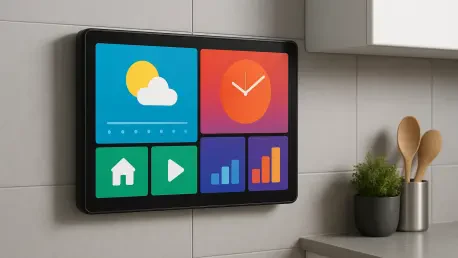
The scaling up of smart displays represents a move toward making the digital interface the literal centerpiece of the modern household. With devices like the Echo Show 21, the lines between a television, a tablet, and a central control panel are becoming increasingly blurred. This massive 21-inch screen is designed to be wall-mounted, serving as a communal hub where family members can manage calendars, track grocery lists, and control smart appliances from a single location. The inclusion of Fire TV capabilities further enhances its utility, allowing the device to transition from a productivity tool to an entertainment station in seconds. This convergence of functionality addresses a growing consumer demand for multipurpose hardware that can replace several smaller, specialized devices. As households become more cluttered with technology, the appeal of a single, high-definition screen that can handle everything from video calls to streaming 4K content becomes a significant selling point for high-end consumers.
While the larger displays capture headlines for their impressive specifications, the mid-tier market remains dominated by devices that prioritize a balance of performance and price. The Echo Show 8 continues to be a favorite among reviewers and consumers alike due to its optimal screen real estate and integrated camera features. It provides the highest perceived value for the average user who needs a functional kitchen companion or an office assistant without the footprint of a full-scale television. The ergonomic design and improved processor speeds in the current generation ensure that the user interface remains fluid, which is critical for maintaining a positive user experience. By offering these mid-sized hubs at competitive price points during the October event, the strategy ensures that the visual component of the smart home is not limited to those with large budgets. This tiered approach allows the brand to capture a wide spectrum of users, from those seeking a dedicated home theater control center to those simply wanting a better way to view recipes and weather updates.
Sophisticated Home Security and Ecosystem Integration
High-Definition Surveillance: The New Industry Standard
Dominance in the home security sector is being reinforced by a clear move toward 2K and 4K resolutions as the industry standard for all new installations. The Ring Battery Doorbell 4K Pro caters specifically to prosumers who prioritize granular detail and advanced detection features like 3D motion tracking. This technology allows the device to map the path of a visitor on a bird’s-eye view, providing a level of security detail that was previously reserved for professional-grade commercial systems. The shift toward higher resolution is not merely a marketing tactic; it provides practical benefits such as the ability to zoom in on license plates or facial features with clarity. As the cost of high-definition sensors continues to decline, these advanced capabilities are being integrated into standard consumer hardware, ensuring that the gap between entry-level and professional security is smaller than ever. This evolution reflects a broader trend where high-quality video surveillance is viewed as a standard household requirement rather than an optional luxury.
Accessibility in the security market is further enhanced by solving common user pain points related to hardware maintenance and visibility. Newer models, such as the Ring Battery Doorbell 2K Plus, emphasize the importance of quick-release batteries and fast-charging capabilities to minimize downtime. These practical improvements make wireless security systems more reliable for the average user who may not have the technical expertise or desire to hardwire their devices. Furthermore, the adoption of head-to-toe viewing angles ensures that packages left on the doorstep are always within the field of vision, addressing one of the most frequent complaints regarding older doorbell cameras. By focusing on these high-resolution, user-friendly solutions, the market is moving toward a standard where security is both powerful and effortless. The integration of these cameras into the wider smart home hub also allows for automated responses, such as lights turning on when motion is detected, creating a cohesive security web that operates autonomously to protect the home and its occupants.
Aggressive Entry-Level Pricing: Strategy for Universal Adoption
To capture the budget-conscious demographic and effectively undercut competitors, a tiered pricing strategy has been implemented that includes staggering discounts on Blink security kits. By offering wired doorbells and outdoor cameras at a fraction of their original cost, the barriers to entry for home surveillance have been virtually eliminated for many households. These devices are positioned as plug-and-play solutions that provide essential 2K resolution without the premium price tag associated with more complex systems. This approach creates a diverse internal hierarchy where different brands within the same corporate family serve different market segments. While one brand focuses on the high-end professional user, another focuses on the mass-market consumer who wants immediate, affordable protection. This prevents potential customers from looking toward third-party competitors for cheaper alternatives, as the internal options cover almost every possible price point and feature set required by the modern homeowner.
The strategic deployment of these affordable security bundles also serves as a gateway for long-term service subscriptions, which have become a vital component of the business model. Once a consumer installs a discounted camera kit, they are more likely to subscribe to cloud storage plans to maintain their video history and access advanced AI detection features. This transforms a one-time hardware purchase into a recurring revenue stream, justifying the aggressive initial discounts seen during major sales events. The simplicity of the installation process ensures that even non-technical users can have a functional system running in minutes, further encouraging widespread adoption. As more households adopt these entry-level systems, the collective data and user feedback help to refine the AI algorithms that power the entire ecosystem. This creates a self-reinforcing cycle where lower prices lead to more users, which in turn leads to better technology and even more competitive pricing in the future, solidifying a dominant market position across all economic levels of the consumer base.
Strategic Market Implications and Consumer Guidance
Technical Trends: AI Integration and Power Versatility
Several overarching technical trends are emerging from the current product cycle, most notably the universal push for AI integration and significant improvements in power versatility. The transition to Alexa+ represents a fundamental change in how users interact with their environment, as generative AI allows for more context-aware and personalized experiences. This shift indicates a consensus among tech developers that the next generation of the smart home will be defined by software that understands intent rather than just responding to specific keywords. Moreover, the move toward fast-charging and long-lasting battery packs in the security lineup addresses historical deterrents to wireless hardware, making these systems more reliable for users who cannot easily access power outlets. These technical advancements are not isolated improvements but are part of a coordinated effort to make technology more resilient and less intrusive. By reducing the friction associated with charging and communicating with devices, the smart home becomes a more natural extension of the physical living space.
The rise of hybrid devices further demonstrates the industry’s direction toward streamlining and efficiency in the domestic environment. Modern hardware is increasingly designed to replace multiple smaller gadgets, such as the smart display that functions as both a television and a home controller, or the security camera that doubles as an outdoor floodlight. This trend toward multifunctionality is driven by a desire to reduce clutter and simplify the user interface across the entire home ecosystem. Developers are prioritizing devices that can communicate across different protocols, ensuring that a single command can trigger a sequence of events involving multiple hardware components. For example, a “goodnight” command might simultaneously lock the doors, dim the lights, and set the security alarm, all while the AI assistant provides a summary of the next day’s schedule. This level of integration represents the current peak of smart home technology, where the focus has moved from individual gadget performance to the collective intelligence of the entire household network, creating a truly automated living experience.
Practical Solutions: Future Directions in Smart Integration
Navigating the complex landscape of hardware deals required a discerning eye to distinguish between genuine technological value and superficial price cuts. Professional reviewers emphasized the importance of monitoring long-term price fluctuations to ensure that savings were legitimate, particularly for high-demand items like the Ring Spotlight Cam Plus. Consumers who successfully identified these value propositions prioritized devices that offered the best performance-to-price ratio, focusing on resolution and battery longevity over purely aesthetic upgrades. The strategic timing of these events, often featuring early-access deals, rewarded those who acted quickly before popular inventory was depleted. This proactive approach allowed many to upgrade their home infrastructure ahead of the peak season, ensuring their systems were fully operational before the onset of winter. The methodology used by savvy shoppers involved comparing technical specifications across different brands to ensure that the chosen hardware would remain compatible with future software updates and AI enhancements.
The industry successfully transitioned from a focus on what individual devices could do to how seamlessly they could be integrated into the daily lives of a universal user base. This shift marked the end of the early adopter phase, as smart home technology became a standard expectation in modern residential design. Consumers found that by leveraging aggressive bundling and high-resolution hardware, they could create comprehensive security and entertainment environments that were once the exclusive domain of professional installations. The focus on resolution, AI capability, and battery efficiency provided a solid foundation for the continued expansion of these digital ecosystems into new areas of the home. Moving forward, the emphasis remained on maintaining the longevity of these systems through regular software updates and the integration of even more sophisticated generative AI models. This evolution confirmed that the high-tech living environment was no longer an exception but had become the standard for the contemporary household, driven by a commitment to making advanced technology both accessible and indispensable for everyone.