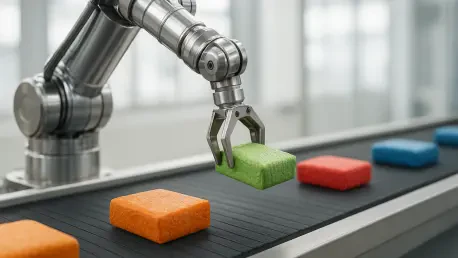

Current market strategies are pivoting away from pure hardware refinement to prioritize the development of robotic AI systems that can interpret human intent. This shift marks the transition from pre-programmed automation to genuine embodied intelligence, where machines possess the cognitive capacity to navigate unpredictable environments. As the landscape evolves in 2026, the robotics industry is no longer satisfied with mechanical precision alone; the focus has moved toward the complex “brain” that governs these movements. The anticipation surrounding OpenAI’s GPT-6 has acted as a primary catalyst for this acceleration. While previous roadmaps suggested that fully autonomous humanoid robots were at least a decade away, recent breakthroughs in multimodal processing have compressed that timeline to just one or two years. This evolution represents a fundamental change in how developers approach robotic design, moving from a rigid engineering perspective to a flexible model that prioritizes the software’s ability to reason through complex physical tasks.
The Cognitive Breakthrough: Redefining Machine Perception
The leap from GPT-5 to GPT-6 represents a transformative move toward a more holistic understanding of the physical world. Earlier iterations of large language models were largely confined to processing text or static imagery, often struggling to translate digital logic into the nuanced requirements of spatial awareness and physical manipulation. Today, the integration of vision-language-action models allows robots to perceive their surroundings with a level of granularity that was once impossible. This capability enables a machine to not only identify objects but also understand their physical properties, such as weight, texture, and fragility. By bridging the gap between abstract reasoning and concrete action, GPT-6 empowers robots to interpret verbal instructions like “clean up the spilled liquid carefully” and translate them into a series of precise, real-time motor commands. This removes the need for exhaustive manual programming, as the model can infer the necessary steps through its internal world model.
This advancement is frequently characterized as the pursuit of a “ChatGPT moment” for the robotics sector, a threshold where the technology becomes reliable enough for mass commercial deployment. To achieve this milestone, industry leaders have established a specific benchmark: a robot must be capable of completing eighty percent of tasks in eighty percent of unfamiliar environments using only natural language input. Achieving such a high standard of versatility requires a departure from the traditional pipelines that often failed when faced with minor environmental discrepancies. With GPT-6, the emphasis is on zero-shot generalization, where a robot can enter a new warehouse or home and immediately begin functioning without a training period. As models become more efficient at predicting the physical consequences of their actions, the distinction between a digital assistant and a physical helper continues to blur. This shift is not merely about adding features but about creating a foundation for robots that learn.
Narrowing the Divide: Addressing the Hardware-Software Divergence
Despite the extraordinary physical capabilities showcased by current humanoid hardware, a significant divergence remains between mechanical agility and the intelligence required to utilize it. In various global innovation hubs, engineers have successfully developed machines that can perform backflips, navigate rugged terrain, and sprint at record-breaking speeds. However, these athletic feats often occur in highly controlled settings or under direct human supervision. The hardware has, in many ways, outpaced the software, leading to a situation where we have “body-ready” machines waiting for a sufficiently advanced “brain” to take control. This bottleneck is most evident in the high failure rates observed when robots are tasked with performing multi-step activities in dynamic settings where obstacles are frequently moving. The challenge is no longer about building a better motor or a more flexible joint, but about ensuring that the software can manage the immense complexity of interactions.
Central to solving this discrepancy is the resolution of the generalization problem, which has historically prevented robots from operating outside of laboratory conditions. A machine might be perfectly capable of picking up a specific blue cylinder in a lab, yet completely fail if the lighting changes or if the cylinder is replaced by a slightly different green sphere. Embodied intelligence seeks to move past these rigid scripts by teaching robots to reason through tasks using logic rather than just following fixed coordinates. By leveraging the deep contextual knowledge inherent in GPT-6, robots can now understand that a “cup” is still a “cup” regardless of its orientation or color. This allows for a more fluid interaction with the environment, where the robot can adjust its grip or approach based on sensory feedback in real-time. This move toward reasoning-based operation is essential for the transition into commercial sectors like logistics and healthcare, where environments change.
Strategic Evolution: The Pivot to AI-First Development
In response to the clear limitations of traditional engineering, major players in the robotics industry are fundamentally restructuring their corporate strategies to prioritize AI-first development. This transition is exemplified by the way research and development budgets are now being allocated, with a significant portion of capital being redirected toward large-scale model training and data acquisition. Companies that once defined themselves through their mechanical patents are now rebranding as AI firms that happen to produce physical hardware. This shift is visible in recent investment rounds and public offerings, where the narrative has moved from the durability of the robot’s limbs to the sophistication of its neural architecture. By focusing on the development of proprietary robotic AI systems, these organizations aim to create a unified ecosystem where sensing, thinking, and acting occur in a continuous, high-speed loop. This holistic approach ensures hardware improves data throughput for the AI model.
The ultimate goal of this strategic pivot is to eliminate the need for remote-controlled or pre-set routines, ushering in an era of true mechanical autonomy. Developers are increasingly moving away from “teaching” robots specific movements and are instead creating environments where the AI can explore and learn the optimal way to complete a mission. This reduction in direct human control is a prerequisite for scaling robotics across diverse industries, as the cost of having a human operator for every machine remains prohibitively high. By empowering robots to plan their own paths and make independent decisions about how to navigate obstacles, companies are unlocking new levels of productivity. This evolution represents a departure from the “robot as a tool” mindset toward “robot as a partner,” where the machine can understand the broader intent of a human supervisor and execute tasks with minimal oversight. As these systems become more integrated, the focus will shift toward decoding nuances.
Operational Realities: Validating Embodied Intelligence in Industry
While the theoretical potential of GPT-6 in robotics is immense, the transition to real-world application is currently being navigated through rigorous industrial trials. Factories and distribution centers have become the primary testing grounds for these advanced humanoid systems, as they offer a bridge between the sterile lab and the unpredictable open market. In these environments, robots are tasked with performing repetitive but variable duties, such as sorting irregular packages or assisting in light assembly. These trials provide the essential data needed to measure the economic viability of embodied intelligence against traditional human labor. For these machines to be truly successful, they must demonstrate a level of reliability that minimizes downtime and prevents costly errors. The metrics for success are no longer just about speed; they are about consistency, safety, and the ability to operate for extended shifts without intervention. These pilot programs are revealing the nuances of human collaboration.
The stakes for physical artificial intelligence were significantly higher than those for digital platforms because of the immediate physical consequences of a failure. While a text-based error might result in a minor misunderstanding, a miscalculation by a heavy autonomous machine could lead to property damage or pose risks to human safety. Consequently, the industry focused on developing redundant safety protocols and “common sense” reasoning modules to prevent such occurrences. Engineers realized that the next few years will serve as a critical validation period for these technologies. It was determined that the path forward required not just better code, but a deep integration of ethical guidelines and fail-safe mechanisms within the AI’s core logic. As organizations moved to deploy these systems, the emphasis remained on building public trust through transparent safety records and measurable efficiency gains. Ultimately, the successful convergence of GPT-6 and hardware provided a blueprint for future machines.