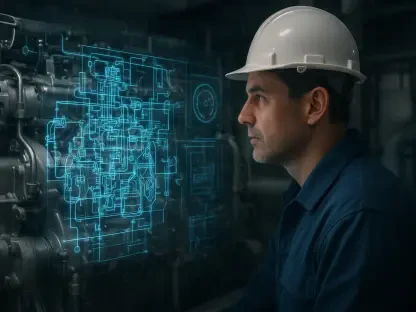

Early testing at the autonomous drone startup DroneForge revealed that AI-driven analysis could prevent costly hardware misdiagnoses by correctly identifying software errors that humans initially overlooked. This realization comes at a critical juncture for the robotics industry, where the rapid advancement of physical hardware has significantly outpaced the ability of human engineers to maintain and debug complex systems. As autonomous machines move from controlled lab environments into the unpredictable chaos of the real world, the sheer volume of data generated during every mission creates a massive bottleneck. Alloy Robotics, a startup founded by veterans of Tesla and OpenAI, has identified this specific friction point as the primary obstacle to achieving massive scale. Without a fundamental shift in how failure logs are processed, the industry risks stagnation under the weight of its own operational data. By leveraging sophisticated AI agents to handle the heavy lifting of forensic analysis, companies are finally finding a path to deploy thousands of units without seeing their maintenance costs balloon.
Scaling Complexity and the Burden of Big Data
The transition from managing a single, hand-crafted prototype to overseeing a massive fleet of autonomous machines introduces a data management challenge of unprecedented proportions. When a robot encounters an anomaly in a dynamic environment like a construction site or a busy hospital corridor, it generates a cascade of telemetry logs, high-frequency sensor readings, and multi-stream video feeds. Traditionally, diagnosing a failure meant an engineer had to manually reconstruct the incident by sifting through these mountains of unorganized data, a process that often takes days or weeks. This manual approach is inherently unscalable; as the number of active units grows, the cumulative time spent on forensic work becomes a prohibitive tax on commercial viability. The primary issue is not just the volume of data but its fragmentation across different subsystems, making it nearly impossible for a human to see the cohesive picture of a failure without the aid of automated tools designed specifically for high-density information synthesis.
Moreover, the traditional debugging process is plagued by the inherent limits of human cognitive processing when faced with thousands of simultaneous data points. Robots in the field produce more information than a team of experts can realistically analyze in real-time, leading to a situation where many edge cases go unaddressed until they cause significant operational downtime. This information overload creates a persistent barrier to both safety and growth, as engineering teams are forced to prioritize catastrophic failures while smaller, systemic issues continue to degrade performance. The time lost to these manual investigations directly delays the rollout of new features and slows down the overall development cycle. To overcome this, the industry is shifting toward automated diagnostic frameworks that can pre-process logs and identify patterns that indicate a coming failure before it actually occurs. This proactive stance is essential for maintaining the reliability levels required for public acceptance of robotics in daily human life.
Searchable Intelligence and Protocol Breakthroughs
To address the inefficiencies of manual debugging, engineers are now deploying specialized AI agents that function as a searchable intelligence layer integrated directly into operational workflows. These agents do far more than simply monitor for error codes; they actively aggregate disparate data streams and correlate technical telemetry with human-centric communication platforms. By linking a specific robotic failure to discussions in Slack or tasks tracked in Jira, the system creates a unified, chronological narrative of the event. This contextual mapping allows engineering teams to see exactly what software updates were deployed or what maintenance was performed just prior to a malfunction. Instead of treating every failure as an isolated mystery, this approach transforms raw, disconnected log files into actionable intelligence that highlights the historical trajectory of the system’s behavior. The result is a significant reduction in the cognitive load on developers, who can now rely on the AI to provide a summarized report of the most likely root causes.
A pivotal technical breakthrough in this domain is the implementation of a native Model Context Protocol (MCP) server, which acts as a bridge between massive robotics datasets and sophisticated AI coding tools like Claude Code. This protocol allows coding agents to access a robot’s complete mission history directly, enabling them to perform autonomous investigations into complex software bugs. By giving these agents the ability to read the hardware’s state over time, developers no longer need to manually package and upload fragmented datasets for every troubleshooting session. Instead, the AI agent can query the necessary information on demand, simulating the deductive reasoning of a senior software architect. This integration facilitates deep-dive investigations that were previously impossible to perform at scale, allowing for the rapid identification of subtle race conditions or memory leaks that only appear after hours of operation. This shift signifies a move toward self-healing infrastructures where the software responsible for operating the robot also assists in its own refinement.
Practical Efficiency and Sustainable Reliability
The real-world impact of these AI-driven diagnostic tools is already manifesting in dramatic shifts in engineering productivity across the robotics sector. Early adopters have reported that tasks which previously required an entire workday for a senior engineer can now be finalized in less than ten minutes. This acceleration allows development teams to clear through weeks of accumulated field test data in a single afternoon, effectively removing the primary constraint on the iterative design process. By automating the triage of common issues, organizations can reallocate their most expensive human resources toward creative problem-solving and long-term innovation rather than repetitive data analysis. This efficiency is not just about speed; it is about the quality of the insights gained from every deployment. When the barrier to understanding a failure is lowered, every minor glitch becomes a learning opportunity that strengthens the system’s overall robustness. Consequently, the development cycle becomes a continuous loop of rapid testing, instant diagnosis, and immediate improvement.
The transition to Physical AI successfully resolved the debugging bottleneck by enabling machines to audit their own performance data with minimal human oversight. Companies that integrated native MCP servers into their workflows moved faster, clearing testing backlogs that previously stalled production for months. This approach demonstrated that future growth relied on the ability of AI agents to contextualize technical failures within the broader narrative of human operations. Organizations prioritized building a unified intelligence layer, ensuring that every deployment served as a high-fidelity data point for continuous improvement. By the time these systems reached full commercial scale, the industry had moved away from manual log analysis entirely, favoring an ecosystem where software and hardware evolved in tandem through automated feedback loops. This shift not only improved the safety profile of autonomous fleets but also established a sustainable model for scaling robotics across unpredictable real-world environments like healthcare and heavy industry.