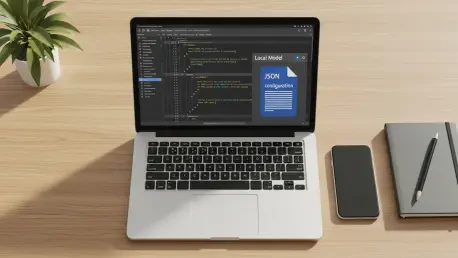

Professional development in secure environments has undergone a significant transformation recently as the necessity for privacy and data sovereignty becomes the primary driver for software engineering teams. This shift toward local execution is not merely a preference for privacy enthusiasts but a mandatory requirement for industries dealing with sensitive intellectual property or classified data where external network connections are strictly prohibited. Visual Studio Code has responded to these enterprise demands by introducing robust support for “Bring Your Own Model” architectures, allowing developers to leverage the power of generative intelligence without ever letting a single line of code leave their physical machine. By integrating local endpoints, the editor transforms from a simple text processor into a sophisticated AI workstation capable of operating in entirely “air-gapped” environments. This capability marks a departure from the early days of cloud-dependent assistants, offering a future-proof solution for those who require absolute control over their computational resources and data flow.
1. Select a Hosting Platform and Enable Core AI Settings
Choosing the right underlying engine is the foundational step in establishing a functional offline AI environment because Visual Studio Code functions primarily as a frontend interface rather than a self-contained model host. Applications such as LM Studio or Ollama serve as the critical middleware, providing the necessary server infrastructure to run large language models locally while exposing an API that the editor can communicate with effectively. When evaluating potential models, hardware constraints—specifically video memory—play a decisive role in determining the overall performance and responsiveness of the system. For a standard development machine equipped with 8GB or 12GB of VRAM, quantized versions of modern models provide a balanced experience between speed and intelligence. Selecting a model specifically optimized for programming tasks, such as Qwen or Codestral, ensures that the resulting logic and syntax suggestions remain relevant to modern software engineering standards.
Before a developer can integrate a third-party or local model, the environment must be correctly configured to permit the execution of any advanced conversational or utility functions within the editor. Many institutional or strictly managed installations of Visual Studio Code might have these features disabled by default to prevent accidental data leaks to public cloud providers. Accessing the central configuration menu allows the user to inspect the current state of the chat and intelligence modules to ensure they are fully operational for local integration. Specifically, the user must navigate through the comprehensive settings tree to locate the miscellaneous chat options where the core logic for the assistant resides. Ensuring that the checkbox for disabling AI features remains unchecked is vital because this setting acts as a master kill switch for the entire cognitive subsystem of the IDE. This manual override provides developers with the autonomy to reclaim these features while maintaining the security of an offline workflow.
2. Navigate the Management Menu and Add Custom Endpoints
Following the activation of these internal switches, interaction with the underlying model registry is facilitated through a dedicated management interface that provides a transparent view of all active providers. To reach this specialized view, one must utilize the Command Palette, which serves as the central nervous system for all advanced operations within the Visual Studio Code environment. By executing the specific command for managing language models, the user is presented with a curated list that typically includes standard cloud-based offerings alongside an option to expand the ecosystem with custom additions. This menu is crucial because it acts as the gateway for defining the parameters of the local connection, ensuring that the editor knows exactly where to send requests and how to interpret the incoming streams of data. It also allows for the auditing of existing connections, ensuring that no unauthorized or redundant models are consuming system resources or conflicting with the desired local setup during heavy development cycles.
The process of adding a new source involves a specific workflow that directs the editor to look beyond its default network boundaries to find the locally hosted intelligence service. Within the management interface, the addition of a new model is triggered by a prominent action button that initiates a wizard-like sequence for defining the connection type. Selecting the “Custom Endpoint” option is the critical choice here, as it signals to the software that the model is being served via a standard API interface rather than a proprietary cloud gateway. This selection is significant because it activates the internal logic necessary for handling local network traffic, which often requires different security considerations than standard internet-based requests. This step serves as the bridge between the high-level user interface and the low-level network configuration that will eventually govern the flow of data. It represents the transition from a standard software configuration into a customized, high-performance local AI workstation.
3. Define Metadata and Technical Configuration Details
With the menu interface active, initializing the connection requires the provision of several key pieces of metadata that help the editor organize and identify the local service among multiple models. The system first requests a group name, which acts as a human-readable label for categorizing the model within the user interface, making it easier to switch between different setups during a project. Following this, the requirement for an API key arises; however, in most strictly local hosting scenarios where the server resides on the same machine, this field can often be left blank or filled with a placeholder. This highlights the simplicity of local deployments where the overhead of complex authentication is removed in favor of direct, high-speed access over the local loopback address. Choosing the “Responses” API type is the final step in this preliminary setup phase, as it ensures the model is treated as a general-purpose completion and chat engine capable of handling a wide variety of tasks.
The most technical aspect of the setup occurs within a specialized JSON configuration file that opens automatically to receive the precise parameters of the local server. This file acts as the low-level blueprint for the connection, requiring a unique identifier and the exact model name that the hosting application, such as LM Studio or Ollama, expects to receive. Accuracy is paramount here, as a single typo in the model name or ID will prevent the editor from successfully initializing a session with the local backend. Furthermore, the URL field must be populated with the correct local address, which is typically the loopback IP followed by the specific port assigned by the hosting software. Including the “/v1” suffix at the end of the URL is a mandatory requirement that allows the editor to utilize the standard discovery protocols to identify the capabilities and features of the connected model. This direct manipulation of the configuration file provides advanced users with the granular control needed to fine-tune the connection for maximum performance.
4. Validate the Integration and Address Native Limitations
Once these technical parameters are committed to the configuration file, the final step involves refreshing the model list and initiating a conversation to verify that the entire pipeline is functioning. Users can navigate back to the model management menu or directly to the chat sidebar to select the newly added local model from the available options. A successful setup is characterized by the model’s name appearing in the selection list, indicating that the editor has successfully contacted the local server and verified its availability. Initiating a simple query, such as asking for a code explanation or a refactoring suggestion, provides immediate feedback on the responsiveness and accuracy of the local setup. This validation phase is critical to ensure that the latency is acceptable and that the model is behaving as expected within the context of the current development workspace. It marks the culmination of the configuration process, transitioning the environment into a state enhanced by private, locally controlled intelligence.
While the ability to run local models for chat and general utility is a massive leap forward, it is important to recognize the specific boundaries of the current “air-gapped” implementation. At this stage, the native integration primarily focuses on the chat interface and the execution of specific tools, rather than the deep, predictive inline code completions that many have come to expect from cloud-based assistants. For developers who prioritize features like ghost-text suggestions or automatic next-edit predictions, the current native local mode may serve as a powerful secondary assistant. To overcome these native limitations, developers often turn to third-party extensions like Continue, which specialize in deep IDE integration. These tools provide the necessary bridge to enable features that the core editor does not yet support natively in an offline capacity, ensuring that the developer does not have to sacrifice functionality for privacy. This hybrid approach remains the most effective strategy for building a custom toolchain that balances advanced features with security.
5. Strategic Directions for Local AI Integration
Organizations that successfully transitioned to local AI workflows realized immediate benefits in both data security and long-term cost management. By decoupling the development environment from external cloud dependencies, these teams ensured that their proprietary logic remained entirely within their controlled infrastructure, effectively eliminating the risks of accidental data exposure. Moving forward, the emphasis should shift toward optimizing local hardware specifically for these workloads, such as investing in high-VRAM workstations or dedicated local inference servers that can serve multiple developers simultaneously. It is also recommended to establish a regular cadence for updating local model weights to stay current with the rapid advancements in model efficiency and reasoning capabilities. This proactive approach to local AI management not only bolstered security but also provided a more resilient foundation for future technological shifts in the software industry.
Implementing these local strategies proved to be a decisive step toward achieving true computational independence in a private landscape. The transition toward offline intelligence was not just a technical upgrade but a strategic pivot that allowed engineering teams to maintain high velocity without compromising on their internal security protocols. By mastering the configuration of custom endpoints and leveraging specialized extensions, developers effectively bypassed the limitations of early cloud-based systems. As local hardware continues to evolve, the capacity for running even larger and more complex models will only increase, further solidifying the role of the “air-gapped” developer environment. Those who adopted these practices early found themselves better prepared for an era where data sovereignty and local inference became the standard for professional software development. This move toward self-hosted solutions ensured that the tools of innovation remained firmly in the hands of the creators.