
The loss of apex predators like the sunflower sea star has triggered a trophic cascade that allows resilient urchins to remain in a state of semi-starvation while preventing new kelp growth. These underwater giants, frequently described as the “rainforests of the sea,” represent some of the most productive ecosystems on Earth, providing essential carbon sequestration and habitat for thousands of marine species. However, the current reality along the California coastline reveals a devastating transition from lush kelp environments to desolate “urchin barrens.” This ecological shift is not merely a regional concern but a global emergency that threatens the stability of marine food webs and the coastal economies that depend on them. In Northern California alone, the loss has reached a staggering 90 percent over recent decades, demanding an immediate response. By understanding the human-induced imbalances that led to this crisis, researchers are now deploying innovative strategies to bring these vital habitats back.
Methodologies for Ecological Recovery
Manual Restoration: The Human Element
The most immediate and proven method for reversing kelp loss is manual restoration, which involves divers physically removing or culling urchins to restore a balanced density. In Santa Monica, the Bay Foundation has provided a successful proof-of-concept for this labor-intensive strategy. Since the start of major operations, specialized dive teams have logged over 15,000 hours underwater to neutralize approximately six million urchins. By physically reducing the urchin density from over 100 per square meter to a sustainable level of roughly two, they have successfully restored 80 acres of lush forest. This hands-on approach demonstrates that once the system is pushed back into balance, the natural resilience of the kelp takes over. The findings suggest that the transition from a barren wasteland to a thriving ecosystem is possible through persistent physical intervention, proving that targeted human efforts can effectively disrupt the cycle of overgrazing that prevents growth.
Because giant kelp is capable of growing up to 30 meters in a single year, the biological rebound following manual intervention is often immediate and visually striking. Once the grazing pressure is removed, kelp spores that were previously suppressed can settle and grow with extraordinary speed, creating a canopy that supports diverse marine life almost instantly. This rapid growth allows for visible success in a timeframe much shorter than that required for coral reef restoration. Furthermore, the restored forests tend to become relatively self-sustaining with minimal maintenance once a healthy balance is achieved. The success in Santa Monica serves as a vital blueprint for other regions, emphasizing that while the work is difficult, the results are both tangible and lasting. These efforts have moved beyond mere preservation and into the realm of active ecological engineering, where the goal is to reboot the underlying processes that define a healthy marine environment and ensure its continued health.
Scalable Technology: Industrial Robotics
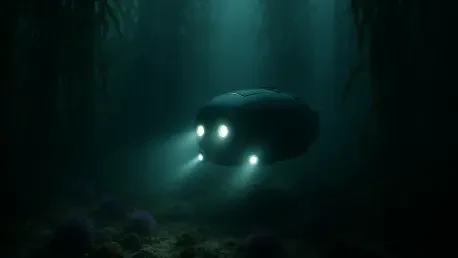
While manual diving is effective for high-value protected areas, it is inherently limited by the physical constraints of human divers and the high costs of boat operations. To address the thousands of miles of coastline currently in distress, conservationists are turning toward industrial-scale technology and autonomous systems. Marauder Robotics is currently at the forefront of this shift, developing autonomous underwater vehicles designed to identify and neutralize purple urchins at a massive scale. Their prototype systems utilize advanced computer vision to distinguish between different marine species, allowing for precise targeting of urchins without harming other benthic organisms. This technological frontier represents a significant evolution in marine conservation, moving away from manual labor and toward a model of high-efficiency, robotic management. By deploying these systems, organizations can cover vast underwater territories that were previously unreachable by traditional diving teams to manage.
The integration of robotics into marine restoration projects significantly reduces the financial and physical risks associated with long-term underwater operations. These autonomous platforms can operate for extended periods and in conditions that would typically ground human-led expeditions, ensuring a constant pressure on urchin populations. As these technologies become more sophisticated throughout 2026 and 2027, the cost per acre of restored kelp is expected to drop, making large-scale intervention more feasible for government agencies and private donors alike. This move toward “industrial-scale” conservation is essential for addressing the 90 percent loss seen in regions like Northern California, where the sheer scale of the barrens dwarfs current manual efforts. By leveraging the power of automation, the conservation community is creating a versatile toolkit that can be adapted to various underwater terrains, providing a scalable solution to a problem that was viewed as too large for human intervention.
Economic and Biological Sustainability
The Blue Economy: Market-Driven Results
A sustainable future for kelp restoration may lie in the development of the “Blue Economy,” where environmental cleanup is transformed into a profitable commercial enterprise. Typically, purple urchins found in barrens are “emaciated” and have no value for the traditional seafood market because they have had no kelp to eat. However, innovative companies like Primitives are now treating these urchins as a raw material for luxury goods rather than ecological waste. By processing urchin remains into high-end, hard-surface materials like kitchen countertops and architectural tiles, they have created a financial incentive for their large-scale removal. This approach transforms a biological pest into a valuable commodity, potentially funding restoration efforts through private enterprise rather than relying solely on government grants or volunteer labor. By creating a market for these urchins, the conservation community can ensure a steady stream of resources for removal projects while reducing the pressure on marine ecosystems.
This commercial model shifts the burden of ecological restoration from the public sector to the private market, ensuring that removal efforts can be sustained as long as there is a demand for the resulting products. When environmental health becomes a foundational component of a business model, the potential for long-term impact increases exponentially. The development of urchin-based luxury materials is just one example of how creative thinking can solve complex environmental problems by aligning economic interests with ecological needs. As these markets continue to mature throughout 2026, they provide a blueprint for other marine conservation efforts globally, showing that profit and preservation do not have to be mutually exclusive. This market-driven strategy effectively turns the “problem” of overpopulated urchins into the “solution” for funding their own removal. Ultimately, the growth of the Blue Economy represents a new era of stewardship where the value of the ocean is recognized for its system health.
Biological Reintroduction: Predator Recovery
While mechanical and manual removal are critical for immediate relief, long-term ecological stability requires the return of natural checks and balances through predator reintroduction. The Sunflower Star Laboratory in Monterey Bay is currently leading the effort to breed sunflower sea stars in captivity, with the goal of eventually outplanting these “urchin eaters” back into their native habitats. These predators were decimated by sea star wasting disease around 2014, which removed the primary natural control on urchin populations and allowed the barrens to form. By successfully rearing these stars and studying their behaviors, researchers are preparing for a future where biological control can replace human intervention. The reintroduction of these keystone species is essential for restoring the ancient predator-prey relationships that kept the kelp forests healthy for millennia. If these predators can be successfully reintroduced, they will provide the permanent regulation needed to prevent the recurrence of barrens.
The process of biological reintroduction involves complex considerations of genetic diversity and habitat suitability to ensure that the newly released sea stars can thrive in the current environment. Organizations are working to ensure that the captive-bred populations possess the resilience needed to withstand the various stressors they will face in the wild, including fluctuating water temperatures and potential disease outbreaks. Reestablishing these trophic links is a crucial step in moving away from constant human maintenance and toward a truly resilient and wild marine environment. Furthermore, the presence of predators like the sunflower star changes the behavior of urchins, making them hide in crevices rather than grazing openly on the seafloor, which allows young kelp plants to take root and grow. This behavioral shift is often just as important as the actual consumption of urchins in maintaining the health of the forest. By focusing on the restoration of the entire food web, scientists ensure that kelp forests manage themselves.
Ecological Resilience: The Path Forward
As global sea temperatures continue to rise, restoration efforts must also account for the increasing frequency of marine heatwaves that can stress or even kill traditional kelp varieties. Researchers have focused on identifying and cultivating heat-tolerant strains of kelp that are better suited to the projected climates of the future. This proactive approach acknowledges that the oceans of tomorrow will be different from the oceans of the past, requiring a shift in how reforestation is handled. By selecting for genetic traits that allow kelp to thrive in warmer waters, conservationists are essentially “future-proofing” the forests they are working so hard to restore. This strategy ensures that the time and money invested in restoration are not wiped out by the next spike in ocean temperature. Through selective outplanting of these resilient seeds, the conservation community is creating a new generation of kelp forests that can survive the changing environmental conditions of 2026 and beyond.
The most effective path forward was found in the integration of traditional diving, advanced robotics, commercial innovation, and biological research. Each of these pillars addressed a different aspect of the crisis: manual diving provided precision, robots offered scale, private markets provided funding, and biological reintroduction ensured long-term stability. This holistic strategy recognized that every region had unique needs, where some areas required only urchin removal while others needed active reforestation with heat-tolerant seeds. By sharing data and techniques globally, the conservation community developed a versatile toolkit to fight kelp loss across different latitudes. This transition from a reactive stance to a proactive strategy proved that the restoration of the world’s kelp forests was achievable. The success of these combined efforts served as a testament to the idea that humans possessed the capacity to fix the environmental imbalances they had previously created for the planet.