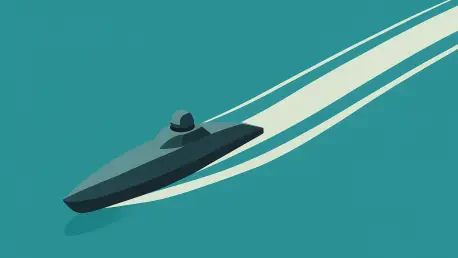

Subsea monitoring has become a priority as global trade remains dependent on the security of major shipping routes and sovereign ports facing hybrid threats. The maritime defense sector is currently undergoing a foundational shift as traditional crewed operations transition toward an integrated model featuring autonomous systems. At the heart of this evolution are the REPMUS and BOLD MACHINA 2026 exercises held in Tróia, Portugal. These NATO-led initiatives serve as the primary testing ground for maritime autonomy, uniting allied military forces and industry leaders to refine the next generation of naval technology. Maritime Robotics played a central role in these exercises, demonstrating how Uncrewed Surface Vessels (USVs) are moving beyond experimental prototypes to become essential assets for coastal defense. This shift highlights a trend where autonomy is a core component of modern naval strategy designed to secure the world’s oceans in an era of increasing complexity. By deploying these systems, naval forces gain superior situational awareness in environments that are often too hazardous or logistically taxing for traditional vessels to sustain.
Platform Performance: Mariner and Sentry Capabilities
The deployment of the Mariner and Mariner X vessels during the Portuguese exercises served as a benchmark for modern situational awareness and comprehensive subsea monitoring. A key highlight was the Mariner X’s ability to act as a flexible sensor platform by deploying a thin-line towed acoustic array, a tool used for passive underwater sensing. This mission proved that uncrewed surface vessels can track underwater threats and collect vital data in contested waters, allowing human operators to manage tactical shifts from a safe distance while maintaining a persistent presence. The Mariner series demonstrated that these platforms are capable of sustained operation in complex environments, providing a level of endurance that traditional crewed ships cannot match without significant logistical strain. By integrating high-fidelity sensors with a robust hull design, Maritime Robotics has created a tool that provides commanders with real-time intelligence while minimizing the risk to personnel. These vessels represent the move toward persistent presence where drones monitor vast areas indefinitely without the fatigue associated with human crews.
In contrast to the larger Mariner series, the Sentry platform was utilized as a compact, high-speed target drone for realistic training scenarios throughout the 2026 maneuvers. By providing a highly maneuverable and reactive threat, the Sentry allowed allied forces to test their response times and decision-making processes in a controlled yet unpredictable environment. This platform emphasizes the growing importance of uncrewed systems in maintaining military readiness through cost-effective training simulations that would otherwise require expensive manned assets. The ability of the Sentry to mimic the behavior of adversarial small craft allows naval commanders to refine their rules of engagement and tactical responses to asymmetric threats. Moreover, the platform’s versatility ensures that it can be used for both offensive and defensive testing, making it an indispensable part of the training cycle. This specific application highlights a shift toward more dynamic exercises, ensuring that personnel are prepared for the rapidly evolving nature of modern maritime warfare.
Interoperability: The Strategic Data Chain
A major takeaway from the NATO exercises is that the effectiveness of autonomous technology depends heavily on interoperability across diverse naval forces. For these systems to succeed in a multinational context, they must connect seamlessly with existing naval procedures and diverse partner technologies using standardized communication protocols. The objective of the recent demonstrations in Tróia was to establish strategic trust, ensuring that autonomous platforms behave predictably and provide reliable data under the intense pressure of real-world missions. This involves creating a unified software architecture that can bridge the gap between different hardware manufacturers and national command structures. By focusing on the operational chain, which encompasses the vessel, its payload, and the resulting data flow to the operator, allies can ensure that intelligence is actionable and timely. This focus on connectivity transforms individual drones into a cohesive and unified fleet, allowing for a more comprehensive and shared understanding of the surface battlespace.
Beyond individual technical specifications, the Tróia exercises focused on the shared infrastructure required to distribute real-time intelligence across international borders. The consensus among participants suggests that the future of maritime security is less about the individual drone and more about the integrated data chain that allows allied nations to maintain a common operational picture. This collaborative approach ensures that data collected by a single USV can be utilized by multiple naval assets, enhancing the collective defense posture of the alliance. Developing these shared protocols is essential for mitigating the risks associated with data silos and ensuring that information reaches decision-makers without delay. As autonomous systems become more prevalent, the ability to share sensor data in real-time will be a deciding factor in the success of maritime operations. This effort builds a unified front against challenges, ensuring technology is used to its full potential by allowing different allied nations to share the data collected in real-time.
Infrastructure Protection: Mitigating Hybrid Threats
The 2026 exercises took place against a backdrop of increasing hybrid threats to global stability, particularly regarding subsea energy pipelines and transcontinental data cables. Since traditional naval ships are often too expensive and oversized for the persistent patrolling required to guard thousands of miles of vulnerable infrastructure, autonomous drones offer a sustainable and scalable solution. These systems provide long-term monitoring of the vital routes that power the global internet and facilitate international trade, acting as a constant deterrent against sabotage or espionage. The ability of USVs to operate autonomously for extended periods means that critical nodes can be monitored without the need for a large surface fleet presence. Furthermore, the integration of advanced artificial intelligence allows these vessels to identify anomalies in maritime traffic or subsea activity. This proactive approach to defense ensures that potential disruptions are identified quickly, maintaining the flow of resources and information.
Ultimately, the integration of these uncrewed systems is intended to empower rather than replace human judgment by providing better tools for complex environments. By acting as force multipliers, USVs allow small teams to oversee vast areas of responsibility while significantly reducing human exposure to dangerous, repetitive, or logistically taxing tasks. The collaborative environment fostered at REPMUS encourages a unique form of technical trust, where operators feel confident in the data provided by autonomous sensors. This relationship between humans and machines is central to the future of naval operations, as it allows for faster processing of information and more precise execution of missions. As maritime security becomes increasingly data-driven, the focus remains on ensuring that technology serves the goal of protecting societal interests and maintaining freedom of navigation. The result is a resilient naval force that can respond to crises with agility and insight, ensuring that personnel are used where they are most effective.
Strategic Outcomes: Actionable Naval Integration
The participation of Maritime Robotics in the 2026 exercises provided a clear roadmap for the operational adoption of autonomous naval systems across the alliance. Allied forces moved past simple testing to demonstrate that uncrewed platforms could handle complex tasks such as subsea detection and high-speed threat simulation under realistic pressure. To maintain this momentum, naval planners identified the need to invest in standardized data architectures and modular sensor payloads that allowed for rapid reconfiguration of vessels for different mission types. The unified conclusion reached during the maneuvers was that the future of maritime security was inherently autonomous and collaborative. By prioritizing the development of persistent monitoring capabilities, nations were able to better safeguard critical undersea infrastructure and major trade routes. These findings suggested that the next phase of implementation should focus on scaling these systems to provide continuous coverage over much larger geographic areas.
Operational success in Portugal solidified the role of the USV as a cornerstone of modern defense, offering a cost-effective method for maintaining geopolitical stability. Industry leaders and military commanders recommended that future procurement strategies should emphasize modular systems that could be updated as sensor technology evolved. It was also determined that the integration of machine learning algorithms would be necessary to handle the vast amounts of data generated by persistent autonomous patrols. Furthermore, allied nations agreed to establish permanent training centers dedicated to uncrewed systems to ensure that personnel remained proficient in these emerging technologies. The exercise demonstrated that the transition to autonomous naval operations was not just a technical challenge but a strategic necessity. Moving forward, the focus was placed on creating a robust industrial base capable of producing these platforms at scale to meet the growing demands of maritime security in an unpredictable global environment.