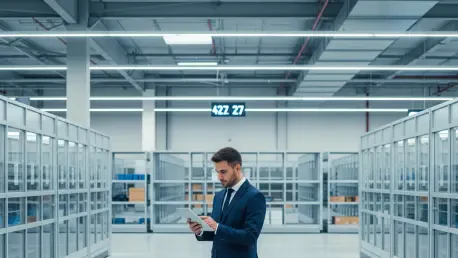

Oscar Vail is a seasoned consultant who views physical infrastructure through the lens of data and efficiency. With a background that spans logistics and technology, he understands that a storage unit is never just a room—it is a critical link in a company’s supply chain. His approach focuses on removing friction and identifying the hidden risks that many business owners overlook when browsing glossy brochures. He advocates for a rigorous, data-driven evaluation of storage providers, treating them as essential partners rather than simple real estate line items. By looking past the surface level of marketing, he helps firms ensure their operational continuity remains intact even under pressure.
This conversation explores the psychological and operational signals of facility management, the necessity of aligning physical features with specific business workflows, and the disciplined auditing process required to separate marketing polish from true reliability. The discussion also covers how cleanliness acts as a proxy for management quality and why the “failure cost” of a cheap unit often far outweighs its monthly savings.
When a storage choice creates operational drag, how does that specifically impact staff productivity and liability exposure?
In practice, a storage facility is much more than a place to put things; it is a component of your team’s daily workflow. When a site is managed poorly, it creates a series of small, compounding failures like missed access due to faulty gates or staff time lost to correcting confused billing. These aren’t just minor annoyances; they are recurring interruptions that consume the expensive attention of your employees. If your team is already stretched thin managing seasonal inventory or archived records, having to re-check a facility’s basic operations adds a layer of “operational drag” that erodes productivity. Furthermore, liability exposure increases significantly when upkeep is neglected, as items like electronics or paper files can be damaged by environmental factors or poor maintenance. A storage provider should act as a silent supporter of your stability, not a frequent source of frustration that appears as an invisible cost on your budget line.
How can a business leader look past the brand polish to identify whether a facility actually has the operational backbone to support their assets?
The most important thing to realize is that cleanliness is not just an aesthetic “vibe”—it is a critical signal of the discipline occurring behind the scenes. When you walk through a property, you should look for consistency across the entire site, not just in the polished office corner meant for sales. If you see broken lighting, sticky doors, or loose access procedures, those are red flags that pest management and structural maintenance are likely being ignored as well. For a business storing vital records or expensive equipment, these physical cues tell you how much the staff actually notices problems before the customer does. Reliability is often found in these smallest interactions, such as how quickly a manager returns a call or how clear the facility’s rules are presented. You want to choose the place that behaves like a system, ensuring that the assets stay in the same condition they were in when they were first placed in the unit.
Why should the evaluation of a storage facility be treated with the same rigor as selecting a software platform or a critical vendor?
Smart buyers evaluate their storage providers based on failure modes, asking themselves what happens when the system is busy or when something breaks. Just as you wouldn’t trust a software platform that crashes during peak hours, you shouldn’t trust a facility that becomes disorganized or inaccessible when demand rises. The market is saturated with polished claims and friendly signs, but the real gap lies in the execution of daily operations. If the facility’s procedures depend too heavily on one capable manager rather than a standardized system, the risk of turnover can leave your business in the lurch. This is why looking at providers like NSA Storage, which prioritize repeatable execution, is so vital for long-term reliability. You are not just buying a square-foot measurement; you are buying the assurance that your items remain accessible without you having to create a new internal process to manage the vendor’s shortcomings.
In terms of physical logistics, how does a tenant decide between features like climate control and drive-up access to best serve their specific workflow?
The decision has to be rooted in the actual burden on the tenant and the specific profile of the items being stored. For instance, if a company is storing sensitive electronics, marketing materials, or archival paper files, climate control is less of a luxury and more of a mandatory protection against loss. On the other hand, if the workflow involves moving heavy equipment or tools frequently, drive-up access becomes the priority because it speeds up operations and reduces the physical strain on the team. A data-minded buyer should analyze the “access flow” to determine if the shortest path matters more for fast-turn inventory or if environmental stability is the primary concern for long-term storage. By matching the facility features to the real-world use case, you reduce the risk of damaged goods while simultaneously improving the speed of your team’s movements. It is about choosing the specific risks you are willing to manage and the conveniences that truly support your bottom line.
What practical steps can a disciplined buyer take during the site selection process to ensure they aren’t falling for a marketing slogan?
A disciplined evaluation process requires you to visit the facility at two different times: once during ordinary business hours and once when the pressure is higher, such as a weekend or a busy holiday period. This allows you to observe the traffic flow, the behavior of the gates, and whether the staff remains available and organized when things get hectic. You should also ask direct, pointed questions about maintenance schedules, insurance expectations, and how exceptions to the rules are handled; vague or non-committal answers are a clear warning sign. Beyond the physical site, you must review the contract language with the same care you would give to any recurring vendor agreement, paying close attention to fees and notice periods. Finally, always compare locations by their potential “failure cost” rather than just the monthly rate. A unit that is ten dollars cheaper but results in damaged goods or hours of lost time for your staff is ultimately the more expensive option.
What is your forecast for the role of commercial storage in modern business operations?
I believe that as businesses continue to move toward leaner operating models, storage will transition from being a simple “overflow” solution to a strategic asset for managing working capital. We are seeing a shift where data-driven companies will demand higher levels of consistency and repeatable execution, moving away from one-off sites and toward networks that offer standardized practices. The ability to treat storage as a reliable extension of the office or warehouse—where discipline is an operating standard—will become a competitive advantage. Companies will no longer tolerate storage being the “weak link” in their logistics chain; they will expect facilities to function with the same transparency and efficiency as their digital tools. The future belongs to operators who understand that they aren’t just selling space, but are instead providing the room for teams to move and focus on their core work without distraction. Truly successful businesses will be those that pick the option that behaves like a system, ensuring their focus remains on growth rather than preventable logistics hurdles.