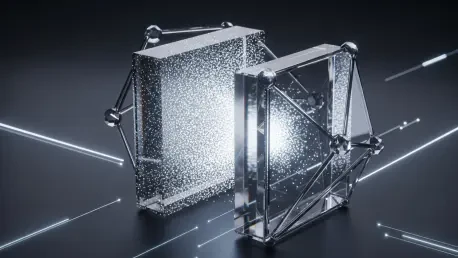

The pursuit of stable quantum connections has long been hindered by the delicate nature of subatomic interactions, yet a breakthrough in June 2026 has fundamentally altered this landscape through the implementation of asymmetric architectural designs. Led by Jia-Kang Wu at Hunan Normal University, a dedicated research team unveiled a transformative approach to quantum control that addresses the long-standing instability of quantum states by moving beyond traditional symmetric designs. By implementing an asymmetric Fabry-Perot cavity, the researchers successfully demonstrated a way to generate nonreciprocal optomechanical entanglement that functions with unprecedented efficiency. This advancement represents a significant pivot from purely theoretical exploration toward the creation of practical, robust quantum hardware, achieving a staggering twenty-five-fold increase in entanglement strength compared to previous models. This leap forward offers a foundational shift in how engineers approach quantum interfaces.
Part 1: Foundations of Optomechanical Interactions
The foundational principles of this technological leap are rooted in the field of quantum optomechanics, which investigates the sophisticated interactions occurring between photons and mechanical vibrations known as phonons. In a standard laboratory configuration, a Fabry-Perot cavity utilizes two identical, highly reflective mirrors to trap light particles, creating a controlled environment where photons interact with a mechanical element such as a vibrating membrane. The primary objective within this setup is to achieve quantum entanglement, a peculiar state where light and mechanical motion become so deeply interconnected that they behave as a singular, unified entity. This correlation remains constant regardless of the physical distance separating the components, providing the necessary basis for transmitting information across a network. Traditional symmetric systems have struggled to maintain this link, but the mechanics of the cavity provide the essential stage for observing how radiation pressure from light can influence the movement of macroscopic objects.
Part 2: Environmental Challenges in Quantum Systems
Despite the immense theoretical promise of these optomechanical systems, they are famously susceptible to environmental interference that can instantly disrupt delicate quantum states. Thermal noise—the random and chaotic vibrations of atoms caused by ambient heat—often destroys entanglement long before it can be utilized for any practical computational or communication tasks. This inherent fragility has historically restricted the deployment of optomechanical technologies in real-world settings, as maintaining the required levels of quantum coherence usually necessitates extreme cooling and expensive shielding. Symmetric cavities often fail to provide the necessary level of control because they allow noise to propagate equally in all directions, leading to a rapid decay of the quantum signal. Consequently, the research community has spent years seeking a method to insulate these systems from the destructive influence of the external environment, as the inability to manage these fluctuations has remained a primary barrier to scaling quantum hardware.
Part 3: Asymmetric Design and Nonreciprocity Mechanisms
To resolve these persistent challenges, the research team introduced a deliberate asymmetry into the cavity architecture by utilizing mirrors with distinctly different reflectivity levels. This structural modification facilitates a phenomenon known as nonreciprocity, which allows quantum information to flow preferentially in one direction while being effectively suppressed in the opposite direction. By compelling light to interact more efficiently with the mechanical membrane in a forward path, the asymmetric design establishes a one-way channel for quantum correlations. This directional bias serves as a protective shield, preventing back-scattering and interference from contaminating the primary signal. The shift away from perfectly balanced mirrors represents a counterintuitive but brilliant engineering solution, as it breaks the symmetry that previously allowed noise to overwhelm the system. This innovation ensures that the quantum bond between light and motion remains intact, marking a major milestone in the development of resilient quantum components.
Part 4: Empirical Results and Engineering Constraints
The empirical data generated by this asymmetric configuration is nothing short of extraordinary, revealing a jump in entanglement measures from a negligible 0.01 in symmetric systems to a robust 0.4. Such a twenty-five-fold improvement transforms a weak and unreliable connection into a high-performance resource that is capable of supporting demanding quantum tasks. Through exhaustive testing, the team determined that the system achieves peak efficiency at a mechanical resonance frequency of 34.5MHz, offering a precise technical blueprint for future designs. Furthermore, the study investigated vital engineering trade-offs regarding operational longevity. While a mirror reflectivity of 98.7 percent yielded the highest possible entanglement, a slightly lower value of 96.3 percent provided a much more stable configuration for long-term use. This distinction is critical for industrial applications, where maintaining consistent performance despite minor fluctuations in laser intensity or temperature is often more valuable than reaching a peak state.
Part 5: Decoupling Classical and Quantum Characteristics
One of the most profound insights emerging from this research is the discovery that classical and quantum nonreciprocity are fundamentally decoupled phenomena. In traditional optical engineering, researchers had long operated under the assumption that enhancing the one-way flow of classical light would automatically lead to a corresponding improvement in quantum entanglement. However, the work conducted by Wu’s team demonstrated that these two effects are actually governed by separate physical mechanisms, which do not always align in a linear fashion. This revelation provides quantum engineers with a new degree of freedom, allowing them to optimize the directional transmission of light and the strength of quantum links as independent variables. By being able to tune these properties separately, developers can create specialized devices that are tailored for specific functions, such as high-speed data transfer or ultra-secure encryption. This decoupling simplifies the design process by removing the need to balance conflicting requirements.
Part 6: Mathematical Modeling via Langevin Equations
To validate these findings and provide a rigorous theoretical basis for their observations, the researchers utilized quantum Langevin equations to model the system over time. These sophisticated mathematical frameworks allowed the team to simulate the complex interplay between laser light and mechanical vibrations while simultaneously accounting for the unpredictable effects of thermal noise. The numerical simulations confirmed that the asymmetric cavity structure effectively protects the quantum bond from external degradation, proving that strategic structural design can mitigate the destructive nature of heat on a macroscopic scale. By employing these equations, the team was able to visualize the evolution of entanglement and identify the exact parameters required to sustain it. This level of modeling is essential for moving beyond laboratory prototypes, as it allows for the prediction of system behavior under various environmental stresses. The successful application of the Langevin approach highlights the synergy between math and physics.
Part 7: Enhancing Security and Teleportation Fidelity
The capability to generate stable and high-strength entanglement is expected to catalyze the development of several revolutionary technologies, particularly in the realm of secure communication. In systems utilizing Quantum Key Distribution, the robust entanglement provided by asymmetric cavities ensures that any attempt by an external party to intercept or eavesdrop on a signal is immediately detectable. This level of security is vital for protecting sensitive data in an era where traditional encryption methods are increasingly vulnerable to sophisticated cyber threats. Furthermore, the enhanced fidelity offered by this asymmetric approach significantly improves the reliability of quantum teleportation protocols. By ensuring that information is transferred across networks without the risk of loss or corruption, this technology facilitates the creation of a truly global quantum internet. These advancements are not merely theoretical possibilities but represent the next logical step in the evolution of digital infrastructure.
Part 8: Bridging Hardware and Precision Sensing
Beyond communication, these asymmetric systems serve as indispensable bridges in the emerging field of hybrid quantum computing by linking diverse hardware platforms. They are uniquely capable of connecting optical fibers, which excel at transmitting data over long distances, with superconducting qubits that are used for high-speed processing. This interoperability is essential for building scalable quantum computers that can handle complex calculations across distributed nodes. Additionally, the extreme mechanical sensitivity of these cavities makes them exceptionally well-suited for high-precision sensing applications. They can detect minute changes in gravitational forces or physical displacement with a level of accuracy that far exceeds current classical sensors. By providing a stable foundation for light and sound to interact, this research establishes a versatile platform for a new generation of interconnected sensors and computational devices. This multi-functional nature ensures that asymmetric technology will remain a cornerstone.
Part 9: Strategic Implementation and Future Standards
The successful demonstration of asymmetric cavities established a new standard for the engineering of quantum hardware, shifting the focus from mitigating noise to fundamentally bypassing it through design. Industry leaders began integrating these nonreciprocal configurations into long-haul fiber networks to ensure that entanglement remained stable across continental distances. Researchers focused on refining the 96.3 percent reflectivity benchmark to create standardized modules that functioned reliably in varying atmospheric conditions. These efforts paved the way for the deployment of the first generation of gravity-sensitive quantum arrays, which provided unprecedented data for geophysics and navigation. By decoupling classical and quantum metrics, the engineering community developed specialized protocols that maximized both speed and security without the previous technical bottlenecks. The transition to asymmetric architectures effectively solved the problem of thermal fragility, allowing quantum systems to move into integrated infrastructure.
Part 10: Actionable Protocols for Industrial Scaling
To capitalize on these findings, engineering teams adopted a rigorous protocol for the mass production of asymmetric cavities, prioritizing structural resilience over peak performance. This shift necessitated a reevaluation of fabrication techniques, leading to the development of automated coating processes that ensured mirror reflectivity remained within the optimal range. Furthermore, practitioners focused on the integration of these cavities into modular quantum repeaters, which were essential for extending the range of secure communication lines. The implementation of these standards allowed for a more rapid transition from experimental setups to commercial-grade hardware, reducing the costs associated with maintaining ultra-precise environmental controls. As a result, the industry moved toward a more decentralized model of quantum networking, where localized sensors and processors functioned as part of a larger, cohesive ecosystem. This systematic approach ensured that the gains in entanglement strength were maintained throughout the entire supply chain.