
Motorola’s shift toward providing five to six years of support for newer models like the Moto G75 5G creates a widening security gap between legacy and modern hardware. As the current landscape of 2026 unfolds, a significant number of users find themselves navigating the final months of official

Deepfakes and compromised accounts have undermined the assumption that voice or video presence automatically proves a participant's true identity in a meeting. This shift has forced a fundamental recalculation of how organizations approach security and compliance within their unified communications

Internal security hardening efforts now focus on stricter verification protocols for help desk password resets to prevent unauthorized account takeovers. This strategic pivot comes in response to high-profile breaches where attackers bypassed multi-layered encryption by simply manipulating human

Researchers proved that quantum information can survive the journey between two distinct facilities on Long Island without the signal degradation typically associated with long fiber runs. This landmark achievement, facilitated by a collaborative effort between Brookhaven National Laboratory and

Active exploitation campaigns are targeting unauthenticated vulnerabilities in Zimbra servers to gain control over the underlying zimbra user account. This security crisis emerged as a consequence of a failure in the input validation process within specific command-line utilities integrated into
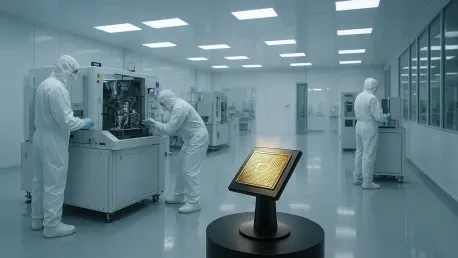
Sweden mandates an immediate shift toward post-quantum cryptography to protect the broader economy from future machines capable of breaking public-key encryption. This strategic pivot marks a significant transition from a period characterized by decentralized academic exploration into a structured