
Modern healthcare environments are rapidly moving toward a future where the distinction between biological systems and digital interfaces becomes increasingly blurred through the implementation of soft electronics. For decades, the reliance on rigid silicon components has limited the scope of wearable technology to bulky, external attachments that often fail to capture the nuance of human physiology. Researchers at the University of Chicago are currently spearheading a paradigm shift by developing electronics that mirror the natural mechanics of the human body. These innovative systems are not merely mounted on flexible tape; they are inherently soft from the inside out, utilizing organic materials that can bend and stretch without compromising their structural integrity. By merging neuromorphic processing with biocompatible structures, engineers are now creating tools that live and work in seamless harmony with living tissue, promising a new era of medical diagnostics. This integration represents a departure from traditional sensors, moving toward a truly symbiotic relationship between the device and the wearer.
The Material Divide: Bridging the Gap Between Hardware and Biology
The fundamental challenge facing modern medical hardware lies in the stark physical contrast between man-made materials and human biology. While human skin and internal organs are pliable, soft, and constantly in motion, traditional electronic chips are composed of brittle silicon and rigid metal interconnects. This material mismatch creates significant friction at the point of contact, frequently leading to skin irritation, inflammation, or the premature detachment of the sensor from the body. When a device cannot move in unison with the wearer, its data collection becomes erratic, as air gaps or movement artifacts interfere with signal clarity. To overcome this hurdle, scientists are reimagining the very essence of hardware by replacing traditional transistors with stretchable semiconductors. These new substrates allow devices to maintain a consistent interface with the body, ensuring that continuous health monitoring is both comfortable and medically reliable over long periods.
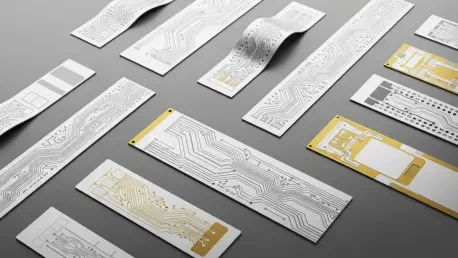
Beyond simple comfort, the transition toward flexible hardware necessitates a fundamental shift in how electrical signals are conducted through moving parts. Standard wires are prone to fatigue and fracture when subjected to the repeated bending that occurs at the joints or along the chest wall during respiration. Engineers are now employing conductive polymers and liquid metal alloys that retain their electrical properties even when deformed to extreme angles. This structural resilience ensures that the device remains operational during vigorous physical activity, providing uninterrupted data streams for cardiac patients or athletes. Moreover, these flexible circuits are designed to be thin enough to integrate with the epidermis, effectively becoming a functional layer of the user’s anatomy. This level of integration represents a significant departure from traditional wearables, as the hardware no longer acts as a foreign object but rather as a symbiotic extension of the patient’s biological system.
Organic Intelligence: Brain-Inspired Architecture and Materials
Central to this technological evolution is the adoption of neuromorphic architecture, a design philosophy that processes information using mechanisms similar to the human brain. Traditional computers rely on the binary movement of electrons through fixed pathways, but these soft chips utilize charged particles that migrate through sponge-like, porous components. This method allows the electronics to mimic synaptic plasticity, the process by which biological neural connections strengthen or weaken based on frequency and usage. By processing data in this manner, the hardware can adapt to a patient’s specific health signals in real-time without needing to transmit raw data to a distant cloud server. This localized intelligence, often referred to as edge computing, allows for the immediate detection of anomalies, such as an irregular heartbeat, directly at the site of the sensor. The result is a system that is not only physically flexible but also cognitively responsive to the unique biological environment it monitors.
To achieve the durability required for everyday use, researchers are utilizing advanced materials such as ionogels and rubbery polymers that can withstand intense mechanical strain. These specialized materials allow electronic circuits to stretch up to 140 percent of their original length, significantly exceeding the natural elasticity of human skin. This high degree of extensibility is critical for maintaining functionality on high-movement areas like the elbows, knees, or neck, where traditional sensors would inevitably fail or peel away. By molding perfectly to the complex curves of the human body, these brain-inspired electronics maintain a steady, high-quality contact point for sensing vital signs. The use of ionogels also facilitates better ion transport, which is essential for the brain-like processing capabilities of the device. This material synergy ensures that the hardware is robust enough for long-term wear while remaining sensitive enough to capture subtle physiological changes.
Technical Evolution: Navigating Applications and Roadblocks
One of the most significant advantages of this brain-inspired hardware is its remarkably low power requirement, which is essential for long-term implantable or wearable use. Because these systems operate on chemical principles and ion movement rather than high-voltage electron flow, they can analyze complex health data using less than half a volt of energy. This extreme efficiency is a critical safety feature, as it prevents the electronic components from generating excess heat that could damage sensitive living tissue or cause discomfort. Furthermore, by performing data analysis locally on the body, these systems reduce the need for constant wireless transmission, which is a major drain on battery life in traditional wearables. This localized processing also enhances data privacy, as sensitive medical information is interpreted on the device rather than being broadcast to external networks. This combination of efficiency and security makes soft electronics a viable solution for continuous monitoring.
The path toward widespread adoption of electronic skins required significant innovation to address manufacturing hurdles, particularly concerning non-volatile memory retention. Historically, soft memory components struggled to maintain data once the power supply was interrupted, a flaw that would have compromised their utility in clinical settings. Engineers resolved this by developing hybrid architectures that positioned small, rigid memory units on protective islands connected by elastic, coiled interconnects. This clever design preserved the overall flexibility of the device while ensuring that critical health history remained securely stored within the hardware. Looking ahead, the focus shifted toward scaling production techniques to make these biocompatible systems accessible for routine hospital use and home-care monitoring. By bridging the gap between rigid technology and soft biology, researchers laid the groundwork for a future where medical intervention is proactive, personalized, and entirely unobtrusive.