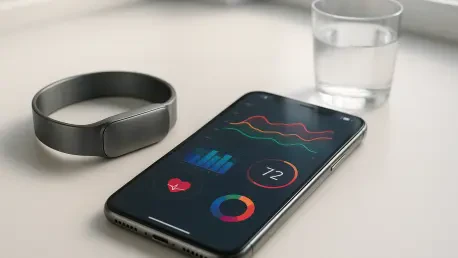

With the release of the screenless Fitbit Air, the brand has introduced a fundamental tension between users who want interactive hardware and those seeking entirely passive health data collection through the Google Health app. This shift marks a pivotal era where the boundary between a traditional timepiece and a biological sensor has almost entirely dissolved, forcing consumers to decide how they want to engage with their own health metrics. As Google deeper integrates its algorithmic prowess into the Fitbit ecosystem, the hardware has become a secondary vehicle for the software-driven insights that now define the brand’s identity. Recent market activity, particularly on platforms like Amazon, has highlighted this transition by placing long-standing favorites alongside experimental new forms. This convergence of discounted legacy technology and minimalist innovation creates a complex decision-making environment for anyone looking to optimize their personal health journey in the current landscape.
Navigating the 2026 Product Landscape and Market Tiers
The Interaction DilemmDisplays Versus Passive Sensors
The choice between active engagement and passive monitoring has become the central theme of the wearable market this year. On one side, devices like the Fitbit Air cater to a demographic that views technology as something that should remain invisible and non-intrusive. These users prefer to focus on physical activities without the distraction of a glowing screen, trusting that the Google Health app will provide a comprehensive post-hoc analysis of their data. Conversely, the majority of the current lineup, including the Sense and Versa series, champions the concept of immediate feedback. For these individuals, the ability to see a real-time heart rate or pace during a morning run is not just a convenience but a necessity for performance optimization. This divergence in design philosophy suggests that the market is no longer looking for a one-size-fits-all solution, but rather a spectrum of devices that match different levels of digital integration.
The Fitbit Charge 6 has solidified its position as the most pragmatic choice for consumers navigating the current array of promotional discounts. By offering a sophisticated suite of sensors—including an electrocardiogram and an electrodermal activity sensor—within a compact fitness band form factor, it effectively bridges the gap between basic trackers and premium smartwatches. Its deep integration with the Google ecosystem allows for features like turn-by-turn navigation through Google Maps and contactless payments via Google Wallet, functionalities previously reserved for much bulkier and more expensive hardware. In the context of recent Amazon sales trends, the Charge 6 represents an unparalleled value proposition, often retailing at prices that undercut less capable competitors. This makes it an ideal entry point for users who want a professional-grade health monitoring experience without committing to the larger physical footprint of a flagship.
Smartwatch Hierarchy: Comparing Flagship and Budget Alternatives
When examining higher-end smartwatch offerings, the distinction between the Sense 2 and the Versa 4 has become increasingly pronounced. The Sense 2 remains the premier choice for health-conscious individuals, utilizing advanced technology for continuous stress monitoring and skin temperature fluctuations that provide a holistic view of well-being. Meanwhile, the Versa 4 occupies a more aesthetic-focused niche, offering the same large, high-resolution display without some of the specialized medical-grade sensors. This creates an interesting dynamic where the Versa 4 is sometimes viewed as a compromise, especially when the smaller Charge 6 offers more technical capabilities at a lower price point. For many users, the decision to opt for the Versa series is driven primarily by a preference for the classic watch shape and a larger interface for notifications. However, those prioritizing rigorous data collection and stress management tools continue to find the Sense 2 to be the superior choice.
For a segment of the population that prioritizes simplicity and long-term reliability over advanced feature sets, the Inspire 3 continues to serve as an essential component of the brand’s strategy. Its most compelling attribute remains its ten-day battery life, which significantly outclasses the more sensor-heavy models that require charging every few days. This longevity makes it particularly effective for consistent, long-term health tracking, such as monitoring sleep patterns and resting heart rate trends over several weeks without interruption. The slim and lightweight profile of the Inspire 3 also addresses a common complaint regarding larger smartwatches, as it is comfortable enough to be worn around the clock without causing wrist fatigue. By focusing on the core essentials of activity and sleep tracking, the Inspire 3 provides an accessible gateway into the ecosystem for budget-conscious consumers or those who simply desire a secondary, low-maintenance device that captures movement.
Understanding Brand Evolution and Strategic Trends
Minimalist Innovation: The Emergence of the Screenless Aesthetic
The introduction of the Fitbit Air signals a bold departure from traditional wearable design by embracing a minimalist, screenless aesthetic that focuses entirely on the invisibility of technology. This device is specifically engineered for an audience that seeks the benefits of advanced health analytics without the constant buzzing of notifications or the visual distraction of a display. Because it is a relatively new addition to the product lineup, it has not yet been subjected to the aggressive price reductions seen with older, screened models like the Charge or the Sense. This creates a temporary market anomaly where a more basic, screenless device may actually cost more than a feature-rich smartwatch or a high-end tracker. This pricing strategy reflects the premium placed on the novelty of a distraction-free lifestyle and the sophisticated engineering required to pack high-precision sensors into such a small frame. It targets a niche of early adopters who value the philosophy of passive data.
Market dynamics in the current year suggest that the transition toward screenless wearables is being met with a counter-movement of value-seeking in the established screened category. Retailers like Amazon have responded to this by slashing prices on models that feature displays, effectively creating a clearance-style environment for hardware that many still consider the gold standard. This allows the brand to clear inventory while simultaneously testing the viability of the Air as a standalone concept. For the savvy consumer, this period represents a unique opportunity to acquire flagship-level health tracking technology for a fraction of the original launch price. The discrepancy between the high-cost novelty of the screenless Air and the discounted reliability of the Sense and Charge series highlights a broader industry trend where hardware is undergoing a radical re-evaluation. Consequently, screened devices remain the dominant force in sales volumes despite the press surrounding new forms.
Strategic Trajectory: Establishing a Multi-Tiered Health Ecosystem
Looking at the progression from 2026 toward 2028, the strategic positioning of the brand involves a dual-track development that caters to both the high-performance athlete and the casual wellness seeker. By diversifying the portfolio to include both screenless sensors and feature-rich smartwatches, the brand is successfully addressing the divergent needs of the modern workforce and fitness communities alike. This approach ensures that the Google Health ecosystem remains the central hub for user data, regardless of the physical form factor worn on the wrist. The software has evolved to process information from various sensor arrays with equal precision, making the specific choice of device more about personal style and interaction preference than about the quality of the health insights themselves. This transition marks the end of the hardware arms race and the beginning of an era focused on ambient intelligence, where the most successful devices are those that integrate most seamlessly into the user’s routine.
The strategic shifts observed throughout the year provided a clear roadmap for the continued evolution of personal health monitoring. Consumers who prioritized high-fidelity data over aesthetic novelty found the best value in mature platforms like the Sense 2 and Charge 6. This period served as a testing ground for the sustainability of passive tracking, proving that while screens remained popular for real-time feedback, the demand for distraction-free hardware was growing steadily. Ultimately, the successful integration of analytical tools ensured that the hardware served merely as a gateway to actionable health intelligence. Decision-makers in the tech space recognized that the future of wearables depended not on the presence of a display, but on the seamlessness of the data capture. In conclusion, users were encouraged to audit their interaction needs and select hardware that matched their lifestyle, ensuring they remained connected to their data without becoming overwhelmed by the digital tools used.