
Private 5G is increasingly utilized as the backbone for industrial connectivity because it offers the long-range reach and reliability needed for autonomous machines operating in unlicensed spectrum. In the current landscape of 2026, the demand for high-performance networking has shifted dramatically as enterprise environments prioritize machine-to-machine communication over standard human interactions. Celona Orion has emerged as a cornerstone of this shift, providing an AI-native converged wireless platform that addresses the fragmentation of legacy systems. By unifying disparate protocols such as Wi-Fi 7, Private 5G, and satellite links into a singular orchestration layer, it eliminates the operational silos that once hindered industrial automation. This platform represents a fundamental change in how digital infrastructure is deployed, focusing on the specific latency and throughput requirements of autonomous systems. As organizations integrate more edge computing capabilities, the role of a unified wireless fabric becomes the primary driver for operational efficiency and technological scalability.
Transitioning from Human-Centric to Machine-Centric Networks
Establishing Reliability: Zero-Tolerance Environments
Traditional wireless networks were primarily built for human-centric use, where minor delays or packet drops are usually managed by software buffers or human patience. However, the rise of autonomous machines and computer-vision systems introduces a zero-tolerance environment where connectivity is a vital part of the machine’s operational logic. Celona Orion addresses this by shifting from the best-effort delivery typical of standard Wi-Fi to a deterministic model. This ensures that physical AI operations—such as autonomous robots in a warehouse—receive the guaranteed speed and reliability they need to function without interruption. When a robot relies on real-time visual data to navigate a crowded floor, even a millisecond of jitter can cause a safety shutdown. By prioritizing machine-to-machine traffic with the same level of importance once reserved for mission-critical voice calls, Orion creates a stable foundation for the high-density robotic fleets that define modern industry.
Physical AI: Supporting Operations in Complex Spaces
Moving beyond simple data transmission, the architecture of machine-centric networks focuses on the specific handshake protocols and telemetry streams required by industrial IoT sensors. Unlike human users who might consume bursty video streams, autonomous machines generate constant, predictable data loads that require symmetrical upload and download speeds. Celona Orion optimizes these flows by treating every connected device as a node in an intelligent ecosystem rather than a passive endpoint. This design philosophy recognizes that the network is the nervous system of the facility, where the cost of downtime is measured in production units rather than user convenience. By leveraging software-defined radio capabilities, the platform can dynamically adjust frequency allocations to mitigate interference from neighboring facilities. This proactive approach to spectrum management allows enterprises to scale their automation efforts without the fear of hitting a wireless ceiling, ensuring that overall performance remains linear.
Framework: The AI-Native Orchestration Layer
Unified Fabric: Converging Diverse Wireless Technologies
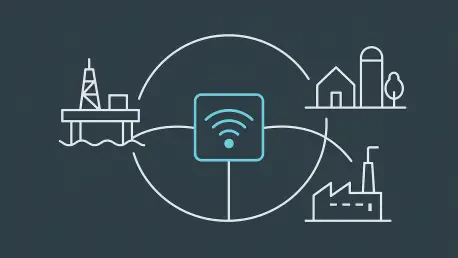
The Orion platform does not seek to replace existing technologies but rather to define specific, complementary roles for them under a single management umbrella. Private 5G serves as the backbone for high-reliability operational technology, while Wi-Fi 7 handles high-capacity data transfers for general enterprise IT. Additionally, the integration of public cellular and Starlink satellite links ensures that connectivity extends to remote sites and mobile workers. This converged approach allows enterprises to maintain a consistent network footprint across diverse geographical and operational settings, simplifying what was once a complex web of disconnected systems. By utilizing a single pane of glass for management, network administrators can assign specific traffic classes to the most appropriate wireless medium based on cost, range, and performance needs. This ensures that a remote mining site can utilize satellite for long-haul backhaul while maintaining a localized 5G mesh for its heavy machinery.
Celona Brain: Automating Network Management
Central to the platform is Orchestrator AI, an agentic operating system powered by the Celona Brain. This system uses a custom-built model that incorporates deep engineering expertise and real-world deployment data to automate complex networking tasks. Instead of just monitoring traffic, Orchestrator AI utilizes intelligent agents to provide deep insights into network health and interact with an enterprise’s existing Large Language Models. By offering programmable, standards-based interfaces, Celona allows organizations to automate their wireless management at a level previously unseen in the industry. These agents can autonomously reconfigure network parameters in response to shifting environmental factors, such as heavy rain affecting outdoor satellite links or sudden surges in sensor traffic. This level of self-healing infrastructure reduces the burden on IT staff and minimizes the risk of human error during complex configuration changes. The integration of AI directly into the control plane transforms the network into an adaptive environment.
Implementation: Ecosystem and Commercial Models
AerConnect: Streamlining Robotics Connectivity
To bridge the gap between network infrastructure and hardware, Celona has introduced AerConnect, an open-source wireless agent for makers of robotics and AI devices. This tool allows manufacturers to embed sophisticated multi-network capabilities directly into their products, enabling devices to switch intelligently between 5G, Wi-Fi, or satellite based on real-time needs. This reduces the burden on manufacturers to become wireless experts while ensuring their devices can leverage the full power of a converged network environment seamlessly. AerConnect acts as a standardized translation layer that handles the complexities of handover between different radio access technologies, ensuring that a mobile robot does not lose its session state when moving from an indoor Wi-Fi zone to an outdoor 5G area. By providing this software as an open-source resource, Celona is fostering a broader ecosystem where hardware vendors can focus on their core competencies while relying on a robust, pre-integrated connectivity stack.
Identity Control: Security and Market Disruption
The implementation of Celona Orion significantly altered the economic and security landscape of enterprise wireless. By utilizing SIM-based identity for every device, the platform ensured a much higher level of protection than traditional password-based systems, effectively creating a zero-trust environment across the industrial floor. This security architecture, paired with a unified subscription model that bundled Private 5G and Wi-Fi 7 hardware, bypassed the massive capital outlays that historically slowed down technological adoption. Organizations that moved to this model found they could redeploy IT resources toward high-value AI development instead of routine maintenance. The shift proved that scaling AI at the edge required treating the network as a modular, always-available utility. For leaders looking to future-proof their operations, the primary takeaway was the necessity of integrating hardware-level security with a converged connectivity strategy to maintain resilience in an increasingly autonomous and interconnected global market.