


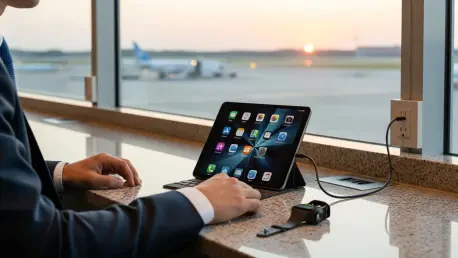

The sheer volume of tangled white plastic cords buried at the bottom of a travel bag often serves as a stressful reminder of how complicated modern connectivity has become. While most travelers accept this “spaghetti-like” mess as an unavoidable tax on mobile productivity, a closer look at specialized hardware suggests there is a more refined way to navigate the digital landscape. A 1.5-meter cable featuring an integrated Apple Watch charging puck built directly into the cord might initially seem like an unnecessary luxury, but it quickly proves to be a calculated response to the chaos of managing multiple device ecosystems on the move.
The psychological shift from viewing such a tool as a gimmick to recognizing it as a necessity happens during the first night in a cramped hotel room. Instead of hunting for multiple wall adapters and untangling a web of redundant wires, a single specialized line can replace a half-dozen accessories that typically clutter a nightstand. This transition highlights a growing demand for hardware that does more than just provide power; it seeks to restore order to the increasingly fragmented experience of maintaining watches, phones, and laptops simultaneously.
The Cable Conundrum: Why Current Travel Chargers Often Miss the Mark
Even though industry leaders like Mophie and Anker have developed reputable charging stations, many of these solutions prioritize desktop stability at the expense of true portability. These devices frequently manifest as bulky blocks or heavy folding pads that consume significant volume in a carry-on bag, making them less than ideal for those who favor a minimalist approach. Travelers are often forced to choose between the reliability of a heavy charging hub or the disorganized mess of individual cords, neither of which perfectly serves the needs of a dynamic, mobile lifestyle.
This recurring struggle to balance functionality with weight has become more pronounced as device ecosystems expand. With the introduction of various wearable standards and fast-charging requirements, the average user now carries a disproportionate amount of “dead weight” in the form of specific power bricks. The lack of a streamlined, single-cable solution has left a gap in the market for a product that can handle high-drain tasks without adding to the physical baggage of a journey, pushing users toward more innovative, integrated designs.
Rugged Versatility: Inside the Nomad Universal Cable Specs
The Nomad Universal Cable distinguishes itself from standard retail offerings through a heavy-duty braided construction designed to endure the constant friction and bending associated with frequent transit. Beyond its physical toughness, the cable is engineered with a 100W power delivery capacity, providing enough overhead to charge a high-performance MacBook or an iPhone at maximum speed. This technical robustness ensures that the integrated Apple Watch puck—compatible with Series 7 through 11 and the Ultra series—does not compromise the charging velocity of the primary device attached to the USB-C terminal.
This dual-purpose architecture extends its utility to users of the AirPods Pro 2, as the charging puck serves as a universal contact point for the entire Apple wearable ecosystem. By housing these capabilities within a single, reinforced strand, the design eliminates the need for the secondary “dongles” or adapters that often go missing during a trip. The result is a high-end tool that maintains consistent performance across different hardware generations, ensuring that build quality and charging efficiency remain top priorities for the user.
Adaptability in the Wild: Solving the Hotel Power Outlet Lottery
Practical application in the field reveals that the true value of this investment lies in its ability to adapt to unpredictable environments, such as older hotel rooms where power outlets are hidden behind headboards or located far from the bed. The 1.5-meter length provides a strategic advantage, allowing the user to dictate the layout of their workspace regardless of where the wall plug is situated. This flexibility ensures that the Apple Watch remains accessible on a bedside table while the rest of the cable reaches toward distant power sources, effectively solving the “short cord” frustration.
By consolidating a traveler’s entire charging kit into a single, high-performance line, the cable removes the mental overhead of inventory management before a flight. The premium price point reflects the utility of having a more organized and efficient workspace, where the focus remains on the destination rather than the logistics of power. It proves that a well-designed piece of hardware can serve as the foundation for a more streamlined travel experience, replacing a bundle of cheap, fragile wires with a single point of failure that is built to last.
Streamlining Your Tech Kit: Practical Steps for Cable Consolidation
To achieve a truly efficient mobile setup, the focus was shifted away from collecting numerous single-purpose cables toward investing in multi-functional hardware that supported modern fast-charging standards. Transitioning to a high-wattage universal system allowed for a simplified packing strategy where a single USB-C port managed the power needs of both wearable and primary devices. This approach effectively decluttered the carry-on and ensured that every piece of technology remained operational without the traditional stress of managing a tangled mess of wires.
The decision to prioritize rugged materials and integrated designs led to a more sustainable tech kit that resisted the wear and tear of constant movement. Future considerations for mobile power should lean toward devices that offer bidirectional charging or modular tips to further reduce the number of individual items in a bag. As hardware became more integrated, the necessity for specialized, high-capacity cables grew, proving that the path toward a cleaner digital life was paved with smarter, more durable tools rather than more accessories.







