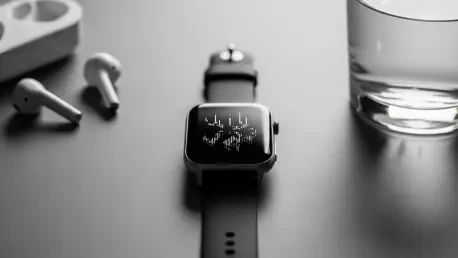

The omnipresence of glowing screens on wrists across the globe has transformed personal health from a series of annual doctor visits into a continuous stream of biometric data. For millions of individuals, these wearable devices offer a sense of control and validation, providing concrete numbers to represent complex biological processes like sleep quality, cardiovascular strain, and daily energy expenditure. This shift toward a data-driven lifestyle has created a new standard for fitness, where “closing rings” or achieving a high readiness score is often equated with genuine physical improvement. However, as the reliance on these gadgets grows, medical experts and engineers are highlighting the necessity of understanding what these numbers actually represent. While a smartwatch may look like a clinical diagnostic tool, it functions primarily as a sophisticated data processing unit that relies on indirect signals to estimate health outcomes. The gap between a medical-grade measurement and a wearable’s algorithmic prediction is often significant, and recognizing this distinction is crucial for anyone looking to use consumer technology for long-term health management.
Distinguishing Measurement from Prediction
The Mechanics of Wearable Sensors: Raw Data Collection
The sensors embedded in modern smartwatches, such as high-precision accelerometers and optical heart rate monitors, are engineered to capture basic physical signals from the surface of the skin. Most of these devices utilize photoplethysmography, a technology that shines green light through the skin to measure changes in light absorption as blood pulses through the wrist. While this method is highly effective for determining resting heart rate, its accuracy often fluctuates during vigorous physical activity when the sensor might lose consistent contact with the skin or pick up interference from rapid arm movements. In addition to optical sensors, many devices incorporate skin temperature sensors and galvanic skin response tools to monitor moisture levels, which are then used as secondary data points for more complex health scores. These components essentially act as high-frequency data collection tools rather than clinical diagnostic instruments. The raw information they gather is remarkably consistent in ideal conditions, but it lacks the contextual nuance required to differentiate between a racing heart caused by a staircase and one caused by a stressful phone call. Consequently, these physical signals represent the foundation of the wearable experience, providing the hardware-level inputs that later undergo significant transformation through proprietary software layers before reaching the interface viewed by the user.
The Role of Algorithmic Estimation: From Signal to Score
Once the raw data is collected by the sensors, it enters a “black box” of proprietary algorithms where it is filtered, smoothed, and combined with user-provided information such as age, height, weight, and biological sex. This process is what transforms a simple heart rate reading into a “recovery score” or a “body battery” metric. It is vital to understand that the watch is not measuring your recovery; it is predicting it based on a mathematical model of how a typical human body with your profile should respond to previous activities. These models are built using large datasets from thousands of test subjects, meaning the results are generalized rather than personalized. If a user’s unique physiology deviates from the average—perhaps due to a chronic condition, specific medication, or an atypical circadian rhythm—the resulting metrics may be less accurate. This is why experts suggest viewing these scores as helpful indicators rather than absolute medical truths. The value lies not in the precision of the daily score itself, but in how that score fluctuates over time in response to lifestyle changes. By shifting focus from the daily “guess” to the monthly trend, users can gain a more realistic understanding of how their habits influence their overall physiological state without becoming overly concerned with minor statistical variations.
Deconstructing Common Fitness Metrics
The Reality of Activity and Calorie Tracking: Accuracy Concerns
The “calories burned” feature remains one of the most frequently utilized metrics on wearable devices, yet it is often one of the most prone to significant error. Studies have shown that while wearables are increasingly accurate at counting steps and measuring heart rate, the estimation of energy expenditure can vary by as much as twenty to forty percent compared to gold-standard metabolic testing. This discrepancy occurs because caloric burn is influenced by numerous factors that a watch cannot see, such as metabolic rate, muscle mass density, and even the efficiency of a person’s movement mechanics. Treating the calorie count on a watch as a “credit” for additional food intake can lead to frustration when physical goals are not met despite hitting the numbers displayed on the device. Instead of focusing on these often-inflated figures, individuals are encouraged to prioritize Non-Exercise Activity Thermogenesis, or NEAT. This includes all the movement performed throughout the day that is not part of a structured workout, such as walking to a meeting, standing while working, or performing household chores. Monitoring overall movement patterns and consistency is a far more reliable strategy for sustainable health than chasing a specific and potentially inaccurate calorie target that may lead to an unhealthy obsession with the math of weight management.
Cardiovascular Performance and Heart Health: Beyond the Pulse
Cardiovascular metrics such as VO2 Max and Heart Rate Variability (HRV) have become staples of the modern fitness experience, providing users with a window into their aerobic capacity and nervous system health. VO2 Max estimates on a smartwatch are typically derived from the relationship between heart rate and walking or running speed. While these estimates are surprisingly good at tracking changes in fitness levels over several months, they can be skewed by external variables such as running on uneven terrain, exercising in extreme heat, or even the consumption of high amounts of caffeine. Similarly, Heart Rate Variability is a powerful indicator of how the autonomic nervous system is handling stress and recovery. A high HRV generally indicates a well-rested state, while a low HRV suggests the body is under strain. However, because HRV is incredibly sensitive to minor changes—such as a late-night meal or a slight dehydration—it is common to see dramatic daily fluctuations that do not necessarily indicate a health crisis. Experts suggest that rather than reacting to a single day of “poor” cardiovascular data, users should look for sustained shifts in their baseline. A steady improvement in estimated VO2 Max over a quarter is a much stronger indicator of heart health than any single workout’s performance data.
Interpreting Sleep and Mental Well-being
Understanding Rest and Sleep Architecture: The Movement Limitation
Sleep tracking has gained massive popularity as users seek to optimize their rest, yet the technology used on the wrist has inherent limitations compared to a clinical polysomnography test. A medical sleep study monitors brain waves, eye movement, and muscle activity to accurately define sleep stages like REM, light sleep, and deep sleep. In contrast, a smartwatch primarily uses actigraphy—the measurement of movement—and heart rate variability to guess which stage of sleep a person is in. If an individual lies very still while awake, the device may incorrectly log that time as light sleep. Furthermore, while these devices are excellent at identifying when a person goes to bed and wakes up, their ability to distinguish between deep and REM sleep is often less reliable. This is why a “low sleep score” should not be a source of immediate anxiety for the user. Instead, the real utility of wearable sleep tracking is found in identifying long-term patterns, such as how alcohol consumption or room temperature affects the total duration of rest over several weeks. By using the data as a diary of habits rather than a definitive report card of brain activity, individuals can make more informed decisions about their sleep hygiene without the stress of trying to achieve a “perfect” score every night.
Psychophysiological Arousal: Interpreting the Stress Score
The “stress scores” found on contemporary wearables are often misunderstood as a direct measurement of emotional or psychological state. In reality, these scores reflect physiological arousal, which is a state of heightened activity in the sympathetic nervous system. The device detects a rise in heart rate or a drop in heart rate variability and labels it as “stress,” but it cannot distinguish between the “good” stress of an exciting presentation and the “bad” stress of an argument. Physiological arousal can also be triggered by physical factors such as a heavy meal, illness, or physical exhaustion. Therefore, a high stress reading on a watch should be used as a prompt for self-reflection rather than a diagnosis of mental health. It serves as a signal for the individual to check in with themselves: Are they feeling anxious, or did they simply have an extra cup of coffee? This nuanced approach allows the user to use the technology as a tool for mindfulness, helping them identify external triggers that may be taxing their body’s resources. When viewed as a measure of the body’s internal workload rather than a measure of emotional failure, stress tracking becomes a valuable asset for maintaining balance in a high-pressure environment.
Professional Strategies for Long-term Health
Leveraging AI and Trend Analysis: The Contextual Future
The integration of Artificial Intelligence into the wearable ecosystem has enabled devices to move beyond simple data collection and toward contextual health insights. Modern AI models are now capable of analyzing multiple data streams simultaneously—such as skin temperature, respiratory rate, and sleep quality—to identify deviations from a user’s personal baseline. For instance, if a device detects a slight elevation in resting heart rate combined with a rise in skin temperature and a drop in sleep efficiency, it might suggest that the user is in the early stages of an illness before they even feel symptoms. This proactive approach to health is a significant step forward from the reactive nature of traditional medicine. However, the most effective way to utilize these AI-driven insights is to view them as a supportive tool for decision-making. If the watch suggests that a user is overtraining, they might choose to opt for a light walk instead of a heavy lifting session. This “human-in-the-loop” strategy ensures that the technology serves the individual’s intuition rather than replacing it. By focusing on these predictive trends, users can navigate their daily lives with a better understanding of their physical limits and requirements, leading to a more sustainable and less injury-prone fitness journey.
Integrating Wearables into Clinical Context: The Doctor-Patient Bridge
As wearable technology matures, it is increasingly being used as a bridge between the patient’s daily life and the doctor’s office. While a smartwatch is not a replacement for professional medical equipment, the long-term data it collects can provide clinicians with a much clearer picture of a patient’s lifestyle than a single ten-minute consultation. For example, a cardiologist might find value in seeing a patient’s average resting heart rate over six months, or a primary care physician might use activity data to discuss weight management strategies more effectively. To make the most of this, users should focus on presenting high-level trends and significant anomalies to their healthcare providers rather than showing them every daily notification. This collaborative approach turns the smartwatch into a communication tool that can help identify potential issues early or track the effectiveness of a prescribed lifestyle change. The most successful health outcomes occur when the user treats their device as a chronicler of their physical journey, providing a narrative that can be interpreted by medical experts. This shift in perspective ensures that the technology remains a valuable asset for preventative care, helping to transition the healthcare model from one of intermittent intervention to one of continuous, data-informed wellness.
The transition toward data-literate consumerism necessitated a shift in how individuals perceived their personal health technology. It became clear that the most effective users were those who treated their devices as navigational compasses rather than absolute maps of their biological terrain. By moving away from the fixation on daily scores, individuals developed a more intuitive relationship with their bodies, using the technology to confirm existing physical sensations or to flag significant deviations over many months. This evolution in perspective allowed for a more harmonious integration of digital feedback and somatic awareness, ultimately fostering a sustainable approach to wellness that prioritized long-term consistency over short-term numerical perfection. Healthcare providers observed that patients who maintained a critical distance from their daily metrics exhibited lower levels of health-related anxiety while still benefiting from the broad behavioral nudges provided by the technology. Instead of reacting to a single night of poor sleep data, users waited for a persistent downward trend before seeking professional advice, which streamlined the diagnostic process for clinicians. The integration of wearable data into electronic health records allowed for more nuanced conversations during check-ups, as doctors saw a more comprehensive picture of activity levels over time. Ultimately, the successful utilization of these devices was defined by a shift from data collection to data interpretation, where the individual remained the final authority on their own well-being.