


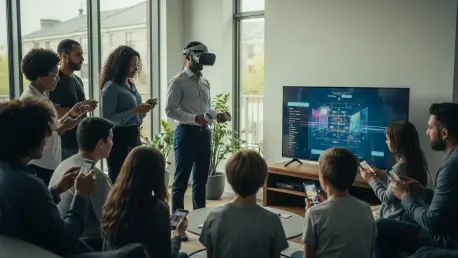

The traditional image of a family gathering often involves board games or movies, but the modern living room is increasingly centered around immersive digital experiences that bridge generational gaps. While virtual reality was once perceived as a solitary endeavor that isolated the user from their physical surroundings, modern hardware has evolved to become a centerpiece for social interaction. Bringing a single headset into a group setting requires a strategic approach to ensure that those not wearing the device feel just as engaged as the person inside the digital world. By transforming the solitary nature of the medium into a shared spectacle, families can discover a new way to bond over interactive entertainment that challenges their reflexes and creativity. This evolution in home entertainment has turned a piece of personal technology into a communal portal, allowing everyone from children to grandparents to participate in the same digital space simultaneously. This approach allows the device to serve as a high-tech campfire for the modern family unit.
1. Shared Vision: Mirroring and Introductory Rhythms
The most critical step in transforming a solo virtual reality session into a group event is mirroring the headset view to a television screen. This allows everyone in the room to see exactly what the player sees, turning a private experience into a public performance where guests can offer advice or laugh at the player’s reactions. Once the visual link is established, starting with rhythm-based hits like Beat Saber provides a perfect entry point for newcomers. The mechanics are simple enough for anyone to grasp within seconds, as the objective merely involves slashing colored blocks to the beat of popular music. Because the gameplay is highly visual and energetic, it keeps the audience entertained while providing the player with a satisfying sense of accomplishment. This combination of spectatorship and intuitive gameplay ensures that the energy levels in the room remain high throughout the duration of the gathering.
Following the initial excitement of rhythm games, introducing titles like Fruit Ninja can further solidify the group’s engagement through recognizable concepts. The goal of slicing flying fruit with virtual blades is instantly clear to any age group, making it a reliable choice for a quick and rewarding experience that does not require a steep learning curve. Such accessibility is vital when hosting a diverse group of people with varying levels of familiarity with modern technology. By focusing on games where the objectives are obvious and the physical movements are satisfying, the host ensures that no one feels intimidated by the equipment. These introductory experiences serve as a foundation, building the confidence of the participants before they move on to more complex or cooperative tasks. This strategic selection of software allows the headset to remain in constant use, as the barrier to entry is kept as low as possible for every guest in attendance.
2. Cooperative Play: Asymmetric and Social Interaction
Beyond individual performances, virtual reality offers unique opportunities for teamwork through games that utilize asymmetric gameplay. A standout example is Keep Talking and Nobody Explodes, where the person wearing the headset is trapped with a ticking bomb while the rest of the family uses a physical or digital manual to provide instructions. This dynamic forces the entire room to communicate clearly and think critically under pressure, effectively turning a single headset into a multiplayer experience. Similarly, titles like Acron: Attack of the Squirrels allow mobile users to connect their smartphones to the session, playing as characters who interact directly with the VR user. These types of games are specifically designed to include as many people as possible, ensuring that the technology acts as a bridge rather than a barrier. By leveraging the devices already in people’s pockets, the host can create a massive cooperative environment.
For families who prefer a slower pace or more traditional formats, virtual tabletop role-playing games like Demeo provide a deep and collaborative adventure. This digital board game experience allows players to sit around a virtual table together, regardless of whether they are in the headset or using a compatible flat-screen device. It captures the essence of classic dungeon crawling while adding the immersive depth that only a three-dimensional space can provide. In a similar vein, low-intensity social games like Walkabout Mini Golf offer a relaxed environment where participants can chat and compete in a low-stakes setting. These titles are particularly effective for longer sessions because they are less physically demanding and unlikely to cause any discomfort for the users. By including these more methodical experiences, the host can cater to different personality types and energy levels, ensuring that the entertainment remains inclusive and enjoyable for everyone throughout the entire event.
3. Interactive Content: Sandbox Games and Mature Themes
The physical comedy inherent in virtual reality is best showcased through humorous sandbox games such as Job Simulator or Vacation Simulator. These titles allow players to interact with a stylized, cartoonish world in ways that often lead to hilarious and unexpected outcomes. For someone who does not consider themselves a gamer, the ability to pick up virtual objects and manipulate them naturally provides an immediate sense of wonder. The audience benefits just as much, as they watch the player navigate absurd scenarios and perform exaggerated physical actions. This brand of entertainment relies heavily on the player’s curiosity and the game’s reactive environment, making it a highlight of any social gathering. The intuitive nature of these interactions means that even the most tech-averse family members can find joy in the simple act of virtual exploration. These experiences highlight the versatility of the medium by focusing on playfulness.
As the evening progresses, higher-energy collaborative titles like Just Another Cooking Game can simulate the chaotic but fun atmosphere of a busy kitchen. Players must work together to prepare dishes and fulfill orders, creating a sense of frantic cooperation that mirrors real-world family dynamics. This type of gameplay is excellent for building rapport and encouraging active participation from everyone in the room. Once the younger children have finished their turns and the atmosphere shifts, the adults might transition to more mature experiences like Arizona Sunshine 2. This cooperative zombie shooter provides a more intense and visceral experience for those looking for a thrill after the earlier, more family-friendly activities. The contrast between lighthearted cooking simulations and gritty survival scenarios demonstrates the breadth of content available on a single device. By carefully timing the transition between different genres, the host can maintain the interest of all age groups.
4. Event Management: Safety and Hygiene Protocols
To keep the experience pleasant for everyone involved, it was necessary to implement a strict hygiene routine throughout the duration of the gathering. Because the headset was shared among many users, wiping down the facial interface with skin-safe sanitizing wipes between each turn became a standard practice. This ensured that every guest felt comfortable and clean when it was their time to enter the virtual world. Additionally, limiting each person’s session to approximately five minutes proved to be an effective strategy for keeping the rotation active and preventing anyone from becoming overly fatigued. Short sessions also helped to mitigate the risk of heat buildup inside the device, which could lead to discomfort over long periods. By managing the clock and the equipment with care, the host maintained a steady flow of participants and kept the momentum of the party going. This organized approach allowed everyone to have multiple turns without feeling like they were waiting too long.
Focusing on stationary experiences was a deliberate choice that helped to prevent motion sickness among newcomers who had never used virtual reality before. By sticking to games where the player stayed in one spot, the host minimized the risk of nausea associated with artificial movement. Furthermore, maintaining a clear physical boundary and supervising every player provided a necessary layer of safety for both the participants and the surrounding environment. Having a dedicated person standing nearby to guide the user ensured that no one accidentally hit furniture or wandered outside the designated play area. These final considerations were essential for creating a secure atmosphere where everyone felt confident enough to try the technology for the first time. The successful integration of these safety and health measures transformed a potentially complex setup into a seamless and enjoyable highlight. Looking forward, these practices will continue to serve as the gold standard for hosting digital social events.







