
The daunting prospect of migrating a decade of digital memories often acts as a more powerful deterrent to switching smartphones than the actual retail price of a new flagship device. Samsung recognized this friction early on and shifted its strategy toward a comprehensive onboarding experience that treats the transition as a relocation of one’s digital life rather than a simple hardware replacement. By prioritizing the user’s comfort during the first forty-eight hours of ownership, the company effectively dismantled the closed-garden barriers that once made platform loyalty feel mandatory. This evolution reflects a broader trend in the mobile industry where software fluidity and data integrity are becoming the primary battlegrounds for consumer retention. Instead of forcing users to adapt to a new paradigm, the Galaxy ecosystem was engineered to absorb existing habits and preferences, ensuring that the move to a high-end model like the Galaxy S Ultra series felt like a natural progression rather than a stressful technical hurdle.
Bridging the Gap: The Virtual Test Drive Strategy
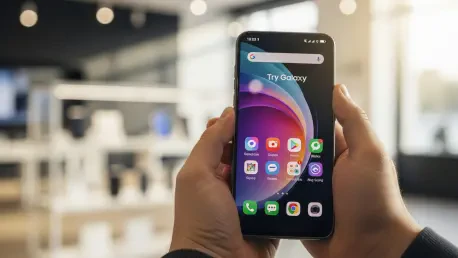
The “Try Galaxy” initiative serves as the primary bridge for curious consumers who are hesitant to abandon their current operating systems without a trial period. This web-based simulation allows users to experience the One UI interface directly on their existing devices, providing a risk-free environment to explore customization options and unique software features. By leveraging a browser-based application, the company bypassed the need for hardware investment, letting potential switchers move widgets around and test multitasking capabilities as if they already held the device in their hands. This digital sandbox effectively demystified the Samsung software experience, showing that the transition was less about learning a foreign language and more about discovering a more flexible version of their current digital environment. It targeted the specific anxiety associated with losing a familiar interface by proving that modern mobile software is increasingly intuitive and adaptable across various different hardware platforms.
Psychological Readiness: Building Muscle Memory Early
Beyond simple aesthetics, this proactive engagement strategy addressed the deeper psychological hurdles that typically accompany a major platform shift. By the time a user decided to visit a retail store, they had already established a level of muscle memory with the Galaxy interface, transforming the actual unboxing into a moment of continuity rather than confusion. The simulation highlighted features like Object Eraser in the gallery or the Multi Window view, demonstrating the tangible benefits of switching to a more powerful hardware platform. This approach flipped the traditional sales funnel on its head, moving the experiential phase of the customer journey much earlier in the decision-making process. By providing this virtual test drive, the brand successfully turned what could have been a stressful technological jump into an inviting exploration, ensuring that the brand-new device felt like a customized tool the moment it was powered on for the very first time, creating immediate value for the owner.
Precision Migration: Safeguarding the Digital Archive
Once the decision to migrate was finalized, the “Smart Switch” utility functioned as the technical backbone for a lossless data transfer process. This tool was designed to go far beyond the basic synchronization of contacts and calendars, reaching into the deep settings of a user’s previous device to replicate their digital environment. It managed the complex task of moving encrypted text messages, detailed call logs, and even specific home screen layouts, ensuring that the personal soul of the old phone survived the transition. Whether the user chose a direct wired connection via USB-C or a wireless transfer, the software prioritized data integrity above all else. This focus on digital history addressed the emotional attachment many individuals have toward their photo libraries and old conversations, which often represent years of personal milestones. By automating the most tedious aspects of setup, the migration process became a background task that minimized downtime and let the user focus on exploring their new high-end hardware features.
Universal Sharing: Breaking Down Ecosystem Silos
A major concern for many potential switchers was the fear of social isolation or the loss of high-quality file sharing capabilities within their existing circles. To mitigate this, the “Quick Share” feature was reimagined through a significant collaboration with Google, establishing a universal standard for fast, high-resolution transfers across the broader Android landscape. This interoperability ensured that switching to a Galaxy device did not mean losing the ability to send uncompressed videos to friends or colleagues who remained on different platforms. By using a combination of Bluetooth and Wi-Fi Direct, the system offered speeds that rivaled proprietary peer-to-peer methods, maintaining the integrity of large media files without the need for cellular data. This strategic move signaled a shift away from walled-garden philosophies, favoring a more open and collaborative approach to mobile connectivity. It provided reassurance that the transition to a premium Samsung device would enhance, rather than hinder, the user’s ability to interact with their broader social circles.
Industry Evolution: Redefining Consumer Mobility Standards
The implementation of these cross-platform tools established a new benchmark for industry interoperability and consumer freedom. Moving forward, the strategy emphasized that hardware manufacturers could no longer rely on digital incarceration to maintain their user bases. Instead, the focus turned toward creating collaborative standards, such as the unified Quick Share protocol developed with Google, which allowed for high-quality file exchanges across diverse ecosystems. This shift encouraged other developers to prioritize open APIs and cloud-agnostic services, ensuring that a user’s social circle remained accessible regardless of their brand of smartphone. By solving the social tax associated with switching, the platform demonstrated that the most effective way to retain high-value customers was to facilitate their movement rather than restrict it. In evaluating progress from 2026 to 2028, experts concluded that the seamless relocation of digital assets became the standard expectation for every premium device launch.