
The persistent glow of a low-battery notification has become an unwelcome nightly ritual for millions of smartwatch owners who find themselves tethered to a magnetic charging puck just to ensure their device survives through the next morning. This cycle highlights the core conflict of modern wearable technology: the trade-off between sophisticated functionality and long-term autonomy. While the Apple Watch currently sets the standard for seamless integration and health sensor accuracy, its reliance on a high-power architecture limits its use for multi-day excursions or consistent sleep tracking without careful planning. As the market evolves, a growing segment of users is beginning to question if the convenience of the ecosystem is truly worth the anxiety of a dying battery. This shift in consumer priorities has paved the way for innovative competitors that prioritize longevity over a surplus of apps. The landscape is no longer a choice between a screen and a simple watch, but rather a complex decision about how much digital overhead one is willing to carry on their wrist.
Understanding the Power Gap
The Architectural Challenges: Why Power Drains Fast
The fundamental reason for the significant disparity in battery performance lies in the processing requirements of a full-featured operating system. Unlike simple fitness trackers, the Apple Watch operates like a miniature computer, managing a constant stream of background data, high-resolution graphics, and complex sensor polling. The current S-series chips are designed for rapid response times and high-speed data handling, which naturally consumes more energy than the low-power microcontrollers found in specialized endurance watches. Furthermore, the vibrant OLED displays required for modern app interfaces demand significant power to maintain their brightness and color accuracy, especially when using always-on features. Even with the power efficiency gains seen in the latest models, the energy demands of keeping a device constantly synchronized with a smartphone remain a massive hurdle. Manufacturers have attempted to mitigate this with “low power modes,” but these often disable the very features that justify owning a high-end smartwatch.
Strategic Sacrifices: How Competitors Extend Life
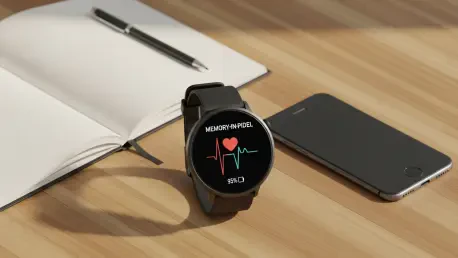
To achieve superior longevity, manufacturers like Garmin and Amazfit employ a different philosophy centered on hardware and software specialization. By utilizing memory-in-pixel (MIP) displays or more efficient OLED controllers that refresh less frequently, these devices can remain active for weeks rather than hours. These systems often run on proprietary, lightweight operating systems that lack the third-party app ecosystem of watchOS but excel at dedicated task management. This focused approach reduces the “noise” of background processes, allowing the battery to focus almost entirely on health tracking and basic notifications. While users might miss the ability to interact with complex apps or use a voice assistant, they gain a device that can withstand a ten-day hiking trip or a full week of heavy training without a single charge. This trade-off is becoming increasingly attractive to those who view their wearable as a tool rather than a lifestyle accessory. The result is a market divided between the “daily chargers” and the “weekly trackers,” each catering to different lifestyle demands.
Evaluating the Leading Alternatives
Specialized Health Trackers: Data Without the Screen
For individuals who prioritize biometric data over digital convenience, the emergence of screenless trackers like the Whoop 5.0 offers a compelling alternative. By removing the energy-hungry display entirely, these devices focus exclusively on recovery, sleep, and cardiovascular strain, often lasting up to two weeks on a single charge. This design allows for a continuous data stream that is rarely interrupted by charging cycles, leading to more accurate long-term health trends. However, this shift away from the traditional watch face means users must rely entirely on their smartphones to view statistics or receive alerts. This “invisibility” is a feature for those who suffer from notification fatigue, yet it can be a dealbreaker for anyone used to checking their wrist for the time or weather. Despite the lack of a screen, these devices often carry a premium price tag due to their advanced sensor arrays and the high-frequency sampling rates required for professional-grade health insights. The value proposition here is pure data, unburdened by the distractions of a conventional smartwatch interface.
Hybrid Designs: Combining Aesthetics and Autonomy
The hybrid market represents a middle ground for those who appreciate the look of a traditional timepiece but still require modern health insights. Devices such as the Withings ScanWatch 2 utilize physical analog hands paired with a small, discrete digital display that only activates when needed. This configuration allows for battery life that can extend to thirty-five days, as the primary time-keeping function requires very little power. These watches are particularly effective at bridging the gap between professional office attire and athletic performance, offering heart rate monitoring and oxygen saturation tracking without the bulky appearance of a typical sport watch. The trade-off, however, is a significantly reduced interaction model; one cannot easily reply to texts or view detailed maps on such a small screen. Nevertheless, for the user who wants a permanent fixture on their wrist rather than another gadget to manage, the hybrid approach provides a sophisticated solution that nearly eliminates battery anxiety. It proves that the most advanced technology is often the most subtle, operating quietly in the background for weeks.
The Reality of the Transition
Financial Considerations: The Cost of Long Life
One of the most significant adjustments when leaving the Apple ecosystem is the shift in how health data is monetized. Many of the leading long-battery alternatives have adopted a subscription-based model, where the hardware is relatively affordable but full access to advanced analytics requires a monthly fee. This is a departure from the Apple model, where the purchase price of the watch includes perpetual access to the Health app and its various insights. Users may find that over a three-year period, a tracker that lasts two weeks on a charge ends up costing significantly more than an Apple Watch once these recurring fees are calculated. Additionally, the lack of deep integration with iOS means that features like Find My, Apple Pay, and seamless hand-off between devices are often lost. For some, the freedom from the charger is worth the extra monthly expense and the loss of minor conveniences, but it requires a careful audit of which features are truly essential for daily life. The choice is ultimately between an integrated service and a specialized, autonomous instrument.
Final Steps: Recommendations for Wearable Independence
The decision to move away from a daily charging routine required a clear understanding of personal priorities and a willingness to sacrifice ecosystem polish for functional independence. Those who successfully made the transition often started by identifying the specific metrics they valued most, such as sleep stages or GPS accuracy for long-distance running. It was beneficial to test whether a screenless or hybrid device felt too restrictive before fully committing to a new ecosystem. Evaluating the total cost of ownership, including potential subscriptions, helped prevent financial surprises later in the product life cycle. Users found that prioritizing a device with at least seven days of battery life significantly reduced the mental load of device management. Ultimately, the shift toward longer-lasting wearables encouraged a more mindful relationship with technology, where the device served as a silent partner in health rather than a demanding extension of the smartphone. By focusing on specialized tools, many achieved a balance that prioritized physical wellness over digital constant connectivity. This shift confirmed that for a specific segment of users, the power of endurance outweighed the lure of the app store.