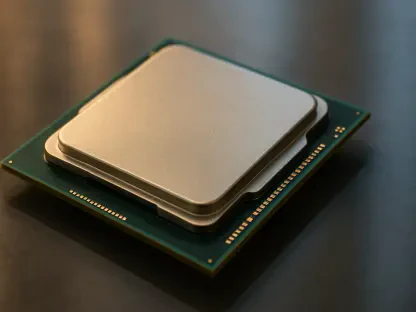

Modern digital infrastructure faces a persistent paradox where the demand for seamless user experiences often collides with the necessity for robust data protection. Assistant Professor Alex Ozdemir is bridging the gap between theoretical cryptography and computer architecture to make privacy-preserving techniques viable for everyday applications. His work addresses the systemic inefficiency that has long prevented advanced mathematical safeguards from being integrated into consumer-grade hardware and software. By re-evaluating how security protocols interact with the underlying physical circuitry of a machine, he aims to remove the “privacy tax” that historically slowed down systems. This research is not merely about finding new ways to hide information but about redesigning the very foundation of how data is processed, ensuring that encryption is as fast as the cleartext computations we use today. Through a blend of hardware optimization and automated reasoning, the goal is to create a digital environment where privacy is not an elective luxury but a standard architectural feature.
Bridging Theory and Application
The transition from academic cryptography to functional software requires more than just complex equations; it demands a deep understanding of how those equations translate into binary instructions. In the current landscape of 2026, the need for verifiable security has never been higher, yet the tools to provide it often remain trapped in theoretical papers. Professor Ozdemir focuses on this specific friction point, identifying the logical hurdles that prevent high-level security properties from being executed efficiently on standard processors. By treating cryptography as a fundamental component of computer architecture rather than a secondary software layer, his research enables a more harmonious relationship between data safety and system performance. This approach is essential for moving beyond basic encryption toward sophisticated systems that can prove the integrity of a computation without ever exposing the raw data involved. Such a shift is necessary to restore public trust in digital platforms that handle increasingly personal information on a global scale.
The Mechanics of Zero-Knowledge Verification
Zero-knowledge proofs represent a pinnacle of cryptographic innovation, allowing one party to confirm the validity of information to another without revealing any underlying data. To visualize this concept, one can imagine a person claiming to have found a specific character in a crowded “Where’s Waldo?” illustration. To prove success without showing the character’s exact location on the original map, the person could place a large, opaque sheet of paper over the picture with a tiny hole cut out, revealing only Waldo. This demonstrates the existence of the solution while keeping the rest of the map hidden. In a digital context, this logic translates to proving that a financial transaction is authorized or that a user meets an age requirement without disclosing an entire bank history or a birth date. These proofs provide a mathematical guarantee of honesty in a trustless environment, yet their implementation remains notoriously resource-intensive for standard processors to handle in real time.
Applying Mathematical Proofs to Hardware
The challenge in making zero-knowledge proofs a standard tool lies in the immense computational overhead they generate during the verification process. Traditionally, these proofs were confined to the realm of pure mathematics and high-end server farms, making them impractical for mobile devices or edge computing. Ozdemir’s research bridges this gap by focusing on the intersection of formal logic and computer architecture to identify where hardware can be optimized to support these specific mathematical operations. By refining the ways in which a central processing unit or a specialized accelerator handles these cryptographic primitives, the time required to generate and verify a proof has been significantly reduced. This approach ensures that the “proof of knowledge” becomes a lightweight operation that can be executed as part of a routine digital handshake. Moving these concepts into the hardware layer allows for a future where secure verification happens instantly behind the scenes, protecting individual identities.
Performance Milestones in Privacy Technology
A significant obstacle to maintaining anonymity in networked communication is the “bottleneck” created when data must be shuffled to prevent tracking. In any system where messages or advertisements are distributed, observing the path of data packets can reveal sensitive links between senders and receivers. To counter this, shuffling protocols are used, but they often impose a severe latency penalty that renders them useless for high-speed commercial applications. The FLOSS project developed by Ozdemir introduces a novel method for optimizing this data shuffling by bifurcating the workload. This strategy separates the computational tasks into an intensive “offline” preparation phase and a streamlined “online” execution phase. During the offline period, the system pre-computes the necessary cryptographic permutations, so that when the actual data arrives, it can be processed with minimal delay. This structure allows the system to focus its immediate resources on speed rather than the heavy lifting of encryption generation.
Streamlining Homomorphic Encryption through Orbit
Fully Homomorphic Encryption is often described as the most sought-after goal in data security because it permits computations to be performed on encrypted data without ever needing to decrypt it. Despite this potential, the complexity of this technology has historically made it too slow for anything beyond simple calculations. Ozdemir’s Orbit project tackles this limitation by serving as a specialized compiler that looks at the entire stack of computing operations. Unlike general-purpose compilers that might overlook redundant cryptographic steps, Orbit is designed to recognize and eliminate computational waste. This optimization is crucial for maintaining the performance needed to run sophisticated software on encrypted datasets. By refining the way homomorphic encryption interacts with the software stack, Orbit significantly enhances the feasibility of using this technology for complex artificial intelligence models. This development is particularly relevant for industries like finance and healthcare, where privacy is critical.
The Future: Invisible and Programmable Cryptography
The long-term vision for a secure digital world involved moving away from bolt-on security tools and toward a philosophy of stack-wide integrated protection. Researchers identified that the most effective way to protect user data was to prioritize performance alongside mathematical rigor, ensuring that cryptography became programmable and deeply embedded within the hardware. The success of projects like FLOSS and Orbit demonstrated that the perceived trade-off between security and speed was a hurdle that could be overcome through better engineering and automated reasoning. These developments moved the industry closer to a reality where confidential computing was the default setting for all cloud interactions. By focusing on the practical application of complex theories, the research successfully bridged the historical divide between the academic study of cryptography and the real-world requirements of global digital infrastructure. This established a new standard where privacy-preserving techniques finally supported the massive data loads of modern industry.