
The human heart beats approximately 100,000 times a day, yet a single irregular rhythm occurring in the middle of the night can be the difference between a normal life and a catastrophic medical emergency. Despite the sophistication of modern clinical environments, cardiologists often find themselves chasing shadows because many heart rhythm disorders are transient and elusive. These “silent” arrhythmias rarely manifest during the brief window of a standard ten-minute office consultation, leaving millions of patients at risk for strokes or sudden cardiac arrest. This diagnostic gap has long been a frustration for medical practitioners who require consistent, long-term data to make accurate interventions. By the time a patient feels a palpitation, the event has often already passed, leaving no trace on traditional diagnostic equipment. Bridging this specific informational divide requires a fundamental shift from episodic testing to continuous, real-life monitoring that adapts to the patient’s lifestyle.
The Constraints: Limitations of Traditional Heart Monitoring
Traditional diagnostic methods, such as the standard resting electrocardiogram (ECG), offer nothing more than a static snapshot of a dynamic and ever-changing biological system. While these tests are invaluable for identifying chronic or persistent conditions, they are notoriously ineffective at capturing paroxysmal episodes that occur only once every few days or weeks. Even the use of a Holter monitor, which records heart activity over twenty-four or forty-eight hours, provides a limited window that frequently misses the very irregularities it is intended to find. As the global population continues to age and the prevalence of cardiovascular disease increases, the reliance on such short-term diagnostic windows has become a significant bottleneck in effective patient care. Doctors are increasingly demanding solutions that provide a longitudinal view of heart health, allowing them to observe how environmental stressors and daily habits influence a patient’s unique cardiac profile over long periods.
Beyond the time constraints of traditional monitoring, the physical limitations of existing portable devices often lead to poor patient compliance and insufficient data collection. Wearable Holter monitors typically involve sticky adhesive patches and a complex web of wires that can be cumbersome, irritating to the skin, and visually intrusive, which often discourages patients from wearing them for more than a few days. Furthermore, the requirement for frequent battery changes and the inability to wear these devices during certain activities, like showering or intensive exercise, further fragment the data stream. When monitoring is interrupted, the chances of missing a critical event rise exponentially, creating a sense of false security for both the patient and the physician. The medical community has reached a point where the hardware must evolve to match the lifestyle of the modern patient, favoring integrated designs that do not sacrifice clinical accuracy for the sake of daily comfort or aesthetic appeal.
A New ErIntegration of Wearable Diagnostic Technology
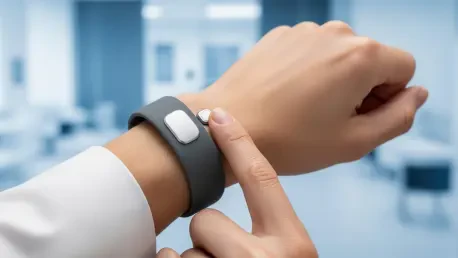
To address the urgent need for unobtrusive and precise monitoring, engineers have introduced the TeltoHeart wristband, a sophisticated medical-grade device that merges the convenience of a consumer wearable with the rigorous standards of clinical diagnostics. This innovation moves away from the messy wires and adhesives of the past by incorporating high-precision electrodes directly into the structure of a stylish, everyday wristband. The device operates by constantly monitoring the user’s heart rate in the background, using advanced sensors to identify patterns that deviate from the individual’s normal baseline. When the system detects a potential arrhythmia, it utilizes a gentle haptic vibration to notify the wearer that an episode may be occurring. At this moment, the user simply places their finger on a dedicated sensor on the device’s surface to initiate a high-quality, lead-I ECG recording that lasts for sixty seconds. This interaction ensures that transient events are captured in real-time.
The dual-functionality of the TeltoHeart system provides a seamless bridge between passive screening and active diagnostic recording, ensuring that no data point is lost during a critical event. Once the one-minute ECG recording is completed, the encrypted data is automatically transmitted via a wireless connection to a secure cloud platform, where it is immediately accessible to the patient’s healthcare provider. This capability eliminates the need for the patient to manually log symptoms or wait for a scheduled appointment to report concerns, which significantly reduces the time between the onset of a condition and the start of treatment. By providing medical-grade waveforms that doctors can trust, the wristband effectively turns the patient’s home into an extension of the cardiology clinic. This level of connectivity allows for a more collaborative relationship between patients and their medical teams, as physicians can adjust medications based on a continuous stream of verified, high-fidelity cardiac data.
Reliability First: Data Accuracy and High-Risk Protection
One of the most significant applications of this continuous monitoring technology is the protection of high-risk individuals, particularly those who have recently experienced a stroke or are at a high risk for atrial fibrillation. Atrial fibrillation is a notorious “silent” condition that often presents no outward symptoms but remains a primary driver of blood clots and subsequent strokes. For patients who have already suffered a neurological event, identifying the presence of this rhythm disorder is vital for preventing a secondary, and often more severe, recurrence. The TeltoHeart wristband provides these patients with a reliable safety net, functioning as a constant sentinel that identifies the subtle precursors of a major cardiac event long before they become life-threatening. By catching these issues early, clinicians can prescribe anticoagulant therapies with a much higher degree of confidence. This shift toward precision monitoring represents a major victory in reducing the global burden of stroke-related disabilities.
Achieving this level of reliability requires sophisticated software capable of distinguishing true cardiac events from the “noise” generated by the wearer’s physical movements and daily interactions. In the past, wearable heart sensors were frequently plagued by false positives caused by the simple act of walking or typing, which could lead to unnecessary anxiety and clinical over-diagnosis. To solve this, the wristband utilizes complex algorithms designed to evaluate signal quality in real-time, filtering out environmental interference and motion artifacts before the data is ever sent to a physician. This ensures that the medical professional is only reviewing clean, actionable data that accurately reflects the patient’s physiological state. Furthermore, the system is designed to identify “clusters” of events, providing insights into the frequency and density of arrhythmias rather than just isolated incidents. This level of analysis allows doctors to determine if a condition is progressing over time.
Strategic Progress: Implementation and Healthcare Policy
The transition from reactive medical care to a more proactive, data-driven approach marks a significant evolution in how society manages chronic cardiovascular conditions. By utilizing remote monitoring tools, the healthcare system can significantly reduce the strain on hospital resources, as patients no longer need to be admitted for long-term observation or frequent diagnostic check-ups. This model of care is particularly beneficial for those living in rural or underserved areas who may not have easy access to specialized cardiology centers. However, the widespread adoption of such technology requires a coordinated effort between medical device manufacturers, healthcare providers, and legislative bodies to ensure that these tools are integrated into standard practice. Moving toward a telemedicine-first strategy empowers patients to take an active role in their own health management, fostering a sense of agency that is often lost in traditional clinical settings. Focus is now on preventative care that prioritizes early detection.
While the technical foundations for this revolution were firmly in place, the ultimate success of remote cardiac monitoring hinged on updating outdated healthcare policies and insurance frameworks. For this technology to reach its full potential, it was essential that national health systems and private insurers recognized the long-term cost-effectiveness of preventing major cardiac events through early detection. Comprehensive reimbursement models were established to cover both the hardware and the professional time required to analyze the resulting data streams, ensuring that medical facilities could afford to implement these programs at scale. By addressing these systemic barriers, the medical community successfully paved the way for a scenario where heart disease was no longer a hidden threat that struck without warning. The integration of the TeltoHeart system into routine care provided a blueprint for how wearable technology could be used to solve the most complex challenges in modern medicine.