



The mobile industry has reached a critical juncture where the incremental updates of the past have finally given way to a fundamental divergence in how flagship smartphones capture our world. On one side, the Samsung Galaxy S26 Ultra represents the pinnacle of refined, software-driven photography, aimed at providing a reliable and balanced user experience for a broad audience. On the other, the Oppo Find X9 Ultra has taken an aggressive, hardware-first approach, packing massive sensors and specialized optics into its frame to challenge the status quo of mobile imaging. This comparison explores how these two giants stack up across real-world testing scenarios, exploring whether the power of physical glass can outweigh the sophisticated algorithms that have dominated the market. As consumers demand more from their devices, the choice between these two products defines a preference for either effortless consistency or professional-grade creative control.
Divergent Hardware and Design Philosophies
Samsung continues to refine its balanced flagship strategy, relying heavily on sophisticated software optimization to maximize the potential of its 200MP main sensor. While the S26 Ultra has seen significant improvements in aperture size to boost light intake, the overall architecture remains a familiar evolution of previous designs. Samsung’s goal is to provide a versatile kit that performs consistently across all focal lengths without requiring the user to be a photography expert. This is achieved through a complex pipeline of image stacking and artificial intelligence that compensates for the physical limitations of mobile sensors. The result is a device that feels incredibly dependable, ensuring that the user can pull the phone out of their pocket and capture a usable image in nearly any condition. By focusing on the reliability of the output, Samsung has created a polished ecosystem that favors the casual photographer and the social media professional alike.
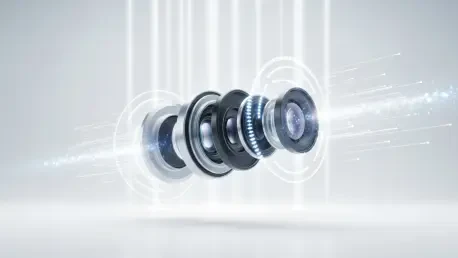
In sharp contrast, Oppo has pushed the boundaries of mobile hardware to an extreme degree that few competitors have dared to follow. By integrating a massive 200MP 3x telephoto sensor alongside a dedicated 10x optical zoom, the Find X9 Ultra aims to render dedicated compact cameras obsolete. This hardware-centric path focuses on raw sensor size and light sensitivity, particularly in its zoom lenses, which Oppo claims are significantly more capable of capturing detail than legacy sensors found in competing devices. The inclusion of a one-inch type main sensor provides a level of depth and texture that is difficult to replicate through software alone. This approach appeals to photography enthusiasts who want the highest quality source data to work with. While it makes the device slightly bulkier than its rivals, the trade-off is a level of optical performance that provides a more tactile and professional feel to every shot. Oppo is betting that physical superiority matters.
Color Science and Daylight Image Processing
In standard daylight, the two devices exhibit very different visual signatures that cater to distinct user preferences. Samsung sticks to its signature pop, delivering images with high contrast and boosted saturation that are immediately ready for social media platforms. This processing style ensures that colors like the blue of the sky or the green of a landscape are vibrant and punchy. While this produces eye-catching results, it can sometimes lead to artificial sharpening and a slight loss of realistic textures when viewed at full crop. The Galaxy S26 Ultra is designed for those who want their photos to look polished and exciting with minimal manual intervention. It excels at balancing exposure across a bright scene, ensuring that both shadows and highlights are clearly visible without looking flat. For many users, this provides a satisfying experience where every shot feels like a winner, regardless of the complexity of the ambient light or the position of the sun.
The Oppo Find X9 Ultra leans toward a natural and organic aesthetic that prioritizes depth over artificial enhancement. Thanks to its larger physical sensors, it produces a genuine optical background blur that software-based portrait modes often struggle to replicate accurately. In its specialized Master Mode, developed in collaboration with imaging experts, the Oppo delivers realistic skin tones and preserves fine details that Samsung’s more aggressive processing might smooth over in the pursuit of noise reduction. This makes the Oppo a favorite for enthusiasts who prefer a professional, lifelike look that resembles the output of a high-end mirrorless camera. The device captures a wider dynamic range in a single frame, allowing for more flexibility if the user chooses to edit the photo later. Instead of forcing a specific look on the image, the Find X9 Ultra provides a rich, textured canvas that respects the reality of the scene being captured by the lens.
Mastering the Night and Wide Perspectives
Low-light photography remains a primary metric for flagship success, and these two devices approach the challenge from opposite ends of the technical spectrum. Samsung prioritizes the mood of a scene, opting for saturated colors and realistic light levels that do not try to turn night into day. This approach keeps the atmosphere of evening shots intact, preserving the warm glow of streetlights or the soft shadows of a dimly lit interior. In extremely dark environments, the S26 Ultra relies on its computational photography engine to stitch together multiple exposures, which generally results in a very clean image with excellent highlight control. For users who want their nighttime photos to feel evocative and true to their memory of the moment, Samsung’s processing offers a consistent and pleasing result that handles high-contrast light sources without significant flare. It is a reliable system for anyone who frequently finds themselves capturing memories after the sun has set.
When it comes to ultra-wide landscapes, the manufacturers prioritize different elements of the frame to achieve their desired look. The Oppo Find X9 Ultra excels at capturing contrast and detail in the shadows and sky, providing a more textured composition that avoids the flat look common in mobile wide-angle lenses. Its larger ultra-wide sensor ensures that corner sharpness is maintained, which is a common weak point for many competitors. Samsung, meanwhile, focuses on exposing specific foreground elements, such as foliage or architectural details, and excels at preventing the halo artifacts that often appear in high-contrast areas. The Galaxy S26 Ultra uses advanced geometric correction to ensure that buildings and horizons stay straight, even at the very edges of the frame. This makes it particularly effective for travel photography where capturing the scale of a scene is more important than absolute pixel-level detail or the raw dynamic range of the shadows.
The Frontier of Zoom and Macro Photography
One of the most surprising outcomes of head-to-head testing occurs in the realm of portraiture and high-dynamic-range management. Despite Oppo’s superior hardware on paper, Samsung’s processing algorithms are often better at managing difficult lighting, such as direct sunlight during the golden hour. Samsung’s ability to process light flares and maintain a pleasing aesthetic in high-contrast scenarios shows that software still plays a vital role in final image quality. The Galaxy S26 Ultra’s portrait mode is exceptionally good at subject separation, even with complex hair or semi-transparent clothing. However, the hardware gap becomes undeniable when pushing the limits of zoom and macro photography. The Oppo Find X9 Ultra’s massive telephoto sensors allow for telemacro shots that can focus on minute subjects with stunning clarity. While the Samsung struggles to lock focus on tiny objects at close range, the Oppo captures textures and fine threads with impressive ease.
Expanding on the technical capabilities of the telephoto systems, the Oppo Find X9 Ultra utilizes its dual-periscope architecture to bridge the gap between traditional and digital photography. By providing native optical zoom at both 3x and 10x, it ensures that there is no loss of data at critical focal lengths used for street photography and nature observation. This level of hardware commitment allows for a more natural fall-off of light and a depth of field that software cannot currently synthesize with perfect accuracy. Samsung’s 100x Space Zoom remains a marvel of digital stabilization and AI reconstruction, allowing users to read signs from great distances, but it cannot match the raw resolution found in Oppo’s optical path. For users who intend to crop their photos or print them in large formats, the Oppo’s approach provides a distinct advantage. The choice becomes a trade-off between the sheer reach of Samsung’s digital prowess and the optical fidelity of Oppo’s glass.
Final Evaluation and Strategic Recommendations
The testing process demonstrated that the choice between these two powerhouses rested on individual priorities rather than a single metric of quality. While Samsung solidified its position as the king of reliability and social media readiness, Oppo proved that hardware innovation could still disrupt established software dominance. Enthusiasts who valued raw data and optical purity found the Find X9 Ultra to be the superior tool for complex lighting and macro work. Conversely, professionals who required immediate, high-quality results for fast-paced environments gravitated toward the Galaxy S26 Ultra. It was evident that the market benefited from these two distinct philosophies, as they pushed each manufacturer to innovate in different directions. The comparison highlighted how mobile photography had matured into a diverse field where there was no longer a single correct answer. Instead, the results showed that the best camera was the one that aligned with the specific creative vision of the user.
Looking at the outcome of this evaluation, the recommended course of action for buyers involved a careful assessment of their specific imaging needs. For those who frequently engaged in professional editing, the Find X9 Ultra offered the most versatile files and superior optical depth. It was suggested that users prioritizing macro and long-range clarity should invest in the Oppo ecosystem. Alternatively, the Galaxy S26 Ultra remained the primary recommendation for individuals who valued a cohesive software experience and a reliable camera that performed under any condition. Actionable steps for prospective owners included testing the ergonomic weight of each device, as the Oppo’s hardware required a larger physical footprint. It was also important to consider the long-term software support cycles provided by each brand, as this influenced the longevity of the AI-driven features. Ultimately, the decision rested on whether one prioritized the art of photography or the convenience of a smart device.







