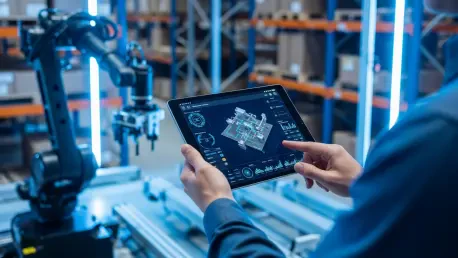

The rapid proliferation of sophisticated autonomous systems across industrial and domestic sectors has fundamentally altered the paradigm of human-machine interaction, necessitating a universal control plane that prioritizes portability and high-speed data throughput. While early robotics relied on tethered consoles or expensive proprietary hardware, the current landscape of 2026 demonstrates that the modern smartphone or tablet is no longer just a peripheral but the essential nervous system for robotic fleets. These mobile applications serve as the primary gateway for complex task delegation, allowing users to oversee intricate maneuvers from across a factory floor or halfway around the globe with identical levels of precision. This shift is driven by the ubiquity of high-performance mobile processing units and the arrival of low-latency 5G and 6G networks, which provide the bandwidth required for real-time sensor feedback. Consequently, the mobile interface transitioned into a mission-critical component that manages everything.
Seamless Integration: Bridging Hardware and Human Interaction
Real-Time Command and Telemetry
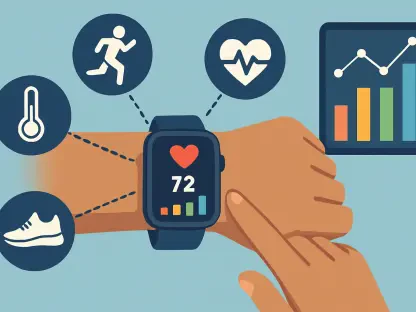
Building on this foundation, modern robotic units generate massive volumes of telemetry data that require instantaneous visualization to ensure operational safety and efficiency in dynamic environments. Mobile applications facilitate this by acting as a high-fidelity dashboard where users monitor thermal signatures, battery health, and joint stress levels through intuitive graphical overlays. In the field of search and rescue or hazardous material handling, the ability to receive a live 4K video stream directly on a mobile device allows operators to make split-second decisions that prevent hardware loss or human injury. Furthermore, the integration of haptic feedback and gyroscope-based controls within these apps creates a more natural interface for teleoperation, effectively reducing the learning curve for new technicians. By leveraging advanced display technologies, developers managed to pack information-dense layouts into a form factor that is both accessible and powerful for various robotic applications.
Simplifying Complex System Navigation
Beyond mere monitoring, one of the most significant hurdles in historical robotics was the requirement for specialized coding knowledge to perform even basic adjustments to a robot’s behavioral parameters or designated pathways. Current mobile ecosystems have solved this issue through the implementation of low-code or no-code drag-and-drop interfaces that allow non-technical staff to reprogram task sequences on the fly. Whether it is adjusting the sorting algorithm for a logistics cobot or defining the boundaries for a commercial lawn care unit, the mobile app provides a visual sandbox for logical construction. This democratization of technology means that the workforce can adapt to changing production needs without waiting for external software engineers to update the core firmware of the machines. Additionally, the inclusion of augmented reality features within these apps allows users to see a virtual image of the robot’s intended path, which significantly aids in spatial planning.
Data Ecosystems: Enhancing Intelligence and Reliability
Cloud Connectivity and Continuous Updates
Transitioning from interface to infrastructure, the relationship between mobile software and robotic hardware has evolved into a continuous loop of improvement where data collected in the field informs the next generation of behavioral models. Mobile apps act as the conduit for this exchange, automatically syncing mission logs to cloud-based servers where machine learning algorithms analyze performance discrepancies or environmental challenges. Once a solution is developed, the same mobile infrastructure facilitates over-the-air updates that ensure every unit in a fleet operates on the most current and secure version of its operating system. This capability is vital for maintaining cybersecurity standards in an era where industrial espionage and remote hacking pose significant threats to critical infrastructure and trade secrets. By centralizing the update process through a secure mobile gateway, companies eliminated the need for manual maintenance, which previously resulted in substantial downtime and high costs.
Predictive Maintenance and Diagnostic Precision
This evolution in connectivity naturally led to improved maintenance; reliability in the robotic sector was previously measured by reactive repairs, but the integration of mobile diagnostics shifted the focus toward a proactive strategy for asset management. Technicians utilized mobile apps to run deep diagnostic sweeps that pinpointed microscopic wear on gears or identified subtle voltage drops in power supplies before a failure occurred. This granular level of insight was achieved by pairing the processing power of mobile devices with onboard robotic sensors, creating a secondary layer of validation that cross-referenced real-time performance against historical benchmarks. Engineers prioritized the development of standardized protocols that allowed mobile apps to act as universal diagnostic tools across different brands of robotic systems. Such interoperability reduced the logistical burden on maintenance teams, who no longer needed to carry specialized controllers, ensuring that industrial systems operated efficiently.