
The relentless pursuit of computational supremacy has transitioned from a theoretical curiosity into a fundamental pillar of modern civilization, fundamentally altering how humanity interacts with information. As the limitations of traditional silicon architecture become increasingly apparent, the focus has shifted toward the untapped potential of quantum mechanics to secure a lasting digital legacy. This transition represents more than a mere upgrade in processing speed; it constitutes a seismic shift in the way knowledge is preserved and transmitted across centuries. Unlike previous technological eras that relied on fragile magnetic or optical media, the current integration of quantum systems offers a robust framework for informational permanence. The decisions made regarding the design and implementation of these processors will inevitably dictate the quality of data available to inhabitants of the far future. By examining the current trajectory of chip development, it becomes possible to discern how these microscopic artifacts will eventually serve as the primary records of the present epoch’s achievements.
The Evolution of Informational Permanence
Bridging the Gap: Silicon to Quantum Foundations
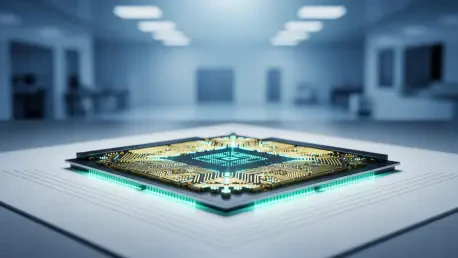
While silicon-based semiconductors served as the backbone of the initial digital revolution, the inherent physical constraints of electron tunneling at the atomic scale necessitated a radical departure toward more resilient structures. Between 2026 and 2030, the emphasis remains on the creation of superconducting qubits that maintain coherence for extended periods, providing a stable medium for complex calculations. These advancements ensure that the hardware itself possesses a level of structural integrity previously thought impossible for high-performance computing components. By utilizing synthetic diamond substrates and topological insulators, engineers are creating chips that resist the typical degradation processes associated with heat and radiation. This shift ensures that the physical manifestations of the present technological prowess are not merely ephemeral gadgets but are instead durable monuments of engineering. The meticulous assembly of these quantum circuits ensures that the information they hold remains accessible.
Preservation Through Complexity: The Data Storage Revolution
The implementation of sophisticated error-correction codes marks a critical turning point in the quest for long-term data preservation within quantum systems. Unlike classical bits that are prone to corruption through simple bit-flips, quantum information is protected by intricate mathematical lattices that allow for the recovery of lost data without compromising the entire set. This level of redundancy ensures that even if individual qubits fail over time, the collective information remains coherent and recoverable for future generations. Recent breakthroughs in surface code architectures have demonstrated that quantum memory can be maintained with high fidelity, even in the presence of significant external interference. By prioritizing these self-healing properties, developers are essentially creating a digital record that possesses an inherent ability to defend itself against the passage of time. This technological resilience is a vital component of the legacy being established today, providing a stable platform for the continuous storage of human knowledge.
Societal Impact and Future Archaeologies
Deciphering the Past: Quantum Computing as a Time Capsule
Quantum computing offers a unique capability to reconstruct complex historical patterns from fragmented data sets, essentially acting as a bridge between the present and the far future. The ability to simulate molecular structures and environmental conditions with extreme precision allows future researchers to understand the specific challenges and successes of the current era in unprecedented detail. This level of insight goes beyond mere text and images, providing a holistic view of the physical and social dynamics that define the current period and beyond. By analyzing the quantum signatures left within the hardware, future historians will be able to verify the authenticity of records and detect any attempts at historical revisionism. This ensures that the legacy remains an accurate reflection of reality, untainted by the biases or technical failures that often plague historical accounts. The preservation of these chips provides a high-fidelity window into the past, allowing future inhabitants to learn from the decisions made during this period.
Ethics of Immortality: Managing the Digital Inheritance
The transition toward quantum-based information systems required a comprehensive strategy that prioritized material durability, mathematical error correction, and ethical governance. Stakeholders in the technology and policy sectors acted decisively to establish standardized protocols that ensured the longevity of digital records beyond the immediate fiscal cycle. These efforts resulted in the creation of a robust infrastructure capable of maintaining its integrity for two and a half centuries. By investing in the development of synthetic substrates and topological protection, engineers successfully mitigated the risks of physical degradation and environmental interference. Furthermore, the international community collaborated to draft legal frameworks that balanced the preservation of history with the protection of individual privacy rights. The focus remained steadfastly on creating a legacy that was both accessible and accurate, providing future researchers with a clear understanding of the digital era. These strategic decisions paved the way for a future where knowledge remained a continuous thread.