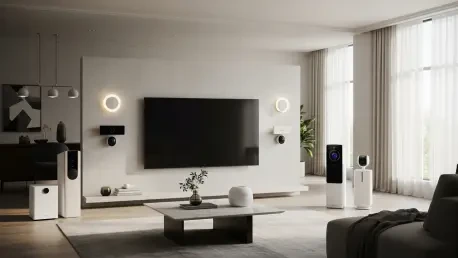

The fundamental transformation of the residential automation market has reached a critical tipping point as of May 2026, signaling a permanent departure from the prohibitive pricing models that once defined the industry. For nearly a decade, the concept of a truly integrated living space was a luxury reserved for early adopters willing to navigate a labyrinth of proprietary software and exorbitant installation fees. However, recent developments in standardized protocols and hardware manufacturing have effectively democratized the technology, allowing high-performance security, lighting, and environmental controls to enter the mainstream consumer market. This “reset” is not merely a seasonal discount but a structural shift in how electronics are designed and sold, favoring high-volume accessibility over niche exclusivity. As modern apartments and suburban homes become increasingly reactive to their inhabitants’ needs, the financial barrier to entry has crumbled, revealing a landscape where sophisticated automation is a baseline expectation rather than a status symbol. This change reflects a broader cultural move toward efficiency and security, where the cost of a smart device is finally outweighed by its tangible benefits to the household budget and overall well-being.
The Technological Foundation of 2026
The Impact of Matter and Thread Protocols
The primary driver behind this newfound affordability is the universal adoption of the Matter and Thread protocols, which have successfully dismantled the walled gardens that once forced consumers into strict brand loyalty. In the previous era, building a smart home required a definitive choice between competing ecosystems like Apple Home, Google Home, or Amazon Alexa, as mixing devices often led to technical conflicts and a reliance on fragile cloud connections. By 2026, these universal communication standards have enabled hardware from disparate manufacturers to communicate locally and instantaneously without the need for expensive proprietary bridges or hubs. This interoperability ensures that a budget-friendly sensor from one brand can trigger a high-end thermostat from another with zero latency. By removing the technical debt associated with maintaining unique software stacks for every possible integration, manufacturers have significantly reduced their overhead, passing those savings directly to the consumer while improving the reliability of the entire network. This protocol shift has shifted the value from the ecosystem itself to the utility of the individual device, creating a more competitive and consumer-friendly marketplace for all.
Strategic Pivots of Major Industry Players
Major industry players have recognized this shift and adjusted their business strategies to thrive in a landscape defined by low-margin hardware and high-volume adoption. IKEA, for example, has undergone a massive transformation of its electronics department, relaunching its entire smart home portfolio to prioritize Matter-over-Thread compatibility at price points that undercut traditional tech giants. Even premium brands such as Philips have introduced budget-oriented sub-brands like WiZ, which offer sophisticated lighting features without the high entry costs associated with their legacy Hue systems. These strategic pivots indicate a collective industry realization that the future of the smart home lies in ubiquity rather than luxury. As the market saturates with compatible devices, the focus has shifted from selling a single expensive ecosystem to providing affordable, modular components that fit into any existing setup. This transition has effectively neutralized the “premium tax” that previously discouraged the average shopper from experimenting with automated living solutions. The resulting competition has forced legacy brands to innovate faster while keeping prices low, benefiting the end user with more features for less money.
Category Breakdown: Security and Power
Evolution of High-Resolution Home Security
Visual security has experienced one of the most drastic price reductions in the current market, with high-definition 2K resolution now serving as the baseline standard for entry-level devices. Previously, features such as “head-to-toe” video doorbells or intelligent motion tracking were locked behind steep price tags and mandatory service contracts. Today, products like the Blink Wired Doorbell 2K+ and the latest Wyze Cam iterations have revolutionized consumer expectations by offering ultra-sharp imaging and weatherproofing for under $50. These devices often include onboard AI for person and package detection, processing these tasks locally to ensure speed and privacy without requiring a monthly cloud subscription. The competition in this sector has become so fierce that even budget models now include advanced features like color night vision and two-way audio as standard inclusions. This accessibility means that a comprehensive home surveillance network, which once cost thousands of dollars to install professionally, can now be deployed for a fraction of that amount by any homeowner. Consequently, the peace of mind provided by professional-grade monitoring is now accessible to residents of all income levels.
Smart Speakers as Central Control Hubs
The central intelligence or “brain” of the modern home has also evolved from a specialized, expensive server into a multi-functional, affordable appliance. A standard smart speaker, such as the latest Amazon Echo Dot or Google Nest Mini, now functions as a robust Matter controller and Thread border router, often available for less than the cost of a dinner for two. Beyond voice commands, these devices integrate environmental sensors that detect temperature, humidity, and even the sound of breaking glass or smoke alarms, making them essential safety tools. By consolidating these functions into a single, mass-produced device, manufacturers have eliminated the need for standalone hubs that previously added $100 or more to the initial setup cost. Furthermore, the rise of affordable smart plugs and outlet extenders has allowed users to integrate “dumb” appliances into these networks for negligible costs. This modular approach allows for a gradual expansion of the home system, where each new addition enhances the existing infrastructure without requiring a complete overhaul of the core management hardware. This decentralization of control has made the smart home more resilient and easier to maintain for the average person.
Atmosphere and Retrofit Solutions
Democratic Access to Atmospheric Lighting
The lighting industry has completed its transition from bridge-dependent, high-cost setups to streamlined Wi-Fi and Thread-based solutions that offer immense flexibility. Consumer demand for atmospheric control has led to the proliferation of affordable color-changing bulbs and LED strips from brands like Govee and WiZ, which often retail for as little as $20 to $30. These modern alternatives no longer require a dedicated central bridge to operate, as they connect directly to the home’s existing wireless network or communicate via local mesh protocols. This shift has democratized high-end features such as music synchronization, dynamic lighting scenes, and circadian rhythm scheduling, which were once the exclusive domain of professional installers. Because these products are built on open standards, they can be controlled through a single app or voice assistant regardless of the manufacturer. This ease of use, combined with the low cost of entry, has turned smart lighting into a common household upgrade rather than an extravagant luxury, allowing users to transform their living spaces with minimal financial commitment while also reducing energy consumption.
Precision Automation Through Affordable Sensors
The expansion of affordable sensor technology has finally enabled the dream of a truly reactive home where automation happens without manual intervention. Leading this charge is IKEA, which has flooded the market with motion, door, and window sensors priced so low that it is feasible to install them in every room of a standard residence. These tiny devices utilize the Thread protocol to ensure years of battery life and instantaneous response times, triggering lights or climate adjustments the moment someone enters a space. In the past, such a comprehensive sensor network would have been cost-prohibitive and technically challenging to maintain, but current hardware is designed for simple, tool-free installation. By moving away from complex programming toward intuitive, event-based routines, these sensors allow even non-technical users to create sophisticated automations. The result is a home that anticipates the needs of its occupants, improving energy efficiency and convenience without the need for constant interaction with a smartphone or voice-activated assistant. This invisible layer of technology provides comfort and savings without adding complexity to the daily routine.
Retrofitting Legacy Devices for Modern Use
A significant portion of the current market success stems from the development of specialized retrofitting tools that bridge the gap between legacy appliances and modern automation. For individuals living in older homes or rental apartments where replacing built-in systems is not an option, devices like the SwitchBot have become essential problem-solvers. These small, battery-powered mechanical arms can be attached to virtually any physical button or rocker switch, bringing voice control and scheduling to coffee makers, intercoms, and even garage door openers. Similarly, affordable infrared hubs have gained popularity for their ability to clone the signals of traditional remote controls, allowing users to manage aging air conditioners and televisions through their smart home interface. This pragmatic approach to automation acknowledges that most consumers are not looking to rebuild their entire lives around technology, but rather to add layers of convenience to the items they already own and trust, ensuring that smart features are inclusive of all living situations. These tools represent a sustainable way to upgrade a home while avoiding the high costs of complete appliance replacement.
Shift in the Consumer Landscape
Local Data Privacy and Subscription Relief
Data privacy and the elimination of recurring costs have become central pillars of the smart home market as consumers increasingly reject the “subscription-everything” model. In the past, the low initial price of a camera or hub was often a Trojan horse for mandatory monthly fees required to access basic features like video history or advanced automation. However, a significant market correction has occurred, with many leading brands now offering local microSD storage and on-device AI processing as standard features to attract privacy-conscious buyers. This shift not only provides long-term financial relief for the user but also ensures that sensitive household data remains within the physical walls of the home rather than being stored on a remote server. By prioritizing local control over cloud dependency, manufacturers have addressed the two largest hurdles to widespread adoption: ongoing costs and the fear of data breaches. This trend toward “local-first” technology has redefined the value proposition of smart devices, moving the industry toward a more transparent and consumer-friendly business model that respects the user’s digital and financial autonomy.
The End of the Premium Smart Home Tax
The so-called “smart home tax”—the significant premium once paid for the privilege of interconnectivity—effectively vanished as industry standards matured and competition intensified. By the middle of the decade, a fully functional and highly secure automated living space was successfully outfitted for a total investment that was often less than the price of a single high-end smartphone. This shift focused the industry on deeper integration with renewable energy systems and more advanced edge computing, which allowed homes to operate with near-total autonomy while further reducing utility costs. For the modern consumer, the necessary steps involved auditing existing setups for compatibility with universal standards and prioritizing hardware that offered longevity through firmware updates rather than planned obsolescence. This era of affordable automation demonstrated that the real value of a smart home was no longer found in its novelty, but in its ability to quietly and efficiently improve the quality of daily life for everyone, regardless of their budget or technical expertise. Moving forward, the emphasis shifted toward maintaining these systems as part of a sustainable, long-term household infrastructure.