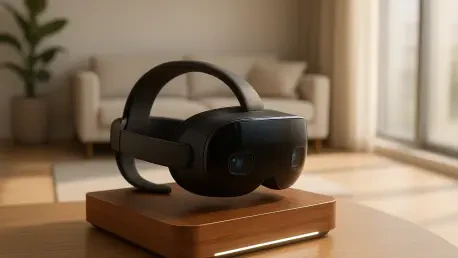

Valve’s $59 ergonomic kit and $29 power supply for the Steam Frame suggest a shift toward a modular accessory model where comfort and utility require separate consumer investments. This tactical decision highlights the maturation of the extended reality sector as it moves away from all-in-one bundles toward a specialized, pick-and-choose ecosystem. By mid-September, the market has clearly transitioned from experimental prototypes to sophisticated, high-fidelity hardware designed for long-term usage. The industry’s primary challenge today is no longer proving that the technology works, but rather optimizing the weight-to-performance ratio and ensuring that software ecosystems are robust enough to justify premium hardware costs. As consumer expectations rise, the focus has settled on three core pillars: visual fidelity via micro-OLED technology, wireless reliability through Wi-Fi 6E, and a diversified software library that moves beyond simple tech demos. This analysis examines how these elements have converged to create a stable, multi-tiered marketplace where virtual, augmented, and mixed reality are no longer distinct novelties but integrated tools for entertainment, productivity, and ambient digital interaction.
The Valve Steam Frame: Bridging Enthusiast PC VR and Standalone Utility
The release of the Valve Steam Frame on September 14 represents the most significant shift in PC VR strategy since the launch of the original Index. By moving away from the tethered cables that defined the early decade, Valve has introduced a wireless-first architecture that relies on a dedicated Wi-Fi 6E adapter to maintain low-latency connections to high-end gaming rigs. This hybrid approach addresses the fundamental bottleneck of standalone hardware, allowing the device to act as a lightweight client for intensive PC-side rendering while still being capable of running “Steam Frame Standalone Verified” titles locally. The pricing structure, ranging from $1,059 for the base model to $1,299 for the 1TB version, reinforces Valve’s position as a premium enthusiast brand. Unlike the subsidized models seen elsewhere, Valve is betting on a controlled supply chain and a randomized reservation system to maintain a prestige aura, ensuring that their hardware remains the gold standard for fidelity-focused users who prioritize performance over mass-market affordability.
Technically, the Steam Frame leverages the Snapdragon 8 Gen 3 processor not for high-end local gaming, but as an efficient management engine for spatial tracking, reprojection, and high-bitrate video decoding. The integration of a specialized version of SteamOS provides a unified interface that mirrors the ease of use found on the Steam Deck, creating a cohesive platform that bridges the gap between handheld gaming and immersive hardware. One of the most notable features is the inclusion of “Half-Life: Alyx” as a foundational experience, which has been optimized specifically for the Frame’s new foveated rendering capabilities. By utilizing eye-tracking to concentrate processing power on where the user is looking, Valve has managed to push visual clarity beyond the raw specs of the hardware. This closed-loop ecosystem, combined with a robust library of existing PC VR content, positions the Steam Frame as the primary competitor to enterprise-grade spatial computers, catering specifically to a demographic that values the depth of the Steam library above all else.
Smart Glasses and the Divergence of Immersive Experiences
A critical trend observed throughout this year is the clear bifurcation of the smart glasses market into two distinct specializations: display-centric media glasses and AI-driven assistant glasses. Manufacturers have recognized that a single device cannot yet master both high-end visual immersion and all-day, lightweight wearability. For instance, the release of the RayNeo iO and the GT Max series demonstrates this split perfectly. The iO model focuses on being a 33g, camera-free HUD designed for ambient data, navigation, and real-time AI translations. In contrast, the GT Max is a 78g personal cinema device designed for high-fidelity 1080p micro-OLED media consumption. This strategic separation allows consumers to purchase hardware tailored to their specific daily needs rather than settling for a compromised experience. The industry has effectively moved past the “one size fits all” philosophy, acknowledging that the hardware requirements for reading a text message and watching a 4K film are fundamentally at odds in a glasses-style form factor.
Price parity has also become a defining characteristic for display glasses this year, as evidenced by the competitive launch of the Viture Pro 2 at the $299 price point. These devices are no longer viewed as experimental peripherals but as genuine alternatives to traditional monitors and televisions. With built-in diopter adjustments for users with vision impairments and virtual screen sizes that mimic a 146-inch display, these glasses are gaining traction among mobile professionals and frequent travelers. The maturation of micro-OLED technology has been the primary driver of this trend, offering contrast ratios and pixel densities that allow for crisp text legibility, which was previously a major hurdle for AR productivity. As these devices become lighter and more affordable, they are starting to eat into the market share of high-end portable monitors, providing a private, expansive workspace that fits into a pocket. This shift suggests that the primary use case for wearable displays is moving toward utility and media consumption rather than purely gaming-focused applications.
Architectural Evolution: The Rise of Distributed Compute Models
The VR headset market is currently undergoing an architectural transformation where the “all-in-one” monolith is being replaced by distributed compute models. To achieve the 100g weight target necessary for comfortable, long-duration wear, industry leaders are increasingly offloading processing components and batteries to secondary “compute pucks” or optical tethers. This design philosophy is evident in the development of the Meta VR Glasses, formerly known as Project Phoenix, which utilizes a 300g external puck to handle the heavy lifting while keeping the head-mounted portion extremely thin. This separation allows for better thermal management and longer battery life, as the heat-generating processor is no longer sitting directly against the user’s forehead. It also simplifies the upgrading process, as users could potentially swap out their compute puck for a newer model without needing to replace the entire optical assembly, marking a significant step toward hardware sustainability and longevity.
While some competitors have moved toward distributed systems, others are focusing on pushing the boundaries of raw panel resolution. The anticipation surrounding the Pico Space Pro, featuring dual 4,000 PPI micro-OLED displays, highlights the ongoing arms race for visual clarity in the “prosumer” and enterprise sectors. These high-density displays are essential for applications requiring ultra-low 12ms latency and high-resolution passthrough, such as remote surgery or complex engineering design. By focusing on the enterprise market, these manufacturers are creating a high-end tier of spatial computing that prioritizes absolute fidelity over portability. The divergence between lightweight, consumer-grade wearables and heavy-duty, high-performance headsets shows that the XR market is fragmenting into clear categories based on professional versus personal use. As high-resolution passthrough becomes the standard, the line between virtual and mixed reality continues to blur, with users expecting digital overlays to be indistinguishable from the physical environment.
The Global Platform War: Android XR vs. Proprietary Ecosystems
The software landscape this year has been dominated by the emergence of Google’s Android XR as a unifying force for third-party hardware. This platform has provided a standardized operating system for manufacturers like Samsung and XREAL, allowing them to compete directly with the closed ecosystems of Apple and Meta. The rapid sell-out of reservation tiers for Android XR-powered glasses indicates a strong consumer appetite for an open, interoperable system that integrates seamlessly with the existing Android mobile ecosystem. By providing a familiar interface and a shared app store, Google has lowered the barrier to entry for both developers and users. This standardization is crucial for the long-term growth of the industry, as it allows developers to build applications that work across a wide range of devices without needing to re-code for different proprietary kernels. Consequently, the “cold war” between operating systems has intensified, with each platform vying to become the definitive “Windows” of the spatial computing era.
This fragmentation of operating systems—Meta’s Horizon OS, Google’s Android XR, and Valve’s SteamOS—has led to an increase in software exclusivity, which remains a double-edged sword for the consumer. While exclusive titles like “Payday: Aces High” drive hardware sales and encourage innovation within specific ecosystems, they also complicate the purchasing process for the average user who must navigate compatibility issues. The choice of a headset is now less about raw specs and more about which digital social circle and app library a user wants to inhabit. However, the rise of cross-platform standards like OpenXR is helping to mitigate some of these issues, allowing for limited interoperability in multiplayer environments. As the competition for dominance continues, the focus has shifted toward building the most comprehensive “lifestyle” ecosystem, where spatial computing is not just for gaming but serves as a central hub for social interaction, work, and personal organization, effectively mirroring the early growth of the smartphone market.
Maturation of Software Libraries and Gaming Genres
The 2026 software library demonstrates a decisive move away from short, experimental technical demonstrations toward deep, narrative-driven experiences that offer significant replay value. Modern releases are focusing on complex mechanics such as three-player co-op roles and procedural generation, which provide hundreds of hours of gameplay. A standout example is “Sol Protocol,” which requires players to take on specific roles as pilots, gunners, or engineers, fostering a level of social coordination that is unique to the immersive medium. Furthermore, the “Flat2VR” movement has reached a peak of professionalism, with major publishers now releasing official VR ports of successful traditional titles alongside their standard versions. This trend has significantly boosted the quantity of high-quality content available, ensuring that new hardware owners have immediate access to a library of established, polished games that have been expertly adapted for spatial input and haptic feedback.
Upcoming titles for the final quarter show a diversifying interest in genres that were previously underrepresented in the XR space. From survival shooters with advanced haptic support like “Into the Radius 2” to ambitious mixed-reality adaptations of high-concept literature like “Project Hail Mary,” the industry is proving that it can handle complex, serious storytelling. These projects indicate that developers have mastered the nuances of XR design, such as minimizing motion sickness and utilizing spatial audio to guide player attention. The integration of specialized haptic feedback, including vest and glove support, has further elevated these experiences, allowing players to feel the recoil of a weapon or the texture of a virtual object. As the year progresses, the focus is clearly on creating “must-have” titles that justify the high cost of current-gen hardware, moving the conversation from “what can this tech do?” to “what can I experience next?”.
Infrastructure Standards and the Modular Accessory Economy
The growth of the XR market is being supported by a robust infrastructure of modular accessories that address the persistent limitations of battery life and ergonomic comfort. As high-performance wireless streaming demands massive amounts of data and power, hot-swappable battery packs and dedicated power supplies have become indispensable for professional and enthusiast users. This “razor and blade” business model allows manufacturers to keep the base price of headsets relatively stable while offering a wide range of add-ons that allow users to customize their setup. For example, Valve’s introduction of specific ergonomic kits and external power solutions highlights a trend where the hardware is treated as a modular platform rather than a static product. This approach not only extends the lifespan of the device but also allows for a more personalized fit, which is essential for mass-market adoption among users with varying physical needs and preferences.
On the technical side, Wi-Fi 6E has solidified its position as the minimum requirement for a high-quality wireless XR experience. This standard provides the necessary bandwidth to stream high-bitrate video from a PC or cloud server with minimal interference from other household devices. The widespread adoption of this standard has been a game-changer for wireless fidelity, allowing for a level of visual consistency that was previously only possible with a physical tether. As 5G and fiber-optic networks continue to expand, the industry is also beginning to look toward cloud-based spatial computing, which could potentially offload all processing to remote servers, further reducing the weight and complexity of the hardware. For now, however, the focus remains on local infrastructure and the optimization of home networks to support the massive data loads required by modern headsets. This foundation is critical for the next stage of growth, as it ensures that the user experience is reliable and friction-free.
Strategic Integration: The Utility of Ambient Intelligence
The shift toward ambient AI and HUD functionality reflects a broader industry consensus that pure immersion is not always the ultimate goal for smart eyewear. A significant portion of the market is prioritizing “all-day” utility over the ability to render complex 3D worlds. These devices focus on providing subtle, non-intrusive layers of information, such as real-time language translation, calendar reminders, and AI-powered visual recognition. By moving toward a more fashion-conscious, lightweight aesthetic, manufacturers are reaching a demographic that finds traditional VR headsets too isolating or cumbersome. This segment of the market treats XR as a productivity enhancer rather than an entertainment destination, focusing on how digital intelligence can be integrated into the physical world to simplify daily tasks. The success of devices like the Samsung Jinju glasses suggests that there is a massive opportunity for hardware that prioritizes social presence and “eyes-up” interaction.
As the industry moved through these developments, it became clear that the focus on actionable modularity was the only path toward sustainable growth. Manufacturers successfully addressed the primary complaints of the previous years by separating processing power from the head-mounted display and embracing open software standards. The launch of the Steam Frame proved that enthusiasts were willing to pay a premium for high-fidelity wireless freedom, while the rise of Android XR created a competitive landscape for mid-range consumers. Developers shifted their focus from tech demos to deep, systemic games, which finally provided the content depth required for mass adoption. Looking forward, the industry took significant steps toward making spatial computing a standard part of professional and personal life, ensuring that the technology remained a tool for enhancement rather than just a niche hobby. The maturation of these ecosystems established a foundation for 2027, where the convergence of AI and XR was expected to redefine the relationship between humans and their digital environments.