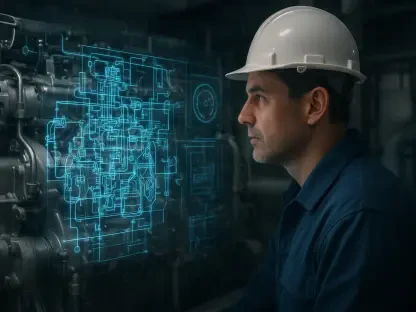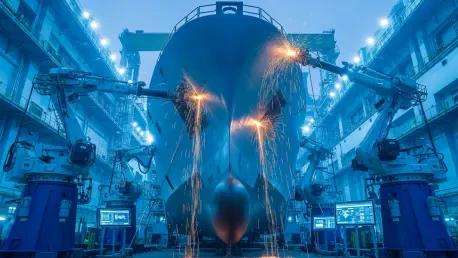

The global race for maritime supremacy is currently shifting from the sheer scale of manual labor toward the silent efficiency of autonomous robotics and software-driven logic. This evolution marks a significant advancement in defense manufacturing, moving from legacy processes to software-defined models. By treating ships as hardware extensions of complex algorithms, builders achieve a level of precision previously impossible. This shift is crucial for nations seeking scalable solutions that bypass the constraints of a dwindling pool of specialized manual labor.
The Paradigm Shift in Maritime Manufacturing
Modern construction is transforming through high-level automation and digital twin technologies. Unlike traditional shipyards, these facilities allow for rapid prototyping and the assembly of complex vessels with extreme accuracy. This evolution decouples naval power from industrial bottlenecks, allowing for software updates mid-production. Builders can now pivot production to meet new threats without redesigning the entire physical plant, providing a distinct advantage over nations reliant on rigid, decades-old construction methods.
Technological Pillars of Autonomous Ship Production
Software-Defined Manufacturing: The Core
AI-driven robotics now oversee every stage of fabrication, from hull welding to sensor integration. This performance is measured by the ability to maintain tighter tolerances and higher output speeds than manual labor. Unlike competitors, this system uses machine learning to optimize each build, identifying structural flaws before the vessel even touches the water.
Large-Scale Infrastructure: Deep-Water Logistics
Facilities like Port Alpha utilize massive footprints to support simultaneous production of diverse vessel classes. Strategic deep-water access and multimodal links ensure that finished assets transition seamlessly into deployment. This logistical framework is essential for launching large-scale platforms that exceed 1,200 feet, providing a specialized engine for rapid naval scaling.
Recent Breakthroughs and Industrial Milestones
The industry recently saw a surge in private investment, highlighted by multi-billion-dollar projects aiming for industrial-scale autonomy. These milestones represent a move toward production volumes reminiscent of mid-20th-century surges but powered by 21st-century technology. This trend favors massive facilities that can scale from small drones to large-scale strike vessels at an unprecedented pace.
Real-World Applications and Naval Integration
The deployment of this tech is evident in vessels like the 180-foot Marauder, which serves intelligence and strike missions. By utilizing an automated base, the military can deploy attritable systems—assets sophisticated enough to be lethal but cheap enough to be lost in combat. This capability revitalizes domestic capacity while providing a steady supply of high-tech assets for national security.
Identifying and Overcoming Sector Challenges
Technical hurdles include the complexity of integrating diverse AI systems and ensuring cybersecurity. The industry must bridge a talent gap by training workers proficient in both software and architecture. Current efforts focus on public-private partnerships and specialized training pipelines to mitigate these regulatory and workforce obstacles in a rapidly changing market.
The Future of Autonomous Maritime Power
Future developments will focus on greater modularity, where ships are assembled by robotic swarms with minimal human oversight. This long-term impact will create a more resilient industrial base capable of responding to geopolitical shifts in real-time. As these technologies mature, they will redefine how naval conflicts are deterred and contested on the world stage.
Summary of the Technological Outlook
The review of autonomous naval shipbuilding showed a maturing reality that reshaped the defense landscape. The integration of software and AI provided a solution to modern fleet challenges that traditional methods could not match. While hurdles remained, the industry trajectory pointed toward a future of high-volume production. Ultimately, this technology represented the most critical transition in maritime power since the shift to steam engines.