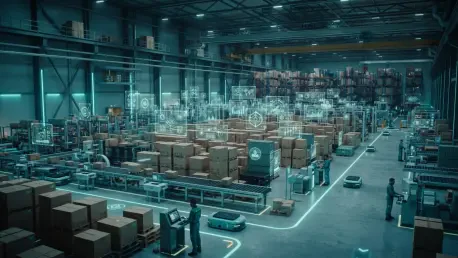

The Pierre acquisition provides the specific tools needed to inspect how new AI-generated logic interacts with existing complex enterprise software systems. This development represents a pivotal shift from mere code generation to the rigorous management of automated output. As OpenAI integrates Pierre’s specialized navigation and review libraries with its internal source control backend, Pando, the industry is witnessing a move toward an “agent-first” architecture. This transition is particularly relevant for sectors like logistics and supply chain management, where the complexity of legacy systems makes manual updates increasingly difficult. The emergence of these tools suggests that the primary challenge for engineering leaders is no longer the speed at which code is written, but the velocity at which it can be safely reviewed and integrated into production environments. By focusing on the structural integrity of the codebase, organizations can now address the widening gap between the high output of autonomous agents and the strict governance requirements of modern enterprise platforms.
Managing the Surge of AI-Generated Code
The adoption of AI coding assistants has fundamentally altered the productivity landscape, effectively shifting the primary bottleneck of software development from creation to validation. For decades, the pace of progress was limited by the human capacity to manually type and debug logic, creating a natural throttle on system complexity. However, the current era of development allows for the simultaneous deployment of multiple AI agents, each capable of refactoring legacy modules or generating thousands of lines of code in seconds. This surge in production volume has created a massive backlog in the integration phase, where traditional manual review processes simply cannot keep pace with the sheer quantity of incoming pull requests. To manage this influx, systems like Pando have been engineered to handle highly parallel activity, moving away from the linear, human-centric workflows that characterized previous version control standards and embracing a more automated approach to merging.
Pierre’s technology plays a crucial role in this new ecosystem by providing the granular visibility necessary to understand how specific modifications affect the broader system architecture. While automated agents can produce code that is syntactically correct and passes unit tests, the risk of introducing subtle logical conflicts increases exponentially as the number of active agents grows. The specialized libraries for diffing and code navigation allow human supervisors to visualize the ripple effects of a change across interconnected services, ensuring that a performance optimization in one module does not create a bottleneck in another. This infrastructure is essential for maintaining “source control” in a high-velocity environment where the frequency of code commits has increased by orders of magnitude since the start of 2026. By bridging the gap between raw code production and stable implementation, these tools provide the necessary scaffolding for organizations to scale their development efforts without risking the overall stability.
The High Stakes of Operational Validation
In mission-critical sectors such as logistics, the risk associated with AI-generated code is amplified by the tight coupling between software logic and physical operations. Systems like Transportation Management Systems or Warehouse Management Systems are not merely digital repositories; they are formalizations of complex physical constraints, commercial contracts, and safety regulations. A seemingly minor adjustment in a rating engine or a replenishment algorithm could lead to thousands of dollars in unexpected shipping costs or significant disruptions on a warehouse floor. Because AI agents often lack the nuanced operational context that comes from years of domain experience, they may propose solutions that are technically sound but operationally catastrophic. This creates a “validation gap” where the primary responsibility of the developer shifts from writing logic to serving as a guardian of the business rules, ensuring that every automated change aligns with the intricate realities of the physical supply chain.
To mitigate these risks, organizations must implement sophisticated testing protocols that go beyond basic functional validation to include deep operational simulations. The challenge lies in the fact that many existing legacy systems contain “hidden” rules—exception logic that was hard-won through years of operational firefighting and may not be well-documented. When an AI agent attempts to refactor such a system, it risks stripping away these vital safeguards in the name of code cleanliness. Therefore, the integration of tools like Pierre is vital for maintaining a “human-in-the-loop” approach, where experts can inspect the agent’s logic through a lens of domain-specific expertise. This high-stakes environment requires a move toward proactive governance, where automated tools provide the visibility needed to detect potential operational failures before they reach production. The ultimate goal is to leverage the speed of AI while maintaining the rigorous precision required to power the global economy safely.
Modernizing Legacy Systems and Reducing Debt
One of the most significant advantages of AI-driven development is the ability to efficiently tackle the massive technical debt that plagues many established enterprise platforms. Many of these systems are built on decades-old codebases characterized by aging interfaces and undocumented “spaghetti” logic that is both fragile and expensive to maintain. Traditionally, refactoring such systems was a low-priority task because it required diverting precious human engineering hours away from high-value feature development. However, AI agents are uniquely suited for this type of “grunt work,” as they can systematically analyze old code, generate comprehensive documentation, and create robust test suites for legacy modules that previously lacked any formal validation. By automating the modernization process, organizations can revitalize their existing infrastructure, making it more scalable and easier to integrate with modern cloud-based services without the need for a complete and risky system overhaul.
This newfound efficiency also has the potential to democratize software customization, allowing vendors to address niche customer requirements that were previously deemed too costly to pursue. In the past, small-scale but high-value requests often languished in development backlogs for years because they competed for limited resources. With AI agents reducing the “cost per line of code,” it becomes economically viable for software providers to create highly tailored versions of their products for specific industries or individual clients. This shift allows for the creation of more responsive and agile applications that can evolve in real-time alongside a customer’s changing business needs. As the burden of maintenance decreases, the focus shifts toward innovation and the delivery of highly specific business value. This transformation marks a departure from the rigid, one-size-fits-all software models of the past and signals a move toward a more flexible and user-centric approach to enterprise application development.
Establishing New Standards for Governance and Traceability
As the industry transitions toward a model where AI agents propose the majority of code changes, the requirements for transparency and traceability have become more stringent. Traditional version control systems record what was changed, but they often fail to capture the reasoning behind a specific modification. In an AI-assisted environment, it is crucial to maintain an audit trail that links every suggested change back to the original business requirement and the specific instructions, or prompts, given to the agent. This level of traceability is essential for maintaining accountability and ensuring that automated decisions can be audited for compliance with industry standards and internal policies. By documenting the relationship between human intent and AI execution, organizations can build a more transparent development process that fosters trust among stakeholders and provides a clear record for regulatory bodies. This approach ensures that even as the pace of change accelerates, the logic governing the system remains understandable.
For enterprise software buyers, this shift introduces a new set of criteria for due diligence when evaluating potential vendors and platforms. It is no longer sufficient for a company to simply state that they use artificial intelligence to accelerate their development cycles; they must also demonstrate the robustness of their governance frameworks. Prospective buyers are now asking more sophisticated questions regarding validation protocols, the frequency of escaped defects, and the vendor’s ability to manage the increased volume of code changes without compromising security. The focus is shifting toward providers who can offer a clear “provenance of code,” showing exactly how AI-generated logic was tested and approved by human experts. This demand for higher standards of accountability is driving the development of new tools and methodologies designed specifically for the oversight of autonomous agents. The result is a more disciplined and professional software industry where speed is balanced by a rigorous commitment to quality.
The Future of Competitive Differentiation
The ability to generate functional code is rapidly becoming a commodity, as powerful language models and APIs make it accessible to nearly any developer. Consequently, the competitive advantage in the software industry is shifting away from the sheer volume of features or the speed of initial product releases. The next generation of market leaders will be defined by their mastery of the “middle” of the development lifecycle—the complex tasks of architectural validation, secure deployment, and long-term maintenance. Companies that successfully implement the infrastructure to govern their AI agents will be able to maintain highly customized and complex systems without experiencing a proportional increase in engineering overhead. This allows them to offer the agility typically associated with smaller startups while maintaining the stability and reliability expected of established enterprise providers. The primary differentiator is now the precision with which an organization can manage the continuous evolution of its software.
Looking ahead, the maturation of AI-driven development required a fundamental rethink of software economics, where the cost of creation was low but the cost of verification remained the primary investment. This transition was mirrored in the history of global trade, where the introduction of faster transportation methods necessitated the development of more complex logistics networks and regulatory frameworks to ensure safety and efficiency. Organizations that embraced the new tools for governance and change management positioned themselves to thrive in an environment of rapid and continuous updates. By shifting the focus toward rigorous validation and architectural consistency, the industry established a foundation for more resilient and adaptable software ecosystems. The final outcome of these strategic shifts was the creation of a development environment where rapid innovation was no longer at odds with operational stability, allowing for the creation of sophisticated systems that effectively powered the global economy.