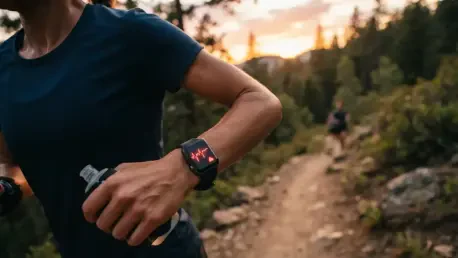

The Apple Watch Series 12 transitions seamlessly from professional environments to high-intensity workouts, though its single-day battery life remains a critical consideration for endurance athletes. As the wearables market enters a phase of significant maturity in 2026, the dominance once held by specialized outdoor brands has faced a credible challenge from versatile tech giants and agile performance-focused newcomers. Consumers no longer feel obligated to endure the steep learning curves or the utilitarian aesthetics often associated with traditional sports watches to access professional-grade telemetry. Instead, the current landscape offers a diverse spectrum of devices that prioritize different aspects of the athletic experience, from deep physiological recovery insights to effortless smartphone synchronization. This shift has democratized high-end tracking, allowing fitness enthusiasts to select tools that align with their specific lifestyle constraints rather than forcing their habits to fit the limitations of a single ecosystem. The result is a more competitive market where innovation in sensor accuracy and data transparency has become the primary battleground for consumer loyalty.
Section 1: The Apple Ecosystem and Athletic Integration
Building on the foundation of general health tracking, the Apple Watch Series 12 has evolved into a formidable companion for the serious athlete who demands more than just step counting. Its internal hardware suite features a sophisticated array of sensors that monitor electrocardiograms, blood-oxygen saturation, and precise skin temperature fluctuations, providing a comprehensive view of metabolic stress. The high-brightness Always-on display serves as a critical upgrade for outdoor enthusiasts, ensuring that pace and distance remain legible under the intense glare of the midday sun without requiring the user to break their stride or adjust their wrist. While the hardware maintains a premium, jewelry-like quality, it is backed by a rugged internal architecture capable of withstanding the rigors of open-water swimming and high-velocity trail running. This hardware capability ensures that the transition from a corporate setting to a rugged training environment is purely a matter of changing a watch strap, rather than switching to a different device entirely.
In terms of software depth, the Series 12 has introduced advanced running dynamics that were once the exclusive domain of elite chest straps and dedicated pods. Runners now have native access to ground contact time, vertical oscillation, and running power metrics, all tracked directly from the wrist with a level of precision that rivals industry veterans. Swimmers benefit from automatic stroke detection and lap counting that integrates seamlessly with the Health app, while cyclists can connect to Bluetooth-enabled power meters and cadence sensors to transform the watch into a comprehensive bike computer. The true advantage of this platform remains its vast third-party ecosystem, allowing users to leverage specialized training platforms like Strava or TrainingPeaks without the friction of manual data exports. For the user who prioritizes a high-fidelity user interface and the convenience of mobile payments and communication, the investment provides a level of daily utility that exceeds the scope of a traditional, fitness-only timepiece.
Section 2: Performance Minimalists and the Coros Philosophy
The Coros Pace 4 has emerged as a direct and aggressive challenger to established mid-tier sports watches by focusing on the essential needs of the performance-oriented runner and triathlete. Its design philosophy centers on extreme weight reduction, with the device weighing in at a mere 32 grams when paired with a breathable nylon band, effectively disappearing on the wrist during long-duration efforts. A notable ergonomic feature is the physical digital crown, which provides a tactile and reliable way to navigate through data screens even when the athlete is wearing winter gloves or dealing with the moisture of high-intensity sweat. This commitment to physical simplicity is complemented by an AMOLED display that provides vivid contrast for map navigation and interval tracking, proving that lightweight design does not necessitate a compromise in visual quality. For athletes who find the bulk of traditional rugged watches to be a hindrance to their natural movement, this minimalist approach offers a streamlined alternative that prioritizes speed and comfort.
Technical transparency serves as a cornerstone of the Coros experience, as the brand provides its entire EvoLab analytics suite to all users without the requirement of a monthly subscription or high-tier hardware purchases. This suite delivers comprehensive insights into training load, base fitness, and recovery levels, utilizing dual-frequency GPS to maintain tracking accuracy even in the challenging signal environments of dense urban forests or mountain canyons. The watch also includes support for offline music and basic breadcrumb navigation, providing sufficient independence from a smartphone during trail exploration or marathon race days. By offering features like VO2 Max estimation and race pace prediction at a highly competitive price point, the Pace 4 appeals to the pragmatic athlete who values data integrity over flashy lifestyle features. The software interface is notably fast and responsive, catering to those who want to spend less time scrolling through menus and more time focused on the path ahead during their daily training sessions.
Section 3: Budget Disruptors and AI-Driven Training
Representing the apex of value-driven engineering, the Amazfit Active 3 has disrupted the market by offering premium materials and advanced coaching at a fraction of the cost typically expected from high-performance brands. The inclusion of a stainless steel casing and a crisp 1.32-inch screen provides a durable and aesthetically pleasing exterior that belies its affordable entry point into the market. One of its most significant advantages is the extended battery life, which reliably provides between 10 and 12 days of operation on a single charge, a feat that significantly outpaces more expensive smartwatch competitors. This longevity makes it an ideal tool for users who wish to track their sleep and recovery without the interruption of frequent charging cycles, ensuring that the health data profile remains continuous and actionable. Despite its lower price, the device does not skimp on sensor capability, utilizing a six-system satellite positioning array to ensure that distance tracking remains reliable across varied geographic terrains and sports modes.
The integration of the Zepp Coach system introduces a sophisticated layer of AI-driven guidance that helps casual athletes transition into more structured training environments. This system analyzes historical performance and current fatigue markers to generate personalized workout plans that adapt in real-time to the user’s progress or setbacks. For someone training for their first local race, this feature removes the guesswork from interval sessions and rest days, providing a structured path to improvement that is usually reserved for those with dedicated human coaches. The watch supports over 160 distinct sports modes, catering to a wide range of activities from traditional track running to niche indoor fitness classes, and ensures that every calorie burned is accounted for in the broader health context. While it may not possess the decades of biological research found in some legacy brands, its modern approach to user-friendly coaching and long-term endurance makes it a compelling gateway for those entering the world of serious fitness tracking.
Section 4: Scientific Accuracy and Cardiac Recovery
For athletes who prioritize physiological precision above all other metrics, the Polar Pacer remains a steadfast choice rooted in decades of heart rate research and clinical validation. Utilizing the proprietary Precision Prime sensor technology, the device offers some of the most reliable optical heart rate data available, minimizing the interference common in high-movement activities like sprinting or rowing. This accuracy is essential for those who utilize zone-based training strategies to manage their intensity levels and avoid the pitfalls of overtraining during peak cycles. The user interface is intentionally streamlined, avoiding the clutter of unnecessary applications to focus on the essential data fields required for elite-level endurance performance. This no-nonsense approach appeals to the data-purist who views their wearable as a scientific instrument rather than a lifestyle accessory, ensuring that every session is guided by valid and reliable cardiac information.
The recovery insights provided by the Pacer extend beyond the duration of the workout, with features like Nightly Recharge offering a deep dive into the autonomic nervous system’s status during sleep. By analyzing heart rate variability and breathing rates, the device determines whether the body has sufficiently recovered from the previous day’s stressors, providing a daily readiness score that helps athletes decide when to push their limits and when to prioritize rest. Additionally, the FuelWise assistant acts as a smart nutrition coach, providing automated reminders for carbohydrate and fluid intake during long-distance efforts based on the athlete’s real-time energy expenditure. This holistic focus on the cycle of effort and restoration ensures that the user is not just tracking their miles, but actively managing their long-term health and performance potential. The Pacer thus serves as a specialized tool for those who understand that the quality of their recovery is just as important as the intensity of their training.
Section 5: Strategic Considerations for Future Wearable Selection
The analysis of the contemporary market revealed that moving away from a traditional ecosystem did not require a compromise in the quality of athletic data or device durability. It was observed that the democratization of sensors, such as dual-frequency GPS and advanced heart rate monitors, allowed athletes to prioritize their specific environmental needs over brand loyalty. The transition toward AI-driven coaching and seamless recovery analytics suggested that the industry moved away from simple data collection and toward providing actionable insights for the user. During the evaluation of these alternatives, it became clear that the distinction between a dedicated sports tool and a lifestyle smartwatch had narrowed, as each device successfully integrated professional metrics into more accessible form factors. These developments ensured that fitness enthusiasts possessed a wider range of options to support their training goals without the necessity of excessive financial investment or complex user interfaces.
Athletes who sought the best outcome for their training found that identifying their primary bottleneck was the most effective strategy for selecting a Garmin alternative. If the primary need involved deep integration with a smartphone for daily productivity, the Apple Watch Series 12 provided the most comprehensive solution despite its power limitations. Conversely, those who prioritized marathon performance and data transparency benefited significantly from the lightweight architecture of the Coros Pace 4. For budget-conscious individuals, the Amazfit Active 3 offered a reliable entry point with impressive battery endurance, while the Polar Pacer remained the gold standard for those focused on heart rate precision and physiological recovery. Ultimately, the successful selection of a fitness tracker in 2026 depended on aligning the device’s specialized strengths with the unique demands of the user’s athletic discipline and daily routine. This objective approach ensured that the wearable served as a true partner in the pursuit of long-term health and performance excellence.