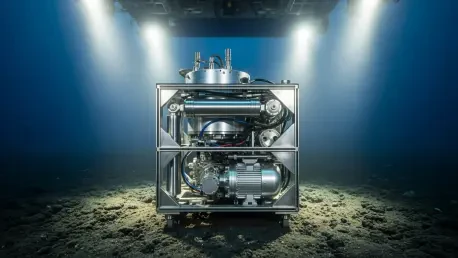

The silent pressure of the ocean at 3,500 meters is enough to crush a conventional submarine, yet a new piece of maritime engineering has just proven it can thrive in that unforgiving darkness. China has officially completed sea trials for a deep-sea electro-hydrostatic actuator, a tool that represents a quantum leap in the ability to manipulate objects on the ocean floor. Operating from the research vessel “Haiyang Dizhi 2,” this device has successfully bypassed the traditional limitations of tethered underwater machinery, signaling a new age of subsea intervention.
The Silent Milestone Reached Beneath the Waves
Breaking the 3,500-meter barrier is not merely a feat of endurance; it is a fundamental shift in how maritime engineering functions at depth. Traditionally, underwater tools relied on heavy hydraulic lines connected to a ship on the surface, a setup that was cumbersome and prone to failure. The “Haiyang Dizhi 2” trials have demonstrated that a self-contained unit can now perform complex tasks without a physical umbilical cord for power. This advancement bridges the “last mile” between laboratory prototypes and field-ready technology, moving China’s maritime capabilities from experimental theory to practical application.
The transition toward self-contained actuators marks a paradigm shift because it grants a level of operational freedom previously unseen in the deep ocean. By removing the need for surface-tethered hydraulics, engineers have created a system that is far more agile and difficult to detect from above. This milestone proves that high-precision mechanical work is no longer restricted to shallow coastal waters but can be conducted across the vast majority of the global seabed.
Why Undersea Infrastructure: The Modern World’s Achilles’ Heel
Subsea cables serve as the digital backbone of our civilization, carrying over 95% of all international internet data and trillions of dollars in financial transactions every day. These lines are the invisible threads that hold the global economy together, yet they are surprisingly fragile. While they are often protected by layers of steel and polymer, they were never designed to withstand intentional, high-pressure mechanical interference at extreme depths.
Most existing cable networks are buried or laid at depths of roughly 2,000 meters, a zone that was once considered a natural sanctuary due to the difficulty of reaching it. However, with the advent of tools designed to operate at 3,500 meters, this defensive depth has vanished. A single targeted disruption in these corridors could cause catastrophic economic and security consequences, severing entire nations from the global grid in a matter of seconds.
Engineering Independence: The Mechanics of the New Electro-Hydrostatic Actuator
The brilliance of the new electro-hydrostatic actuator lies in its integrated efficiency. Instead of sprawling networks of external oil piping, the device houses its hydraulic systems, electric motors, and control units within a single, pressure-resistant casing. This compact design significantly reduces the physical footprint of the tool, allowing it to be deployed with stealth and precision. It is a refined evolution of previous Chinese innovations, such as the diamond-coated grinding wheels once used for deep-sea cutting.
Moreover, the elimination of external piping increases the reliability of the system in the high-pressure environment of the abyss. By localizing the power source and the mechanical output, the actuator minimizes the risk of fluid leaks or pressure drops that frequently plague traditional hydraulic setups. This streamlined engineering approach ensures that the tool can perform delicate or destructive tasks with consistent force, regardless of the crushing weight of the water column above it.
Geopolitical Friction: The Securitization of the Deep Ocean
The emergence of such technology inevitably leads to a “dual-use” dilemma where the line between civilian maintenance and strategic sabotage becomes dangerously thin. While official reports focus on the upkeep of deep-sea energy infrastructure, the strategic implications are impossible to ignore. International precedents, such as the activity of Russian “shadow fleets” in the North Sea, have already shown how maritime research can serve as a cover for monitoring or prepping critical infrastructure for future disruption.
Anticipating the full-scale deployment of these tools, security analysts are now viewing the seabed as a primary theater of geopolitical competition. The ability to sever data lifelines at depths where repair is nearly impossible provides a country with immense leverage during times of tension. This securitization of the deep ocean suggests that the era of treating the seabed as a neutral, scientific frontier has come to an end, replaced by a reality where digital sovereignty is contested miles below the waves.
Strategies for Securing the Global Digital Frontier
Protecting these vital assets now requires a multi-layered approach that moves beyond simple physical shielding. Enhancing surveillance is the first priority, necessitating the deployment of real-time monitoring sensors along cable corridors in high-risk zones. These systems must be capable of detecting the acoustic signatures of autonomous actuators long before they make contact with the infrastructure. Hardening the cables themselves with new materials capable of resisting mechanical cutting tools would also provide a necessary layer of physical deterrence.
Ultimately, the technical challenge must be met with a robust policy framework. Establishing international protocols that clearly define hostile intent in deep-sea research was a necessary step to prevent the blurring of civilian and military boundaries. As the deep ocean was transformed into a contested space, the global community focused on creating deterrence through transparency and shared monitoring. These combined efforts aimed to ensure that the vital arteries of the digital age remained intact despite the rapid evolution of subsea intervention tools.