


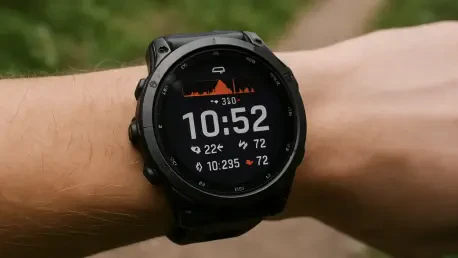

Standing atop a wind-swept ridge in the Sierra Nevada, where the air is thin and the nearest cellular signal is forty miles away, a piece of technology must transcend its status as a simple gadget to become a reliable survival tool. The Garmin Fenix 7 series serves as a definitive milestone in the world of wearable technology, specifically engineered for the rigorous demands of elite athletes and outdoor explorers who view their equipment as a critical extension of their own physical capabilities. In an era where many smartwatches focus on generalized lifestyle features like social media notifications and aesthetic minimalism, Garmin has doubled down on rugged durability and specialized performance metrics that provide actual utility in the wild. This device is not merely a piece of jewelry intended for a boardroom; it is a high-precision instrument designed to withstand the harshest environments while providing deep, actionable insights into human physiology and global navigation. By focusing on the intersection of hardware resilience and software intelligence, Garmin has established a new gold standard for what a professional-grade wearable should provide to its user under extreme conditions.
The series is built upon a versatile ecosystem that caters to a wide range of physical needs and varied preferences through a modular approach to design. By offering three distinct sizes—the compact 7S, the standard 7, and the oversized 7X—Garmin ensures a comfortable and secure fit for any wrist size, which is a fundamental requirement for accurate biometric sensor readings. Furthermore, the inclusion of Solar and Sapphire Solar editions allows users to prioritize battery longevity and screen resilience based on their specific mission profiles. This diverse lineup demonstrates an acute understanding of the consumer market, recognizing that a mountain climber on a multi-day trek in the Pacific Northwest has vastly different requirements than a marathon runner training in a high-density urban setting. Each model within the ecosystem maintains the core functional integrity of the brand while providing the flexibility necessary for different athletic disciplines. This strategic diversity ensures that the Fenix 7 remains relevant across a broad spectrum of activities, from deep-sea diving to high-altitude mountaineering.
Precision Engineering and Physical Resilience
Innovations in Hardware: The Evolution of Industrial Design
The transition to the Fenix 7 brought about a refined design language characterized by a bezel-free aesthetic that maximizes screen real estate without increasing the overall footprint of the device on the wrist. This improvement in legibility is a crucial upgrade for those navigating complex topographic maps in low-light conditions or during high-velocity activities where a quick glance must provide a wealth of information. By narrowing the metal housing and expanding the active display area, Garmin has addressed one of the primary complaints of previous generations, making the interface feel more immersive and modern. The touch-screen functionality, which can be toggled on or off, adds a layer of intuitive interaction that complements the traditional five-button layout. This hybrid approach ensures that the watch remains usable in freezing temperatures with heavy gloves while offering the convenience of a modern smartphone interface during casual daily use or when reviewing detailed post-activity data.
Beyond the external visuals, the internal hardware houses a sophisticated optical heart-rate sensor that acts as the core engine for the entire health and performance suite of the watch. Every heartbeat is monitored with high precision, feeding data into complex proprietary algorithms that estimate everything from blood oxygen levels to overall cardiovascular fitness trends. This sensor is protected by a redesigned housing that minimizes external light interference, which is often a source of error in wrist-based biometrics during intense physical movement. The integration of this high-fidelity sensor allows for continuous monitoring of stress levels, respiration rates, and even body battery scores, providing a comprehensive view of the wearer’s physiological state throughout the day. By prioritizing the accuracy of this foundational data, Garmin ensures that the higher-level training insights provided by the software are based on a bedrock of reliable biological information, which is essential for athletes who make training decisions based on these metrics.
Structural Integrity: Meeting Military-Grade Environmental Standards
Durability remains a cornerstone of the Fenix identity, with the device meeting stringent military-grade standards for thermal, shock, and water resistance to ensure it remains operational in the most unforgiving climates. Constructed with premium materials such as titanium and fiber-reinforced polymers, the watch is designed to absorb significant impacts and resist the corrosive effects of salt water and sweat. Capable of functioning at depths of up to 100 meters, the device is built to survive extreme conditions that would likely destroy a standard consumer smartphone or a less robust fitness tracker. This rugged construction ensures that whether a user is scrambling over abrasive granite peaks, mountain biking through mud-clogged trails, or swimming in the open ocean, the device remains a reliable partner that does not require delicate handling or constant protection from the elements. The physical buttons are engineered with a tactile click that provides feedback even when the watch is submerged or covered in debris, maintaining operational control in all scenarios.
This focus on physical longevity is a strategic departure from the planned obsolescence often found in the broader consumer electronics industry. Garmin has designed the Fenix 7 to be a long-term investment, providing a level of reliability that builds deep brand loyalty among professionals who cannot afford equipment failure in the field. The screen is protected by chemically strengthened glass or optional sapphire crystals, which are virtually scratch-proof and maintain clarity even after years of heavy use in abrasive environments. For the American outdoor enthusiast, this means a watch that can endure a decade of adventures across the diverse landscapes of the United States, from the humid swamps of the Everglades to the arid deserts of the Southwest. By focusing on material excellence, the brand reinforces its reputation as a provider of “mission-critical” gear rather than a mere lifestyle accessory. This commitment to durability is not just about survival; it is about providing the user with the peace of mind necessary to focus on their performance rather than the safety of their equipment.
Advanced Power and Performance Tracking
Solar Integration: Achieving Energy Autonomy in the Field
One of the most significant hurdles for outdoor electronics is battery anxiety, a challenge that Garmin addresses through innovative solar harvesting technology that redefines the expectations for wearable longevity. The Power Sapphire lenses utilized in the high-end models convert sunlight into electrical energy, effectively extending the device’s operational life during long expeditions where traditional charging outlets are non-existent. Coupled with highly customizable power-management software, this allows users to toggle specific sensors, such as GPS frequency or backlight intensity, to ensure the watch lasts the entire duration of a multi-week through-hike or an ultra-endurance race. In high-sunlight environments, the solar charging can provide a significant boost to the standard battery life, sometimes adding days of usage in smartwatch mode or several hours of continuous GPS tracking. This technological leap effectively bridges the gap between digital functionality and the reliability of traditional mechanical or solar-powered field watches.
The practical application of this solar technology is most apparent during extended wilderness stays where every milliampere of battery capacity is precious. For a hiker traversing the Appalachian Trail from 2026 to 2027, the ability to rely on the sun for supplemental power means fewer stops at towns and a lighter pack without the need for massive portable power banks. The software provides a real-time “solar intensity” graph, allowing the user to optimize their exposure and understand exactly how much energy they are harvesting from their environment. This transparency fosters a deeper connection between the user and their surroundings, turning environmental conditions into a functional resource. By reducing the frequency of required charges, Garmin has created a device that feels less like a tethered electronic peripheral and more like an autonomous tool. This autonomy is vital for those who push the boundaries of exploration and require their gear to keep pace with their ambitions without the constant need for a wall outlet.
Training Intelligence: Predictive Analytics and Recovery Insights
In addition to its physical stamina, the Fenix 7 functions as a sophisticated digital coach by providing predictive and recovery-based analytics that help athletes optimize their training cycles. It utilizes a combination of Heart Rate Variability (HRV) and comprehensive sleep tracking to generate a “Recovery Time” recommendation, which is essential for avoiding the pitfalls of overtraining and injury. By analyzing the “impact” of every workout—considering both aerobic and anaerobic strain—the watch provides American athletes with the data-driven confidence to know when to push for a personal best and when to prioritize active rest. The software even calculates a “Training Readiness” score, which synthesizes recent sleep, recovery time, and acute load to give a clear picture of the body’s current capacity for intense exertion. This level of insight was once reserved for elite professionals with access to sports science laboratories, but it is now accessible on the wrist of any dedicated amateur.
The predictive nature of these analytics extends to race-day performance, where the watch can estimate finishing times for various distances based on current fitness levels and historical training data. Features like the “Real-Time Stamina” tracker provide a live look at potential energy reserves during a run or ride, helping athletes pace themselves effectively and avoid “bonking” before the finish line. This proactive approach to data allows for a more nuanced understanding of how different variables, such as heat or altitude, affect performance in real-time. For a triathlete training in the varying climates of the United States, these insights are invaluable for adjusting intensity levels on the fly to match their body’s physiological reality. By transforming raw data into actionable advice, the Fenix 7 moves beyond simple logging and becomes an active participant in the athlete’s journey toward their goals. This transition from reactive tracking to proactive coaching represents the current frontier of wearable technology and cements Garmin’s position as a leader in the performance space.
Navigation and Market Positioning
Mapping Excellence: Multi-GNSS Systems and Situational Awareness
Navigation has long been the hallmark of the Fenix series, and the 7 continues this tradition with support for Multi-GNSS satellite systems, which provide superior positioning accuracy in challenging environments. By accessing multiple satellite networks simultaneously—including GPS, GLONASS, and Galileo—the watch maintains a precise location even under dense forest canopies or within the “urban canyons” of major metropolitan areas like New York or Chicago. This redundancy is critical for safety and performance, ensuring that distance and pace metrics remain accurate regardless of external interference. The inclusion of dual-frequency positioning in certain models further enhances this precision by filtering out signal errors caused by atmospheric conditions or signal reflections off rock walls and buildings. For the explorer, this means a reliable digital breadcrumb trail that can be followed back to safety even when traditional landmarks are obscured or forgotten.
The software suite complements this hardware with preloaded topographic maps and specialized data for thousands of golf courses and ski resorts worldwide, making the Fenix 7 a versatile tool for almost any outdoor pursuit. The “Up Ahead” feature provides hikers and runners with a clear view of upcoming points of interest, such as aid stations, water sources, or trail junctions, directly on the map screen. This level of situational awareness is a game-changer for those who venture into unfamiliar territory, as it reduces the need to constantly consult a separate handheld GPS or paper map. Furthermore, the integration of “Trendline Popularity Routing” utilizes billions of miles of Garmin Connect data to suggest the safest and most frequented paths used by other athletes in the area. This community-driven data ensures that users can find high-quality trails and roads wherever they travel, turning the watch into a global guide for outdoor activity. These features represent a holistic approach to navigation that prioritizes both precision and ease of use in high-stakes environments.
Strategic Market Value: Competitive Dynamics and Professional Utility
Despite its impressive array of features, the Fenix 7 is clearly positioned for a “power user” demographic rather than the casual consumer who might only require basic step counting and notification mirrors. With a premium price tag and a robust, utilitarian aesthetic, it is an investment for those who prioritize data accuracy, environmental resilience, and extreme battery life over sleek lifestyle aesthetics or cellular connectivity. While it faces stiff competition from tech giants like Apple—whose Ultra model offers a more vibrant display and deeper smartphone integration—Garmin’s deep ecosystem and reputation for reliability ensure it remains the primary choice for professional athletes. The lack of a high-resolution OLED screen in most Fenix 7 models is a deliberate trade-off for battery longevity and sunlight legibility, a decision that resonates with the core audience of serious outdoorsmen and women. In the competitive landscape of 2026, Garmin has maintained its dominance by refusing to compromise on the features that matter most to its dedicated user base.
For the American market, the Fenix 7 represents a specialized tool that integrates seamlessly with professional platforms like Strava and TrainingPeaks, creating a “moat” of data that keeps users within the Garmin ecosystem. The ability to sync complex workout plans and analyze years of historical performance data within a single interface provides a level of continuity that many competitors struggle to match. As wearable technology continues to evolve toward more generalized health monitoring, Garmin’s focus on the “athlete-first” mentality provides a clear point of differentiation that justifies its premium positioning. The watch is not trying to be a smartphone on the wrist; it is trying to be the most capable outdoor computer ever built. This clarity of purpose has allowed the brand to survive and thrive even as larger tech companies enter the fitness space with massive marketing budgets. For those who demand the absolute best from their gear, the Fenix 7 remains the benchmark against which all other outdoor wearables are measured, providing a level of confidence that is essential when the stakes are high.
The Garmin Fenix 7 series successfully redefined the expectations for professional-grade outdoor wearables by balancing extreme physical durability with sophisticated analytical capabilities. It moved beyond the role of a passive data logger to become an active, intelligent partner in the training and exploration process. For athletes and explorers, the device offered a level of reliability that allowed for deeper focus on the environment and personal performance rather than the limitations of their technology. As the landscape of wearable tech continued to shift toward lifestyle integration, Garmin’s commitment to specialized utility secured its place as an essential piece of equipment for those venturing into the world’s most demanding terrains. The series proved that in the realm of high-performance gear, purpose-driven design and material excellence would always hold a distinct advantage over generalized functionality. Future iterations will likely build upon this foundation, further refining the relationship between human physiology and digital insight. Explorers were encouraged to leverage these tools not as crutches, but as enhancers of human potential, enabling safer and more informed journeys across the globe.







