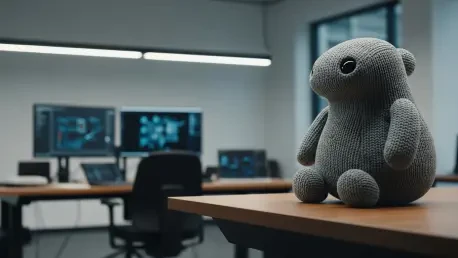

The dream of a mechanical soul residing within our living rooms has long been a staple of science fiction, yet the reality has often resulted in either clunky industrial tools or digital assistants trapped inside plastic cylinders. Colin Angle, the visionary who once revolutionized domestic chores with the Roomba, is now pivoting away from the utilitarian world of floor cleaning toward a more profound human need. By launching a new venture called Familiar Machines & Magic, Angle seeks to introduce a category of robotics that prioritizes emotional resonance and companionship over mere productivity. This shift represents a fundamental change in how developers perceive the role of artificial intelligence in the home, moving from a focus on what a machine can do to how a machine can make a person feel.
The objective of this exploration is to dissect the technological and philosophical underpinnings of the “Familiar,” a new class of robot that bridges the gap between hardware and heartbeat. Readers can expect to learn how this project diverges from the current industry obsession with humanoid robots and why a non-verbal, pet-like approach might be the key to widespread adoption. Through a series of detailed inquiries, the following sections will examine the hardware innovations, the role of modern AI processing, and the strategic design choices that aim to make these robots permanent fixtures in our personal lives.
Key Questions or Key Topics Section
Why Is the Industry Moving Away From Humanoid Robots for the Home?
For years, the robotics sector has been captivated by the idea of creating a machine in our own image, believing that a humanoid form is the ultimate goal for domestic assistance. However, this pursuit often leads to a phenomenon known as the uncanny valley, where a robot looks almost human enough to be creepy but lacks the fluid grace or social nuance to be truly convincing. Furthermore, humanoid robots carry a heavy burden of expectation; if a machine has hands, we expect it to fold laundry or wash dishes with human-like dexterity. When these machines inevitably fall short of these complex tasks due to current limitations in fine motor skills, users quickly lose interest, viewing the technology as an expensive disappointment.
In contrast, the strategy behind the Familiar involves lowering the barrier of expectation while maximizing emotional engagement. By adopting the morphology of an “abstract bear” or a medium-sized pet, the robot avoids the pitfalls of human mimicry. This design choice signals to the owner that the machine is a companion rather than a butler. This shift allows the robot to succeed by simply being present and responsive, much like a living pet, rather than being judged by its ability to perform high-stakes labor. Experts suggest that by removing the pressure of utilitarian perfection, social robots can finally find a sustainable niche in the household market.
What Role Does AI Time Play in the Development of New Robots?
The current landscape of technology is experiencing a phenomenon often referred to as “AI Time,” characterized by an unprecedented acceleration in software capabilities. In previous development cycles, training a robot to navigate a complex environment or recognize specific family members could take years of manual coding and testing. Today, thanks to advanced reinforcement learning and powerful edge-processing units like the Nvidia Jetson Orin, a small team of engineers can achieve in months what used to take a decade. This rapid evolution allows for the creation of “Physical AI,” where the machine’s intelligence is deeply integrated with its physical form, allowing it to learn and adapt to its surroundings in real time.
This acceleration means that the Familiar is not a static appliance but a learning entity that forms memories and develops a unique personality based on its interactions. Because the software can now process massive amounts of data locally, the robot can exhibit lifelike behaviors such as “padding” around a room or reacting to its owner’s mood without relying on constant cloud connectivity. This technological leap enables a level of spontaneity and awareness that makes the robot feel truly alive. By leveraging modern AI stacks, developers are moving beyond pre-programmed responses toward a system that grows alongside the human family it inhabits.
How Does the Familiar Communicate Without Using Human Speech?
A deliberate and perhaps surprising design choice for the new class of companion robots is the total absence of human language. While many tech companies are racing to integrate large language models into every device, the Familiar communicates through a sophisticated palette of animal-like sounds, expressive eye movements, and physical gestures. This approach is rooted in the belief that verbal communication in robots often leads to frustration, as users expect a machine that speaks to understand every nuance of human conversation. By stripping away speech, the interaction becomes more primal and intuitive, relying on the same emotional cues we use with biological pets.
Moreover, non-verbal communication allows the robot to bypass the linguistic errors that often break the illusion of life. Instead of an awkward “I do not understand the question,” the robot might tilt its head, wiggle its ears, or gently pat an owner’s leg to seek attention. These behaviors tap into deep-seated human psychology, fostering a sense of empathy and connection that words often fail to provide. This method of interaction ensures that the bond between human and machine is built on shared presence and physical affection, which are far more enduring than the novelty of a talking computer.
What Technological Innovations Make These Robots Soft and Inviting?
One of the primary hurdles for domestic robotics has been the “hard” nature of the machines themselves; metallic shells and rigid joints are not conducive to the petting and cuddling that define companionship. To solve this, the development team has utilized 3D-knitting technology borrowed from the athletic footwear industry to create a soft, plush exterior. This “skin” is digitally specified to fit the robot’s frame perfectly, allowing for a tactile experience that is warm and malleable. This outer layer also serves a functional purpose, as the knit allows for airflow to cool the internal electronic components while hiding the complex machinery underneath.
Beyond the exterior, the robot’s fluid movement is powered by custom-built, low-cost actuators that provide 23 degrees of freedom. Traditionally, such high-precision components were reserved for expensive industrial arms or research prototypes. By engineering a proprietary gearbox and motor system, the developers have managed to bring the cost down significantly while maintaining the grace required for lifelike motion. This combination of advanced textile engineering and affordable high-performance hardware ensures that the robot is not only durable and functional but also a pleasant physical presence in the home.
How Is the Privacy of the Household Maintained With an Always-On Robot?
The idea of a robot that is “always awake and alive” naturally raises questions regarding surveillance and data security. Unlike many smart home devices that function primarily as data collection hubs, the Familiar is positioned as a supportive presence whose primary goal is emotional labor. The machine uses stereo cameras and microphone arrays to navigate and recognize its owners, but these tools are focused on environmental awareness rather than recording. The design philosophy emphasizes that the robot is a member of the family rather than a security monitor, creating a distinct boundary between a companion and a surveillance tool.
To foster trust, the processing of sensitive sensory data occurs locally on the robot’s internal hardware, minimizing the need to send private information to external servers. This local autonomy is a crucial component of the “Physical AI” model, ensuring that the robot’s personality and memories remain within the home. By prioritizing user privacy through on-device processing, the developers aim to alleviate the anxieties typically associated with “always-on” technology. This approach allows the owner to enjoy the benefits of a robot that is always ready to interact without feeling that their personal life is being scrutinized by a distant corporation.
Summary or Recap
The emergence of the Familiar marks a significant departure from the utilitarian history of home robotics. By focusing on emotional connection rather than domestic labor, Colin Angle has identified a gap in the market that prioritized chores over companionship. The use of pet-like morphology, combined with the rapid advancements of AI Time, allows these machines to bypass the uncanny valley and establish a genuine bond with their owners. Key innovations such as 3D-knit plush skins and custom-engineered actuators have transformed what was once a rigid machine into a soft, approachable entity. Furthermore, the decision to eschew human speech in favor of behavioral cues has created a more authentic and less frustrating user experience.
These developments suggest that the future of the smart home lies in devices that understand the psychological needs of their inhabitants. The Familiar is designed to provide value through its mere presence, offering comfort and engagement at a price point comparable to that of a biological pet. As the industry moves away from the “smoke and mirrors” of humanoid prototypes, this new class of companion robots stands as a testament to the power of physical AI. Those interested in the intersection of technology and psychology may find that the most meaningful innovations are those that prioritize the human heart over a clean floor.
Conclusion or Final Thoughts
The transition from the functional efficiency of the Roomba to the emotional depth of the Familiar reflects a maturing of the robotics industry. Engineers finally recognized that the most successful domestic technologies are those that integrate seamlessly into the social fabric of a household. By embracing a non-humanoid form, the creators avoided the trap of unrealistic expectations, focusing instead on the subtle art of companionship. This pivot demonstrated a sophisticated understanding of human nature, acknowledging that a machine’s value is often found in its ability to offer a supportive presence during the quiet moments of daily life.
As society continues to navigate the complexities of an increasingly digital world, the introduction of physical, empathetic AI offers a promising path toward reducing isolation. Future considerations will likely involve how these robots can be tailored to assist specific demographics, such as the elderly or children with special needs, through adaptive learning and sensory feedback. The success of this new class of machinery will depend on its ability to remain a “wonderful and caring” presence without becoming an intrusive one. Ultimately, the evolution of home robots reached a point where the hardware became secondary to the relationship it facilitated, marking the beginning of an era where technology truly feels like a member of the family.