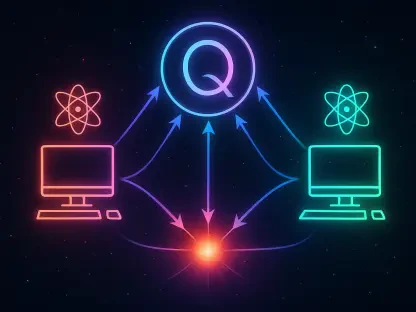

The partnership targets the specific vulnerabilities found in agentic AI applications by providing a foundational security layer that governs how autonomous systems access corporate information. This landmark agreement, valued at approximately $43.9 billion, signals a transformative era for the global cybersecurity sector as CrowdStrike moves to acquire Zscaler in an all-stock transaction. By uniting the world’s leading endpoint protection platform with the pioneer of cloud-native network security, the two companies are constructing a comprehensive cybersecurity operating system designed for the requirements of modern enterprises. In today’s landscape, traditional network perimeters have effectively dissolved, replaced by a complex web of remote users, cloud workloads, and autonomous entities. This consolidation is not merely a financial maneuver but a strategic necessity to address the inherent risks of a decentralized digital world where data must be protected at every touchpoint, from the device to the cloud gateway.
Strategic Synergy: Global Market Expansion
Unified Security: Integrated Defense
The integration of CrowdStrike’s Falcon platform with Zscaler’s Secure Access Service Edge solutions offers a seamless defense mechanism that bridges the long-standing gap between endpoint and network security. Historically, security teams have struggled with fragmented visibility, often forced to piece together information from disconnected tools to understand the scope of a single threat. This unified approach provides a single control plane that monitors and protects every interaction within the corporate ecosystem, ensuring that security policies are enforced consistently across all environments. By combining endpoint telemetry with network-level zero-trust controls, the platform can verify identities and assess device health in real-time before granting access to sensitive resources. This continuous authentication model is vital for modern businesses that rely on a mix of on-premises and cloud-based applications to maintain their operations in an increasingly competitive global market.
Beyond standard user access, the combined entity focuses on the emerging challenges posed by autonomous AI agents that operate with varying levels of independence. These digital entities often require extensive access to internal databases and proprietary information to function effectively, yet they lack the innate judgment required to recognize potential security breaches. The new cybersecurity operating system provides a robust governance framework that defines the operational boundaries for these agents, mitigating the risk of data exfiltration or unauthorized system changes. This proactive stance moves enterprise security from a reactive model to one that is inherently predictive, leveraging the combined intelligence of both network and endpoint data. As organizations continue to integrate AI into their core workflows, having a unified security layer becomes a foundational requirement for maintaining trust and compliance. This approach ensures that innovation does not come at the expense of safety or data integrity.
Operational Reach: Market Scale
This merger significantly expands the total addressable market for the combined company, with financial analysts projecting an opportunity exceeding $185 billion by 2029. Zscaler brings an impressive portfolio of high-profile clients, including more than half of the Fortune 500, which provides a fertile ground for cross-selling CrowdStrike’s identity and cloud security modules. Many of these large-scale enterprises are currently looking for ways to consolidate their security spending, preferring a single, reliable vendor over a patchwork of niche solutions. By offering a comprehensive suite under one contract, the new organization can simplify the procurement process and reduce the administrative burden on IT departments. This consolidation of spending is expected to drive significant revenue growth while deepening the relationship between the vendor and the enterprise. The ability to provide a complete, end-to-end security solution positions the company as an indispensable partner for the world’s largest organizations.
To further accelerate global growth, the company plans to leverage Zscaler’s extensive network of international resellers and managed security service providers. These partnerships are essential for penetrating the mid-market and expanding into geographic regions where local expertise is necessary to navigate diverse regulatory landscapes and technical requirements. By integrating these channels with CrowdStrike’s existing ecosystem, the combined entity can offer its advanced security capabilities to a broader range of customers more efficiently. This expanded reach allows for a more standardized approach to cybersecurity on a global scale, helping organizations of all sizes achieve a high level of protection without the need for an oversized internal security team. The focus on scalability ensures that the platform can grow alongside its customers, providing the necessary tools to defend against an ever-evolving array of cyber threats while maintaining operational agility in a fast-paced digital economy.
Technical Integration: Strategic Outcomes
Advanced Telemetry: Data Convergence
On a technical level, the convergence of endpoint and network telemetry creates a massive data layer that is unparalleled in the industry, processing trillions of daily events. This consolidated data stream provides the high-fidelity training material required for the next generation of SafeMind frontier security models, which are designed to identify and neutralize threats with extreme precision. By analyzing the entire attack path in real-time, the platform can correlate suspicious behavior on an endpoint with unusual traffic patterns on the network, providing a complete picture of an adversary’s movements. This level of insight allows for more accurate threat detection and minimizes the number of false positives that can overwhelm security analysts. The ability to see both the “inside” view from the device and the “outside” view from the network ensures that no detail is missed, creating a more resilient defense architecture that can adapt to new and sophisticated attack vectors as they emerge.
The practical application of this combined telemetry translates into faster automated responses and more accurate threat identification across the enterprise. When a suspicious process is detected on an endpoint, the integrated platform can immediately correlate that behavior with network traffic patterns to determine if a larger coordinated attack is underway. If a threat is confirmed, the system can automatically isolate the affected device while simultaneously blocking the malicious traffic at the network gateway, effectively neutralizing the danger before it can spread. This level of coordinated response reduces the mean time to detect and remediate incidents, which is a critical metric for reducing the financial and reputational impact of a breach. Furthermore, the convergence simplifies the work of security analysts by providing them with a single source of truth, eliminating the need to manually piece together logs from different systems. This technical synergy represents a major leap forward in the practical application of AI and automation within the cybersecurity sector.
Strategic Integration: Practical Results
Looking ahead to the completion of the merger in the second half of fiscal year 2028, the financial outlook remains robust with an expected initial annual recurring revenue exceeding $10 billion. The transaction was structured to be immediately accretive to free cash flow per share, signaling to investors that the combination was as much about financial efficiency as it was about technical innovation. Significant cost synergies were anticipated as the companies optimized their global data center footprints and streamlined corporate operations to remove redundancies. These savings were destined to be reinvested into research and development to maintain a competitive edge against emerging startups and legacy incumbents trying to pivot to the cloud. Until the deal officially closed, both organizations continued to operate as independent entities, ensuring that existing customer support and product development cycles remained uninterrupted. This careful approach to integration was designed to minimize friction for clients while preparing the groundwork for a unified roadmap.
The successful execution of this merger required navigating a complex landscape of regulatory reviews and securing the approval of Zscaler’s shareholders, who were offered a 34% premium over market prices. Following the definitive agreement, leadership teams from both companies began the process of aligning their long-term visions and identifying key milestones for technical interoperability. For enterprise leaders, the actionable next step involved reviewing current security vendor portfolios to identify areas where consolidation could drive both better protection and cost savings. Organizations evaluated how the integration of endpoint and network data would enhance their specific threat detection capabilities and began planning for a transition toward a more unified security architecture. The future of cybersecurity belonged to those who could manage complexity through integration rather than adding more fragmented tools to their environment. As this landmark deal moved toward finalization, it served as a clear signal that the era of siloed security products was ending.