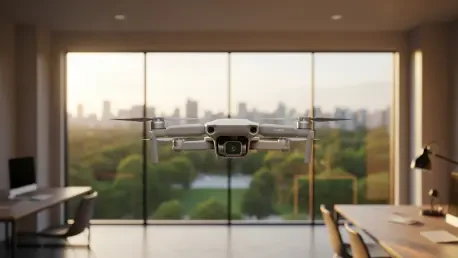

The sudden appearance of a digital ticker on global tech platforms has effectively signaled a massive transformation in how we perceive budget-friendly creative tools. This movement is spearheaded by DJI, which is currently preparing for the April 2026 launch of the Lito drone series and an updated audio lineup. These releases are not merely iterative updates; they represent a strategic play to redefine the entry-level market for hobbyists and digital creators. As the landscape becomes increasingly saturated, these new tools aim to provide professional-grade features at price points that were previously reserved for toy-grade hardware. By analyzing the current momentum, it becomes clear that the focus is shifting toward a seamless integration of visual and auditory technology for the masses.
Evolution of the Entry-Level Drone Market
Historically, the entry-level drone market was dominated by a few key models like the Spark or the original Mini, which brought flight to the masses but often compromised on sensor quality. However, the shift toward a more granular product strategy suggests that DJI is no longer content with simply discounting older models to fill budget gaps. The sequential branding observed in recent teasers indicates that the Lito series—comprising the Lito 1 and the Lito X1—is designed to be the modern foundation of a creator’s kit, sitting just below the more specialized Neo and Flip lines. This transition reflects a broader industry trend where even the most affordable machines must now offer sophisticated flight stability and high-resolution imaging to meet consumer expectations.
Navigating the Competitive Landscape of Consumer UAVs
Balancing Performance and Price in a Crowded Market
In the current market, the challenge is no longer just about making drones fly; it is about making them intelligent. The Neo 2, which arrived in late 2025, raised expectations by offering 4K video and omnidirectional sensing in a compact frame. For the Lito series to establish a foothold, it must navigate the fine line between high-end functionality and cost-effectiveness. The market demand is shifting toward machines that require minimal user input for professional results, placing the Lito in a position where it must outperform its price tag to stay relevant. Consequently, the success of this series depends on its ability to offer unique features, such as enhanced AI tracking, that were once exclusive to mid-range models.
The Strategic Shift from Mini 4K to the Lito Ecosystem
A significant portion of this market shift involves the retirement of legacy systems like the Mini 4K. While that model provided respectable flight times, its aging stabilization and camera technology have made it a less attractive option for modern content creators. The Lito X1 appears to be the answer to this technological gap, potentially merging the long battery life of the Mini series with the superior 4K/60fps capabilities and internal storage seen in more recent releases. This consolidation simplifies the purchasing process for newcomers while raising the baseline for entry-level aerial photography. It ensures that the entry point for the brand remains modern and competitive against a rising tide of specialized alternatives.
Expanding Beyond Flight with Integrated Audio Solutions
Beyond the sky, the diversification of creator tech into audio solutions highlights a move toward a holistic production ecosystem. The “More Than Sound” teaser points to the release of the Mic Mini 2, which emphasizes visual workflow through color-coded panels. This innovation addresses a common pain point for solo creators and small teams who struggle to manage multiple audio levels in real-time. By integrating these tools, the brand is creating a cohesive environment where the drone and the microphone work in tandem to reduce production friction. This “walled garden” approach ensures that once a creator enters the ecosystem through a budget drone, they are likely to stay for the accompanying audio and software support.
Anticipating the Technological and Economic Shifts
Looking forward through 2026 and 2027, the industry is expected to lean heavily into software-driven innovation. AI-assisted autonomous flight modes are likely to become standard, even in budget-friendly hardware like the Lito series. Economically, this aggressive release cycle makes it difficult for competitors to gain traction in the sub-$300 bracket. Furthermore, as global flight regulations continue to evolve, the trend of shrinking professional-grade safety sensors into sub-250-gram frames will likely accelerate, ensuring that high-quality cinematography remains accessible despite tightening restrictions. The focus will remain on miniaturization without sacrificing the power needed for high-bitrate video processing.
Practical Insights for Consumers and Content Creators
For consumers entering the market today, the recommendation is to prioritize longevity over immediate savings on older stock. Waiting for the Lito 1 or X1 allows for better firmware support and compatibility with newer mobile interfaces. Similarly, investing in the latest audio gear ensures that content remains competitive in an era where high-quality sound is as critical as high-definition video. Strategically, creators should focus on building a versatile kit that emphasizes portability, as the current trend favors gear that can be deployed rapidly in diverse environments. Choosing tools that offer automated features will also allow creators to spend more time on storytelling and less on technical troubleshooting.
Final Reflections on the Lito and Beyond
The strategic introduction of the Lito series and the Mic Mini 2 represented a fundamental shift in how accessible technology functioned for the modern creator. By bridging the gap between budget constraints and professional expectations, these tools simplified the entry into high-quality media production. The market moved away from fragmented hardware choices toward a unified ecosystem that prioritized user experience and workflow efficiency. Moving forward, the focus turned toward deeper software integration and cross-device compatibility. Mastered systems like these allowed for a significant democratization of creative tools, ensuring that the next generation of filmmakers had everything necessary to produce world-class content from day one.