
Small and midsize businesses burn time toggling between HR, payroll, IT, and finance tools, and Factorial’s wager is that one orchestrated system can cut that friction without burying teams in complexity or cost spirals. The platform’s all-in-one approach blends people operations with device and license governance, aiming to reduce overhead from day one while leaving room for modular expansion as needs mature.
That pitch matters because tool sprawl quietly taxes growth: duplicate data entry breeds errors, policy gaps create risk, and scattered workflows slow hiring and reviews. Factorial frames consolidation not as a monolith, but as a breadth-first foundation—Core HR plus optional Time, Talent, Finance, Payroll, and IT/device management—that can be tuned per team, geography, and operating model.
What Factorial Is and Why It Matters
Factorial is a Barcelona-born HR suite built for SMBs that want strong coverage across employee records, time, performance, and recruiting, while also absorbing device logistics and procurement. Its design principle favors clarity over knobs and dials, with visual cues and quick actions that compress routine steps.
This HR-plus-IT stance is more than a feature add-on. It links identity, access, and hardware lifecycle to the same source of truth that manages hiring and departures. When a role changes or a contract ends, access rights and device status can follow suit automatically, reducing security gaps and shadow IT.
Product Architecture and Key Capabilities
Core HR and Workflow Engine
The core acts as a structured data layer for people records, documents, and org charts, with approvals and permissions that mirror real reporting lines. Custom workflows let admins encode consistent steps—like contract issuance or policy acknowledgment—so HR stops reinventing checklists.
Because workflows are configurable, teams can set guardrails without losing speed. For example, a manager’s promotion request can auto-route for HR and finance sign-off, logging every decision and timestamp for auditability.
Time Management
Time-off policies, shift planning, and overtime rules live in one canvas so managers see coverage before approving requests. Geolocation time tracking adds context, validating that hours match assigned sites or roles.
Self-service matters here: employees submit changes, swap shifts, and view balances without bottlenecking HR. The result is fewer back-and-forths, clearer entitlements, and cleaner payroll inputs downstream.
Talent Management
Performance cycles support 360-degree input and goals that map to OKRs, pushing feedback into a routine rather than a quarterly scramble. Engagement tools and lightweight learning keep development loops visible, not buried in spreadsheets.
Recruiting funnels sit alongside performance data, giving hiring managers context on growth trajectories and gaps. That continuity reduces reset costs when candidates become employees and move into reviews.
Finance Management
Projects, expenses, and procurement fold into the same identity layer, turning approvals into traceable workflows rather than email threads. Expense policies translate into rules that flag exceptions early.
This isn’t a full ERP, but it narrows the cracks between HR, operations, and finance. When projects scale or budgets tighten, teams see people costs and purchasing in one place, which improves course correction.
Payroll
Payroll runs through guided flows with support for bonuses, overtime, and custom agreements. The system structures steps so admins don’t miss critical validations before submission.
However, the depth plateaus for intricate multi-jurisdiction scenarios. Organizations with nuanced union rules or heavy localization may still prefer a specialist engine, using Factorial as the system of record that feeds it.
IT/Device Management and Procurement
Zero-touch deployment, license tracking, and policy enforcement align device status with HR events. A new hire gets the right profile and apps; a departure triggers remote lock and reclamation.
Global device fulfillment extends this model: pre-configured hardware ships to employees in numerous countries, collapsing lead time. The outcome is fewer handoffs among HR, IT, and office managers—and a smaller attack surface.
AI and Automation
Factorial’s AI assistant targets repetitive drudgery: summarizing meetings, drafting surveys, and assembling reports from live HR data. It’s engineered as an accelerator, not a black box decision-maker.
The “why” is pragmatic: SMB teams lack bandwidth for manual synthesis. By automating narrative and first drafts, the assistant shortens feedback loops, while keeping humans in control of final judgments.
Integrations and API
With 80-plus connectors—Zapier, Slack, WhatsApp, Jira, Workable, Apple, Google, and Microsoft included—Factorial sits well inside common SMB stacks. The API covers custom handshakes where prebuilt links fall short.
Still, the ecosystem is “good, not maximal.” Buyers with heavy dependence on niche tools may need middleware or custom work, which adds time and cost to deployment plans.
User Experience and Design
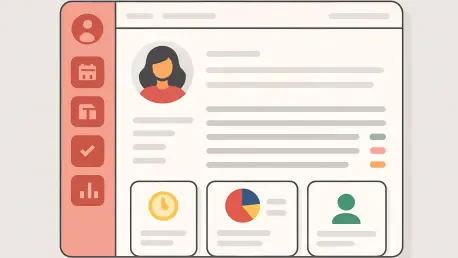
A unified inbox centralizes requests with one-click approvals, and a left-hand nav keeps modules discoverable. Org charts, photo-forward profiles, and color-coded calendars reduce cognitive load for non-technical managers.
Design here is strategy: clarity increases adoption, and adoption drives data completeness. Clean funnels in recruiting and at-a-glance timesheet flags make managers faster without a training marathon.
Packaging and Pricing Model
Factorial sells a base Core plan and modular add-ons—Time, Talent, Finance, Payroll—plus an Enterprise tier for deeper customization. The logic is simple: pay for what moves the needle now, keep options open for later.
The trade-off is price opacity. Module rates require a quote, and the “full experience” can escalate quickly. Financially disciplined teams should model scenarios and negotiate bundle thresholds up front.
Enterprise Enhancements
Enterprise unlocks templating, fillable PDFs, API key control, and multi-currency workflows. These capabilities matter for organizations with regional variance or strict compliance templates.
The benefit is consistent governance across markets without duplicating tools. The risk is over-customization if teams chase edge cases; guardrails and documentation help keep sprawl in check.
Developments and Market Trends Shaping Factorial
Modularity is now table stakes, but it shifts diligence from features to total cost of ownership. Buyers need to model not just today’s modules, but the next few that growth will likely trigger.
HR platforms are also pushing into IT and operations. That convergence reduces handoffs and compliance gaps, but it invites comparison to IT-first suites—raising the bar on automation depth and device coverage.
Real-World Applications and Best-Fit Scenarios
SMBs consolidating HR, time, performance, recruiting, light finance, and foundational payroll gain the most. The platform trims swivel-chair work while keeping interfaces friendly for managers who live outside HR.
Teams seeking HR-IT alignment benefit from policy-driven device deployment and license governance tied to org charts. Fast adoption environments—retail, hospitality, agencies—see gains from the visual workflows.
Support Model, Help Resources, and Service Coverage
Help Center content, ticketing, live chat, and phone support cover the basics, with AI triage steering admins quickly. Urgent issues still favor phone as the most direct path.
Service hours align with European and Latin American time zones. Global teams that need follow-the-sun coverage should plan internal tier-one support or a managed partner to bridge gaps.
Competitive Landscape and Positioning
BambooHR Comparison
BambooHR leans hard into onboarding depth and polished core HR, an advantage for companies scaling headcount rapidly. If the top priority is new-hire orchestration with advanced onboarding templates, BambooHR may edge out.
Factorial counters with broader surface area—time, talent, finance, and IT—which reduces tool count. The choice hinges on whether onboarding depth or ecosystem consolidation drives more value.
HiBob Comparison
HiBob matches Factorial’s modern UI and focuses on engagement. Culture-centric teams may value HiBob’s community features and analytics around sentiment and growth.
Factorial’s differentiator is device and procurement management. For firms where access governance and hardware logistics are pain points, that edge can eclipse marginal differences in engagement tooling.
Rippling Comparison
Rippling is the benchmark for tight HR-IT automation, with deep device and app provisioning flows. Its automation can surpass Factorial’s for complex, rule-heavy environments.
Factorial appeals when teams want a simpler path: strong coverage with less configuration overhead and a friendlier HR-first narrative. Both reduce fragmentation; Rippling skews to automation depth, Factorial to usability breadth.
Ecosystem Breadth vs. Usability
Some rivals tout larger marketplaces, which helps edge cases and rapid plug-ins. Factorial instead optimizes the core experience and curates integrations that cover typical SMB stacks.
This trade-off clarifies positioning: fewer potential connectors, faster day-to-day work. Buyers should weigh long-tail integration needs against the gains from a more opinionated, coherent UI.
Challenges, Limitations, and Trade-Offs
Opaque module pricing complicates budgeting and benchmarking. Without list rates, procurement teams must rely on scenario quotes and leverage timing, volume, or term length to control costs.
Payroll is capable but not a specialist for multi-jurisdiction complexity. Integration breadth is solid yet not market-leading, and analytics, while accessible, may not satisfy data-heavy organizations without augmentation.
Future Outlook and Potential Advancements
Expect analytics to deepen with more flexible modeling and custom dashboards, allowing HR to partner with finance on scenario planning. That shift would raise the platform’s strategic value beyond operations.
An expanded integration catalog and richer payroll localization would ease specialist gaps. Meanwhile, a maturing AI assistant could move from drafting to pattern detection, surfacing risks and opportunities earlier.
Summary of Findings and Overall Verdict
Factorial advanced a clear thesis: unify HR, time, talent, finance, payroll, and device management in one approachable system, then let modules scale with need. The result was a polished SMB platform that prized usability and cross-functional reach, with IT/device management as a practical differentiator. It traded maximal ecosystem breadth and specialist payroll depth for a coherent core, fast adoption, and manageable configuration.
The verdict landed on measured endorsement. Teams that modeled pricing carefully, scoped payroll complexity, and mapped integration must-haves were best positioned to win with Factorial. For SMBs prioritizing unified workflows, visual clarity, and HR-IT alignment, the platform delivered meaningful operational lift; for organizations demanding the deepest payroll or the largest marketplace, a specialist or hybrid approach remained prudent.