
The High Stakes of Data Freshness in the 2026 Digital Economy
Modern businesses operating in the fast-paced global economy have discovered that even a few minutes of data latency can lead to significant financial losses and missed strategic opportunities. In the current landscape, the traditional batch-processing model, which once served as the backbone of corporate reporting, has become a considerable liability. Organizations now operate in an environment where customer preferences change in seconds and supply chain disruptions require instantaneous redirection. Consequently, the demand for immediate insights has pushed engineering teams to move away from nightly synchronization cycles in favor of systems that mirror the live state of the business.
Change Data Capture (CDC) has emerged as the definitive standard for synchronizing PostgreSQL databases, effectively shifting the focus from historical reporting to live operational awareness. By capturing every insertion, update, and deletion as it happens, CDC allows the secondary systems used for analytics and customer engagement to remain in lockstep with the primary production database. This transition ensures that the data used by decision-makers is not a dusty relic of the previous day but a vibrant, accurate reflection of the current moment. The adoption of these technologies marks a fundamental change in how data is perceived, moving it from a static record to a fluid, continuous asset.
This exploration covers the transition toward log-based streaming, the leading platforms facilitating this shift, and the strategic advantages of maintaining a zero-latency data architecture. Industry experts recognize that the competition is no longer just about who has the most data, but who can act on it the fastest. As companies integrate sophisticated artificial intelligence and automated response systems, the underlying plumbing of the data ecosystem must be robust enough to handle the pressure of real-time demands. Achieving a state of “data nirvana” requires a deep understanding of the available tools and the architectural standards that define modern replication.
Deciphering the Architectural Standards and Tooling for Modern PostgreSQL Replication
Automated Schema Evolution and the End of Pipeline Fragility
Modern tools like Artie and Fivetran have revolutionized data engineering by automating the detection and implementation of schema changes without manual intervention. In the past, a simple addition of a column or a change in a data type on the source PostgreSQL database would trigger a catastrophic failure in the downstream data pipeline. This often resulted in hours of manual troubleshooting and the tedious rebuilding of tables. Today, however, these platforms are designed to “listen” for structural changes, adjusting the destination schema on the fly to ensure that the flow of information remains uninterrupted.
This automation addresses the chronic issue of “pipeline breakage,” where minor production database alterations previously resulted in significant downtime and technical debt. Engineers are no longer tethered to their monitors, waiting for a developer to push a change that might inadvertently crash the analytics suite. By treating the schema as a dynamic entity rather than a rigid contract, these modern CDC tools provide a level of resilience that was previously unattainable. The ability to automatically sync metadata alongside raw records has allowed organizations to scale their data operations without a proportional increase in the size of their maintenance teams.
Despite these advancements, organizations must still balance the convenience of “set it and forget it” services against the granular control required for complex enterprise systems. While automated schema evolution is a boon for speed, some highly regulated industries require strict governance over how data structures are modified. In these cases, engineers often implement hybrid approaches where minor changes are automated, but significant structural shifts trigger an alert for manual review. Finding the right equilibrium between total automation and human oversight remains a key priority for those managing high-volume PostgreSQL environments.
Harnessing WAL-Based Streaming to Eradicate Production Overhead
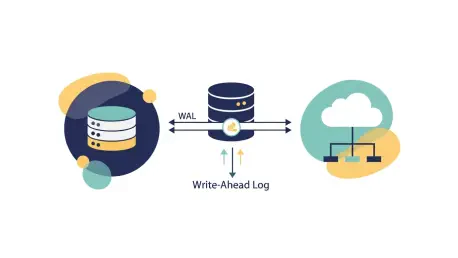
The industry has reached a consensus that reading the Write-Ahead Log (WAL) is vastly superior to query-based polling for capturing changes. Traditional polling methods require the synchronization tool to repeatedly execute “SELECT” queries against the production database, which can consume significant CPU and memory resources. This often leads to a “heisenberg effect” where the very act of monitoring the database slows down the applications it is supposed to support. In contrast, WAL-based CDC bypasses the query layer entirely, reading the transaction logs that PostgreSQL already generates for its internal recovery processes.
By utilizing logical replication at the log level, platforms like Airbyte and Debezium capture every transaction with minimal impact on the source database’s performance. This approach allows for a near-instantaneous stream of events to be broadcast to downstream consumers without competing for the same resources used by active customers. Technical leaders advocate for this methodology because it provides a complete record of all intermediate states of a row—even if a record was updated multiple times between polling intervals, the WAL preserves every single transition. This granularity is essential for auditing and for maintaining the integrity of complex event-driven architectures.
Organizations must navigate the trade-off between the low-latency benefits of WAL streaming and the infrastructure complexity inherent in managing log-based systems. Setting up logical replication requires specific configuration changes in the PostgreSQL “postgresql.conf” file and necessitates a careful management of replication slots. If a downstream consumer falls behind, the WAL files on the primary server can grow rapidly, potentially exhausting disk space and causing a system crash. Therefore, while the performance benefits of log-based streaming are undeniable, they require a higher level of operational maturity and proactive monitoring to ensure system stability.
The Convergence of In-Flight Processing and Real-Time Analytics
Innovative platforms such as Estuary Flow and Striim are moving beyond simple replication by offering “in-flight” data transformations that clean and filter data while it is in transit. In the traditional ETL (Extract, Transform, Load) model, data was moved in its raw state and then cleaned once it reached the warehouse. However, this approach often introduced latency and resulted in the storage of redundant or “dirty” data. By moving the transformation logic into the stream itself, businesses can ensure that the data arriving at its destination is already optimized for consumption, reducing the load on the destination warehouse.
This trend allows businesses to feed high-quality, pre-processed data directly into AI models and predictive analytics engines, preventing “model decay” caused by stale or raw information. When an AI agent is tasked with fraud detection or personalized pricing, it cannot wait for a batch job to finish. The ability to perform joins, aggregations, and filtering in real time allows these models to react to the most current state of the world. Consequently, the data pipeline is no longer just a pipe; it has evolved into a smart processing layer that adds value to the information as it moves from the source to the sink.
The shift toward treating data movement as a fluid, continuous process challenges the old assumption that transformation must happen exclusively within the destination data warehouse. Many architects now argue that the most efficient place to handle data logic is as close to the source as possible. This “shift left” strategy in data engineering reduces the costs associated with cloud warehouse compute cycles and ensures that every downstream service—whether it be a dashboard, a search index, or a microservice—receives a consistent and sanitized version of the truth.
Strategic Trade-offs Between Managed Simplicity and Custom Open-Source Control
The 2026 market offers a clear divide: managed services like AWS DMS provide ecosystem stability, while open-source frameworks like Debezium offer unparalleled architectural flexibility. For many smaller teams or those with tight deadlines, the managed route is often the most pragmatic choice, as it offloads the burden of server maintenance and security patching to the cloud provider. These services are built to integrate seamlessly with other cloud-native tools, providing a cohesive experience that allows developers to focus on building features rather than managing infrastructure.
Specialized tools like PeerDB illustrate an emerging trend toward PostgreSQL-specific optimization, catering to teams that require hyper-efficient, low-latency BI dashboards. Unlike general-purpose tools that try to support dozens of different databases, specialized platforms can take advantage of unique PostgreSQL features to squeeze out every bit of performance. For instance, they might optimize the way large binary objects are handled or use specific internal APIs to speed up the initial data snapshotting process. This level of specialization is particularly valuable for organizations where PostgreSQL is the primary store for massive, complex datasets.
Deciding between these paths requires a careful analysis of internal engineering capacity versus the mission-criticality of zero-downtime synchronization. An open-source solution might offer the lowest licensing costs, but the “total cost of ownership” can quickly escalate if the engineering team spends half their time debugging configuration issues. Conversely, the premium price of a managed service is often justified by the peace of mind that comes with enterprise-grade service level agreements. Strategic leaders must evaluate their team’s strengths and the specific demands of their workload before committing to a specific CDC architecture.
Tactical Frameworks for Building a Scalable and Fault-Tolerant CDC Environment
Success in CDC implementation hinges on prioritizing native log reading and ensuring robust “exactly-once” delivery mechanisms to prevent data duplication. When a network hiccup occurs, a poorly designed pipeline might send the same set of records twice, leading to inaccurate financial reports or duplicate customer notifications. To mitigate this risk, modern frameworks utilize sophisticated checkpointing systems that track the exact position in the transaction log. This ensures that when the system recovers, it resumes precisely where it left off, maintaining the integrity of the data stream without requiring manual cleanup.
Engineering teams should focus on observability, implementing real-time monitoring to detect replication lag and throughput bottlenecks before they impact downstream consumers. It is not enough to know that a pipeline is “running”; teams must have visibility into how many milliseconds of delay exist between a commit in PostgreSQL and its appearance in the analytical warehouse. High-quality monitoring tools provide alerts for unusual spikes in transaction volume or sudden drops in throughput, allowing the team to scale resources proactively. In a real-time world, observability is the only way to guarantee that the system is meeting its performance requirements.
Best practices suggest an incremental adoption strategy, starting with non-critical workloads to test the scalability of the chosen architecture under peak transaction volumes. Jumping headfirst into a full-scale migration of a primary production system can be risky, especially given the nuances of log-based replication. By beginning with a small set of tables, engineers can gain a better understanding of how the CDC tool interacts with the specific workloads of the organization. This measured approach allowed teams to identify potential issues—such as long-running transactions that stall the WAL—before they could affect mission-critical business processes.
Establishing a Foundation for Intelligent, Event-Driven Enterprise Operations
Transitioning to real-time PostgreSQL replication was no longer an optional upgrade but a fundamental requirement for the modern, agile enterprise. The integration of CDC into the core technology stack ensured that AI agents, microservices, and executive dashboards were powered by the most current data available. Businesses that successfully navigated this transition found themselves equipped with a significant competitive edge, as they were able to respond to market shifts with a level of precision that was previously impossible. The infrastructure was built to handle continuous streams, which allowed for the decommissioning of expensive and fragile batch scheduling systems.
The move toward log-based streaming fundamentally altered the way organizations approached data integrity and system decoupling. By publishing database changes as a sequence of events, different departments were able to consume the same data in the ways that best suited their specific needs. Marketing teams utilized the stream for personalized outreach, while finance departments relied on the same feed for real-time risk assessment. This shared foundation fostered a more collaborative and data-driven culture, as the barriers between different data silos were systematically dismantled.
Selecting the right tool—balancing operational ease with high-scale performance—remained the most critical decision for leaders looking to transform raw transactions into immediate business value. Those who prioritized native log reading and automated schema management found that their systems were more resilient and required less manual intervention. In the end, the focus shifted from the technical mechanics of data movement to the strategic application of the insights derived from that data. The journey toward a real-time enterprise was paved with the careful implementation of these robust and scalable Change Data Capture solutions.