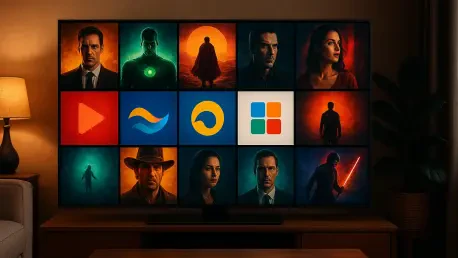

Users are increasingly opting for a diverse media diet by combining multiple free apps to cover everything from live news and sports to cult cinema and vintage sitcoms. This significant shift represents a departure from the previous decade, which was largely defined by the aggressive expansion of premium, ad-free subscription models. For years, major players like Netflix and Disney+ positioned themselves as the inevitable successors to traditional cable, promising an uninterrupted viewing experience and a centralized location for all major entertainment needs. However, the initial honeymoon period of the streaming revolution has gradually given way to a more complex and often frustrating reality for the average household. As the market reached a state of near-total saturation, the convenience of digital media became overshadowed by the rising costs and the fragmentation of content across dozens of competing platforms.
The current landscape is defined by a growing sense of subscription fatigue, a condition brought about by frequent price increases and the realization that maintaining multiple “essential” apps often costs more than the legacy cable packages they were supposed to replace. This financial burden, coupled with the mental load of managing numerous accounts and passwords, has prompted a massive reevaluation of what constitutes value in the digital age. Consequently, a new generation of free, legal, and high-quality ad-supported services has emerged as a formidable alternative. These platforms, collectively known as Free Ad-Supported Television or FAST, are no longer relegated to the fringes of the industry. Instead, they have become central to a more sustainable media strategy, offering vast libraries of movies and television shows to anyone willing to sit through a few minutes of commercials. This transition highlights a broader movement toward economic rationality and a desire for a more flexible, low-commitment relationship with home entertainment.
The Diverse Ecosystem of Free Streaming Alternatives
The Hybrid Capabilities of the Plex Platform
Plex has successfully transitioned from its origins as a niche tool for technology enthusiasts into a versatile, comprehensive streaming hub that addresses the modern need for consolidated entertainment. Initially celebrated for its ability to help users organize and stream their private media collections across various devices, the platform has expanded its reach significantly. It now functions as a dual-purpose environment where personal media management exists alongside a massive, professionally curated library of over 50,000 on-demand titles. This hybrid model allows for a seamless transition between watching a high-definition copy of a home movie and exploring a vast catalog of Hollywood cinema. By positioning itself as a central gateway for all types of content, Plex has managed to simplify the user experience, reducing the need to jump between multiple disparate applications to find something worth watching.
The platform’s inclusion of more than 300 live television channels has further solidified its position as a legitimate replacement for traditional broadcast services. These channels provide a wide-ranging spectrum of content, encompassing everything from local news and global sports to specialized feeds dedicated to cult cinema and retro television. This integration of live, linear programming satisfies the desire for the spontaneous discovery that was once the hallmark of the cable era. Furthermore, Plex’s high degree of technical flexibility ensures that it remains accessible on almost any modern hardware configuration. Whether a user is operating on MacOS, Linux, Windows, or mobile platforms like iOS and Android, the experience remains consistent and polished. This broad compatibility extends to smart TVs, gaming consoles, and streaming sticks, making it a strategic asset for households looking to unify their digital presence without incurring additional monthly costs.
Beyond its core streaming and management features, Plex offers a sophisticated discovery engine that helps mitigate the common problem of choice paralysis. By aggregating metadata and providing advanced filtering options, the platform enables viewers to find specific genres or actors across both their personal libraries and the free on-demand catalog. This level of organization is particularly valuable in an era where digital content is often scattered and difficult to track. The service also fosters a sense of community through features that allow users to share their media libraries with friends and family, effectively creating a private, social streaming network. This combination of robust technical infrastructure and community-oriented features distinguishes Plex from more conventional streaming services, proving that a free platform can offer a level of sophistication and customization that rivals even the most expensive premium subscriptions.
Tubi and the On-Demand Content Revolution
Tubi, a prominent subsidiary of Fox Corporation, has redefined expectations for what a free, ad-supported service can offer in terms of library depth and quality. With an expansive catalog that exceeds 50,000 titles, the platform has emerged as the most direct and formidable competitor to the traditional subscription-based model. Its library is not merely a collection of obscure or low-budget content; instead, it features a diverse array of major Hollywood blockbusters, critically acclaimed independent dramas, and popular animated series. This massive volume of content ensures that viewers can find high-quality entertainment regardless of their specific tastes or demographic profiles. By focusing on volume and variety, Tubi has created a sanctuary for those who are tired of the algorithmic restrictions and limited selections often found on paid platforms, offering a sense of exploration that feels genuinely expansive.
The user experience on Tubi is frequently highlighted for its refreshingly simple and intuitive design, which prioritizes ease of access over complex navigation menus. Unlike many other digital platforms that suffer from cluttered interfaces, Tubi maintains a clean aesthetic that allows movies and shows to take center stage. High-definition streaming quality is standard for modern releases, ensuring that the visual experience remains competitive with premium services. While the platform is supported by advertising, the execution of these commercial breaks is noticeably less intrusive than the traditional broadcast model. The ads are typically shorter and less frequent, creating a viewing experience that feels modern and respectful of the audience’s time. This balance between monetization and user satisfaction has been a key factor in Tubi’s rapid growth and its high levels of user retention.
One of Tubi’s most significant strengths is its deep commitment to niche genres and “forgotten gems” that are often overlooked by mainstream platforms. From vintage sitcoms and classic black-and-white films to specialized categories like international horror and niche documentaries, the service caters to a wide variety of subcultures. This focus on long-tail content has made Tubi an essential destination for cinephiles and nostalgic viewers alike. It encourages a form of “digital crate-digging,” where the next great watch is often found in a category that a premium service might have purged years ago to save on licensing costs. By preserving and promoting such a wide range of media history, Tubi has moved beyond being just a free alternative; it has become a vital cultural archive that provides universal access to the breadth of cinematic history without a financial barrier.
Pluto TV and the Return of Linear Surfing
Pluto TV, operated by Paramount Global, addresses a specific psychological phenomenon often referred to as “choice fatigue” by reintroducing the concept of linear, programmed television to the digital age. While many streaming services require users to actively search for and select a specific title, Pluto TV offers a “lean-back” experience through its familiar grid-based interface. With over 250 curated live channels, the platform allows viewers to engage in the traditional practice of channel surfing, moving through various feeds until they encounter something that captures their interest. This format is particularly effective for those who want entertainment without the mental effort of making a definitive decision. By mimicking the structure of cable television, Pluto TV provides a sense of comfort and serendipity that is frequently missing from the strictly on-demand environments of its competitors.
The channel selection on Pluto TV is highly specialized, featuring dedicated 24/7 feeds for iconic television series, specific movie genres, and diverse interest groups. For instance, viewers can tune into channels that play nothing but episodes of “Star Trek,” true crime investigations, or classic game shows. This curation is backed by Paramount’s extensive media library, which grants the platform unique access to decades of high-value content. This ensures that the channels are not just filled with filler material but are instead packed with recognizable and beloved titles. The platform also includes a significant amount of live news and sports coverage, bridging the gap between digital streaming and the real-time information needs of the public. This blend of evergreen entertainment and timely broadcasts makes Pluto TV a comprehensive daily companion for many households.
In addition to its live offerings, Pluto TV maintains a substantial on-demand section for viewers who eventually decide they want to watch a specific film or episode. This dual approach provides the best of both worlds: the ease of a programmed experience and the control of on-demand access. The platform’s success highlights a recurring trend in consumer behavior where the convenience of choice is balanced by the desire for curation. As the digital world becomes increasingly fragmented and overwhelming, the simplicity of a pre-scheduled television grid has proven to be an enduringly popular format. Pluto TV has successfully modernized this traditional experience, proving that even in an era of infinite choice, there is still a massive audience for a service that tells you what is on right now and makes it easy to just sit down and watch.
The Roku Channel and Premium Curation
The Roku Channel represents a significant evolution in the strategy of hardware manufacturers moving into the content space. Originally conceived as a value-added feature for owners of Roku streaming devices, it has since grown into a standalone powerhouse that is accessible across the web and through dedicated mobile applications. What sets this platform apart is its focus on high-end curation and the inclusion of exclusive content, which effectively blurs the line between a free service and a premium subscription. Through strategic partnerships with major Hollywood studios and the production of its own “Roku Originals,” the service offers a level of prestige that was previously reserved for paid platforms. This approach has allowed The Roku Channel to attract a demographic that values high production standards and exclusive access but is looking to reduce their monthly overhead.
The interface of The Roku Channel is designed with a modern, sophisticated aesthetic that rivals the most expensive apps on the market. Navigation is seamless, and the presentation of content is both visually appealing and highly organized. This commitment to quality extends to the technical side of the platform, where high-definition streams and reliable performance are the norm. For many users, the transition from a paid service like HBO or Netflix to The Roku Channel feels like a lateral move in terms of quality, even if the financial cost is eliminated. This high-end feel is a powerful psychological tool that helps remove the stigma often associated with “free” media. By providing a premium environment for ad-supported content, Roku has successfully redefined consumer expectations and demonstrated that a free service can be both a primary source of entertainment and a high-quality experience.
While the platform is available on a wide range of devices, it is most effectively utilized within the Roku hardware ecosystem, where it is deeply integrated into the operating system. This synergy between hardware and software allows for a more personalized experience, with recommendations and features that are tailored to the user’s viewing habits. Many consumers have found that investing in an affordable Roku streaming stick or smart TV pays for itself within months by providing access to such a robust free platform. The Roku Channel’s success has influenced the broader industry, prompting other hardware manufacturers to bolster their own free offerings. Ultimately, the service serves as a prime example of how a well-executed ad-supported model can compete at the highest levels of the digital entertainment market, proving that curation and quality are more important to the modern viewer than the absence of commercials.
The Economic and Psychological Shift in Media Consumption
Economic Rationality and the Rise of Bill Shock
The primary catalyst for the widespread migration toward free streaming services is the undeniable reality of economic pressure. For several years, the average consumer was willing to tolerate a few small monthly charges in exchange for a massive library of ad-free content. However, as the number of “must-have” services increased and the monthly price for each service steadily climbed, many households began to experience what is known as “bill shock.” This phenomenon occurs when the total cost of individual digital subscriptions is tallied, and the consumer realizes they are spending more on streaming than they ever did on traditional cable. In an era of general inflation and rising living costs, the $15 or $20 monthly fee for a single platform is increasingly viewed as an avoidable luxury rather than an essential utility.
This economic shift has led to a more calculated and rational approach to media consumption. Instead of maintaining a permanent collection of active subscriptions, many viewers are now turning to free, ad-supported apps to serve as the foundation of their entertainment diet. This strategy allows them to save hundreds of dollars annually while still maintaining access to a comparable volume of high-quality content. The value proposition of a service like Tubi or Plex becomes incredibly compelling when viewed through this financial lens. If a household can access a library of 50,000 movies for free, the necessity of paying for a premium service just to watch one or two exclusive shows becomes much harder to justify. This transition is not just about saving money; it is about reclaiming control over the household budget and rejecting the “subscription creep” that has characterized the last decade.
The rise of free services also serves as a critical relief valve for the overall digital economy. As premium services continue to experiment with password-sharing crackdowns and tiered pricing models that include ads anyway, the distinction between “paid” and “free” has become increasingly blurred. Many consumers feel that if they are going to be forced to watch commercials or navigate complex restrictions, they might as well do so on a platform that doesn’t charge them for the privilege. This sentiment has created a competitive environment where free platforms are winning on the basis of transparency and value. For the modern consumer, economic rationality is no longer just about finding the cheapest option; it is about finding the model that provides the most utility with the least amount of financial and logistical friction.
The Growing Acceptance of Ad-Supported Models
There has been a profound cultural shift in how audiences perceive and interact with advertising in the digital age. In the early stages of the streaming revolution, the absence of commercials was marketed as a revolutionary benefit that would change television forever. However, as the financial reality of producing high-end content has set in, the “ad-free” promise has become an increasingly expensive tier that many are no longer willing to fund. Interestingly, the modern viewer has become much more pragmatic about this trade-off. There is a growing consensus that a few minutes of commercials is a small and manageable price to pay for access to a massive library of free entertainment. This acceptance of the FAST model suggests that the “commercial break” was never the true enemy; rather, it was the excessive cost and lack of choice that defined the old cable era.
Modern ad-supported platforms have also learned from the mistakes of the past, implementing advertising in a way that is far more palatable than the broadcast television of the late 20th century. Digital ads are typically more targeted, relevant, and shorter in duration than their analog predecessors. Many platforms also include “ad-load” indicators that show exactly how much longer a commercial break will last, providing a sense of transparency and control to the viewer. This improved technical execution has significantly reduced the frustration traditionally associated with commercials. Furthermore, the psychological barrier to watching ads has been lowered by the sheer quality of the content being offered. When a viewer is able to watch an Oscar-winning film or a premium drama for free, they are much more likely to view the accompanying ads as a fair and reasonable transaction.
This cultural change is also driven by the younger demographic of viewers who have grown up with ad-supported platforms like YouTube and social media. For these consumers, the presence of advertising is a normalized part of the digital experience, provided that the content is accessible and high-quality. This generational shift has allowed free streaming services to thrive without the “stigma” of being a low-budget alternative. The current industry consensus indicates that the FAST model is not just a temporary fad but a permanent fixture of the media landscape. As long as the ad breaks remain reasonable and the content libraries continue to expand, the acceptance of commercials will likely continue to grow. This shift represents a return to a more traditional model of media funding, but one that is powered by modern data and delivered with a much higher level of user convenience.
Psychological Benefits of Ending Subscription Obligations
One of the most profound but often overlooked impacts of moving toward free streaming services is the psychological relief that comes from ending the cycle of subscription obligations. When a consumer pays a monthly fee for a service, they often feel a subtle but persistent pressure to “get their money’s worth.” This creates a sense of obligation to watch content, leading to a phenomenon where leisure time begins to feel like a task or a chore. Binge-watching, once viewed as a fun pastime, can quickly become a compulsive behavior driven by the desire to finish a series before the next billing cycle. By contrast, free services eliminate this financial pressure entirely. Because there is no monthly bill, there is no guilt associated with an app sitting unused on a device for weeks at a time. This freedom allows for a more spontaneous and relaxed relationship with media.
Users who have transitioned to a primarily free media diet frequently report that they watch less television overall, but they enjoy what they watch more. Without the pressure to justify a subscription, entertainment becomes an optional activity rather than a pre-paid commitment. This change in mindset can lead to a more balanced lifestyle, as viewers are more likely to engage in other activities when they don’t feel “tethered” to their streaming accounts. The shift away from “compulsive viewing” also reduces the mental clutter associated with tracking multiple series and release dates across different platforms. In a world where digital notifications and obligations are constantly vying for our attention, the simplicity of a free service that asks for nothing but a few minutes of time is a powerful psychological benefit.
Furthermore, the lack of a financial commitment fosters a more adventurous approach to media consumption. When a show is free, the “risk” of trying something new is non-existent. If a viewer doesn’t like a particular movie, they can simply turn it off and try something else without feeling like they have wasted their money. This encourages the discovery of diverse genres, international films, and independent projects that a viewer might have ignored on a paid platform. This sense of play and exploration is a vital part of a healthy media diet, and it is much easier to maintain in a free ecosystem. Ultimately, the move to ad-supported streaming is as much about psychological well-being as it is about financial savings, providing a way to reclaim time and reduce the “digital debt” that often accompanies the subscription model.
The Resurgence of the Linear Viewing Experience
Despite the overwhelming dominance of on-demand technology in recent years, there has been a notable and surprising resurgence in the popularity of linear, programmed television. Many viewers have discovered that they actually miss the serendipity and ease of the traditional “live” experience. The endless scrolling and decision-making required by on-demand menus often lead to “analysis paralysis,” where a user spends more time looking for something to watch than actually watching it. Free apps that offer a linear grid, such as Pluto TV and Plex, solve this problem by providing a pre-curated stream of content. This allows for a “lean-back” experience where the viewer can simply turn on a channel and let the programming take over. This return to the “grid” highlights a fundamental human desire for curation and the comfort of a shared viewing experience.
The linear format also serves as an excellent tool for background entertainment, a use case that on-demand services struggle to fulfill. Whether someone is cooking dinner, working from home, or simply relaxing, having a familiar show or a news feed running in the background provides a sense of companionship and atmosphere. Free services have successfully tapped into this need by offering channels dedicated to low-stakes content like “comfort TV” or 24-hour nature documentaries. This type of viewing doesn’t require the intense focus of a serialized drama, making it perfect for a more casual media relationship. The ability to stumble upon a movie halfway through or catch a random episode of a classic sitcom provides a sense of discovery that algorithms often fail to replicate. This serendipity is a key part of why the linear format has endured despite the availability of nearly infinite on-demand options.
This trend toward linear surfing also reflects a broader desire for simplicity in a world that is increasingly complex and data-driven. While the ability to watch anything at any time is a technical marvel, the reality of managing that choice can be exhausting. By reintroducing the programmed experience, free services have combined the technical benefits of digital streaming with the psychological ease of traditional television. This has proven to be an winning combination, attracting a diverse audience that ranges from older viewers looking for the comfort of the past to younger users seeking a break from the “active” demands of the internet. The resurgence of the linear format is a testament to the fact that sometimes, the best way to enjoy media is to simply let someone else pick what is playing and enjoy the ride.
A Unified Understanding of the New Streaming Paradigm
The transition from a landscape dominated by expensive, paid subscriptions to a more diverse ecosystem of free, ad-supported platforms represented a significant milestone in the evolution of digital entertainment. For years, the industry operated under the assumption that consumers would indefinitely tolerate rising costs in exchange for an ad-free experience. However, the emergence of robust alternatives like Tubi, Plex, Pluto TV, and The Roku Channel proved that this was not the case. These platforms matured to a point where their library depth, user interface quality, and technical performance became genuinely competitive with the most prestigious paid services. The realization that thousands of high-quality movies and live television channels were available at no cost prompted millions of households to reconsider their spending habits and embrace a more sustainable model of media consumption.
This shift was driven by a combination of economic necessity and a psychological desire for a less demanding relationship with technology. By replacing a collection of mounting monthly bills with a handful of legal and free apps, viewers were able to save significant amounts of money without sacrificing the quality or variety of their entertainment. The findings from this period indicated that the modern consumer was more concerned with value and ease of access than with the complete absence of commercials. The successful integration of ad-supported models into the mainstream media diet showed that when commercials are executed with respect for the viewer’s time and interests, they are a small price to pay for a world of free content. This evolution marked the return of a “golden age of free television,” but one that was built on a foundation of modern digital convenience and high-definition technology.
Looking back on this transition, it is clear that the industry underwent a necessary correction. The era of the fragmented, expensive subscription model eventually reached its logical limit, and the rise of FAST services provided the needed alternative. For the contemporary consumer, the choice was no longer between high-cost cable and high-cost streaming. Instead, the focus moved toward building a personalized and cost-effective media environment that balanced premium occasional purchases with a solid foundation of free, ad-supported content. This movement toward a more rational and diverse media diet allowed individuals to reclaim their time and their budgets, ultimately leading to a more healthy and balanced relationship with the vast world of digital entertainment. The legacy of this period was the democratization of high-quality media, ensuring that entertainment remained a universal right rather than an expensive privilege.