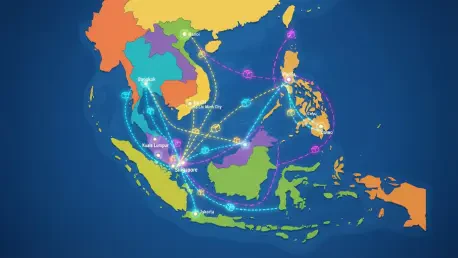

Merchant acquisition costs and logistics routes are being restructured across major hubs to accommodate the high-velocity shipping demands driven by regional influencer networks. The digital retail landscape across Southeast Asia has encountered a seismic shift as social media platforms evolve into comprehensive shopping ecosystems. By integrating commerce directly into the interface, TikTok Shop has removed the traditional barriers between content consumption and financial transactions, allowing users to complete purchases without ever leaving the application. This frictionless experience has triggered a massive redistribution of market share, challenging established industry leaders who once dominated the region with search-based models. With a user base numbering in the hundreds of millions, ByteDance has successfully converted casual viewers into active consumers, transforming its e-commerce arm into a formidable competitor in record time. This evolution reflects a broader trend where entertainment and retail converge to redefine the modern shopping experience for the next generation of digital users.
Disruptive Growth and Category Dominance
Market Expansion: The Power of Social Influence
The rapid ascent of social commerce is fundamentally anchored in its unique ability to convert viral trends into immediate sales volume, particularly within high-frequency consumer categories. Beauty and personal care products have emerged as the primary engines of this growth, accounting for the vast majority of transactions on the platform. Influencers and creators play a central role by demonstrating products in real-time, providing a level of social proof and engagement that static product listings cannot replicate. This dynamic environment encourages a sense of urgency and community, where the line between entertainment and shopping becomes blurred. By leveraging real-time feedback and high-engagement video content, the platform has managed to capture a significant portion of the youth demographic. This demographic shift indicates that the traditional e-commerce model, which relies on intent-based searching, is being supplemented by discovery-led shopping where products find the consumer through an algorithmic feed.
Strategic Sales: The Role of Livestream Bundling
To sustain this momentum, merchants have adopted sophisticated livestreaming strategies such as product bundling to encourage larger basket sizes and repeat purchases. By pairing high-frequency, low-cost items like skin creams and lip tints into discounted kits, sellers can build consumer habits and establish trust without requiring a large initial financial commitment from the buyer. This strategy mirrors successful social commerce trends where initial success in smaller categories provides the necessary data and customer loyalty to eventually expand into higher-ticket items. The use of limited-time offers during these live sessions further amplifies the impulse-buying phenomenon, creating a high-velocity sales cycle that traditional marketplaces struggle to match. As these shopping habits become more entrenched among Southeast Asian consumers, the platform is laying the groundwork for a broader expansion into electronics and home appliances. This transition will require a shift from influencer-led marketing to more complex systems.
Competitive Shifts: Regional Incumbents Under Pressure
The aggressive expansion of social-first retail has forced established regional giants like Shopee and Lazada to undergo a radical transformation of their existing business models. For years, these platforms operated primarily as functional marketplaces where efficiency and price were the main competitive advantages. However, the current environment has ignited a livestreaming arms race, necessitating a shift toward entertainment-centric features to prevent merchant and user churn. Legacy platforms are now diverting significant portions of their research and development budgets into video-led commerce and creator tools. This pivot is not merely an aesthetic change but a fundamental shift in operational philosophy, as these companies attempt to replicate the engagement levels seen on social media apps. By integrating interactive video features directly into their interfaces, they hope to recapture the attention of users who are increasingly spending their time on short-form video platforms rather than traditional search engines.
Adaptive Growth: Strategic Response to Video Commerce
Evidence of this industry-wide transformation can be seen in the massive transaction spikes reported by traditional marketplaces during major promotional campaigns. By adopting video-first strategies, legacy players have managed to see significant increases in engagement, with some reporting a twelve-fold rise in livestream-driven sales compared to standard operating days. This success demonstrates that the infrastructure for high-volume commerce already exists, but the methods of reaching consumers have changed irrevocably. To maintain their market share from 2026 to 2028, these incumbents must continue to innovate in the social space, blending their superior logistical capabilities with the high-engagement formats pioneered by newcomers. The competition is no longer just about who has the fastest delivery or the lowest price, but about who can provide the most compelling and integrated user experience. As the market becomes more fragmented, the ability to offer a seamless blend of entertainment and reliability will become a differentiator.
Operational Evolution and Future Challenges
Business Model Evolution: Modern Merchant Requirements
The transition toward video-driven retail is fundamentally altering how brands and retailers allocate their marketing budgets and manage their daily operations. Businesses are moving away from a total reliance on search engine optimization and sponsored listings within traditional marketplaces, opting instead to invest heavily in creator networks. This shift requires a new set of skills, including influencer management, video production, and real-time community engagement. Merchants must now act more like media companies, producing constant streams of content to remain visible within the algorithmic feeds of social platforms. This necessity has created a secondary industry of talent agencies and production hubs dedicated specifically to social commerce. For many brands, the cost of customer acquisition is being redefined by the performance of these creator partnerships rather than traditional advertising spend. This evolution represents a maturing of the digital ecosystem where brand storytelling is essential.
Logistics Restructuring: Managing High-Velocity Demand
Logistically, the high-velocity nature of influencer-led retail presents a new set of challenges that require a complete restructuring of the supply chain. Unlike traditional e-commerce, where demand is relatively predictable based on search trends and historical data, social commerce can trigger sudden and massive surges in demand due to a single piece of viral content. To mitigate the risk of stockouts or delivery delays, brands are beginning to restructure their logistics routes and inventory management systems in major urban centers like Jakarta and Bangkok. This involves placing inventory closer to the consumer and developing more agile manufacturing processes that can respond to trends in real-time. The goal is to accommodate the “see-now, buy-now” mentality of the modern consumer, where shipping speed is a critical component of the overall brand experience. By optimizing local shipping routes, companies are attempting to build a more resilient infrastructure that can handle the unpredictable peaks of retail.
Infrastructure Development: The Path to Long-Term Viability
Despite the impressive growth seen in smaller consumer categories, the next phase of expansion into higher-value goods like electronics and large home appliances presents a significant logistical hurdle. Established competitors have spent the better part of the last decade building sophisticated warehouse networks and specialized delivery fleets capable of handling bulky items. In contrast, the current infrastructure of social-first platforms is largely optimized for small, lightweight packages such as cosmetics. Moving into the electronics sector requires not only more storage space but also more complex handling procedures, specialized insurance, and robust after-sales support systems. To compete effectively in these high-margin categories, the social giant must either invest billions in its own logistics backbone or form strategic alliances with third-party providers. This transition from a pure social platform to a full-service e-commerce provider is fraught with operational risks that could erode profit margins if not managed correctly.
Operational Excellence: Overcoming Last-Mile Complexity
The complexity of last-mile delivery remained one of the most significant barriers to achieving long-term market leadership in the region. Managing the delivery of household goods across the diverse and often challenging geography of Southeast Asia required a level of coordination that went far beyond software and algorithms. As the platform attempted to balance competitive pricing with rising operational costs, the focus shifted toward building a more sustainable and reliable logistics framework. Industry experts recommended that stakeholders prioritize the integration of advanced tracking systems and localized fulfillment centers to maintain the speed and reliability that consumers have come to expect. While the initial surge of growth was driven by the novelty of social shopping, the future of the industry was ultimately decided by the efficiency of the supply chain. Organizations that successfully bridged the gap between digital engagement and physical fulfillment found themselves best positioned to thrive in the market.