


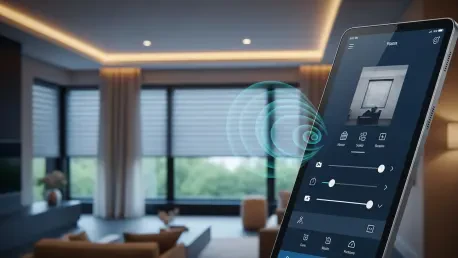

Transforming a standard living space into a fully automated smart home environment often involves a series of permanent alterations that can leave lasting marks on walls, ceilings, and window frames. This reality creates a significant barrier for individuals living in rental properties or those who prefer to maintain the structural integrity of their homes without the noise and mess of power tools and masonry drills. The emergence of high-quality, motor-driven window treatments has fundamentally altered the landscape of interior design, yet the complexity of the installation process has remained the final hurdle for many technology enthusiasts. Kincmo has addressed this specific pain point by introducing a line of smart blinds that utilize a sophisticated no-drill mounting system designed for rapid deployment. By leveraging modern communication protocols like Matter over Thread, these devices promise a seamless blend of home automation convenience and high-tech functionality. The following analysis explores whether these innovative blinds truly represent a significant leap forward in smart home technology or if the convenience of a tool-free setup comes at the expense of long-term stability and performance across different room environments within the modern household.
1. Contextual Evolution: The Rise of Accessible Smart Shading
The landscape of automated window treatments has shifted dramatically since the early days of niche HomeKit and Thread-based systems that first gained traction in late 2026. For several years, homeowners seeking custom smart blinds were often limited to a handful of manufacturers who specialized in high-end, professionally installed solutions. These early systems laid the groundwork for the modern Matter standard, which has since become the universal language for smart home interoperability. As the market matured, users began to demand more than just connectivity; they sought hardware that could be easily integrated without specialized tools or professional help. The introduction of Matter over Thread technology allowed for a decentralized network where each device strengthens the home’s mesh connectivity, ensuring that blinds respond instantly to commands without relying on a central hub or proprietary bridges. This technological baseline has allowed companies like Kincmo to focus on the mechanical aspects of the product, such as the mounting mechanism, rather than just the software protocols.
The current evaluation focuses on how Kincmo has positioned its latest offerings to serve a diverse range of user needs, from the tech-savvy homeowner to the non-DIY-minded renter. By providing options for both pressure-mounted and traditional bracket-mounted installations, the manufacturer aims to cover every possible window configuration found in a standard residential layout. The scope of this assessment includes a detailed look at two distinct setups: a no-drill model intended for a guest bedroom and a standard bracket-mounted unit designed for a kitchen space. The bedroom scenario is particularly relevant for those who want to avoid damaging pristine window casings while still achieving a perfect blackout effect. Conversely, the kitchen installation serves to test the hardware’s durability in environments where humidity and frequent manual adjustments might be more common. Through this dual-environment testing, it becomes possible to determine if the pressure-mount system holds up under daily use or if the traditional screw-in method remains the gold standard for heavy-duty applications.
2. Unboxing and Package Contents: A Comprehensive Hardware Inventory
The experience of receiving these smart blinds begins with the packaging, which is engineered to withstand the rigors of international shipping and local delivery services. Long, reinforced cardboard tubes are utilized to prevent the internal aluminum rollers from bending or warping during transit, a common issue with cheaper window treatments. Upon opening the package, the user is greeted with a neatly organized set of components that facilitate both the installation and the ongoing operation of the shades. Central to the kit is a wireless RF remote control, which conveniently includes two AAA batteries and a wall-mountable clip to ensure the controller has a dedicated home. The inclusion of a 10-foot USB-A to USB-C power cord is a thoughtful addition, providing ample length to reach the internal battery’s charging port from a standard wall outlet without requiring an extension cord. This long cable is essential for maintaining the sleek look of the window, as it allows for periodic charging without removing the entire blind from its mount.
Beyond the primary hardware, the package contains several essential documents and small accessories that simplify the onboarding process. Three separate user guides are provided, covering hardware setup, Matter pairing procedures, and general troubleshooting, which ensures that users have immediate access to technical support information. A specialized motor manual is also included, featuring a unique Matter setup sticker that is critical for integrating the blinds into a smart home ecosystem. For those who worry about losing the initial pairing code, Kincmo provides a small pouch containing extra pairing stickers that can be placed in a safe location or affixed to the device itself for future use. The hardware mounting clips provided in the box are tailored to the specific width of the shade, ensuring that wider units have sufficient structural support. This attention to detail in the packaging phase reflects a commitment to a smooth user experience, reducing the likelihood of missing parts or damaged components that could delay the installation.
3. Customization Options: Tailoring Aesthetics and Functionality
When selecting a smart blind, the ability to customize the fabric and hardware is paramount to ensuring the product complements the existing interior design. Kincmo offers an extensive range of fabric types, ranging from light-filtering materials that maintain privacy while allowing natural light to permeate the room, to 100% blackout options ideal for bedrooms and home theaters. These fabrics are available in a variety of colors and textures, allowing homeowners to match the blinds to their wall paint or furniture. Furthermore, the hardware finishes can be selected to coordinate with window frames or other metal accents in the room. This level of customization extends to the functional components as well, such as the optional valance. These matching fabric or solid color covers are designed to hide the roller tube and the motor, providing a clean and finished appearance that mimics professional custom installations. The valance snaps easily into place, covering the mechanical parts without interfering with the movement of the shade.
Functionality is further enhanced by the design of the motor and its integrated power system. Each unit features an internal battery with a USB-C charging port, which is conveniently fixed on the right side for the no-drill models to ensure easy access. This placement is a practical consideration for those who do not have power outlets directly adjacent to their windows, as the high-capacity battery typically requires charging only a few times per year. To assist users who are installing multiple blinds across different rooms, each unit is shipped with custom room labels. This prevents confusion during the unboxing process, ensuring that the correctly sized blind is brought to the intended window frame. The combination of aesthetic flexibility and practical identification features makes the product accessible to a wide audience. Whether a user is looking for a minimalist aesthetic with a sleek metal finish or a more traditional look with matching fabric covers, the customization process is designed to be intuitive and comprehensive.
4. Pressure-Mount Setup: The Tool-Free Installation Method
The standout feature of the Kincmo system is the pressure-mount installation, which is specifically engineered for speed and simplicity without the need for a drill. The process begins by removing the protective transport wrap from the shade, ensuring that the fabric and mechanism are free from any packaging material that might impede movement. Once unpacked, the unit is placed inside the window frame in the desired position, typically centered to provide even coverage. The user then inserts the included hex key into a specialized adjustment opening on the end of the mounting rail. By turning the hex key, the user expands the spring-loaded ends of the rail, which push outward against the sides of the window frame. This expansion continues until a clear clicking sound is heard, indicating that the mechanism has reached the optimal level of tension to hold the weight of the blinds securely. This auditory feedback is a crucial safety feature, preventing the user from under-tightening or over-tightening the mount.
Following the initial tensioning, a few final steps are taken to ensure the installation is both functional and visually appealing. Although the pressure mount is self-centering to a degree, it is recommended to verify that the shade is perfectly horizontal using a spirit level, as an uneven mount can cause the fabric to roll incorrectly over time. Once the level is confirmed, the decorative front cover or valance can be snapped onto the mounting frame, hiding the internal components and the tensioning mechanism. This entire process can often be completed in under ten minutes, making it an ideal solution for those who want to upgrade their home technology quickly. The stability provided by the clicking tension system is impressive, as it creates a firm grip that feels as secure as traditional screws. This method is particularly effective for standard-sized windows where the frame is made of solid wood, vinyl, or metal, providing a reliable foundation for the motorized operation that follows.
5. Traditional Bracket Setup: Solutions for Complex Window Frames
While the no-drill option is a significant selling point, certain architectural constraints necessitate the use of a traditional bracket setup. This method is typically employed for windows where pressure mounting is not possible, such as corner windows where two frames meet at an angle, or windows with shallow casings that do not provide enough surface area for the pressure pads to grip. In these scenarios, the installation requires screwing mounting clips directly into the window frame or the ceiling. These clips are designed to be low-profile and durable, providing a permanent anchor point for the motorized shade. Once the clips are securely fastened, the shade simply snaps into place with a firm push. This traditional approach remains a popular choice for homeowners who are not restricted by rental agreements and prefer the absolute certainty of a mechanical fastener. It also allows for greater flexibility in terms of where the blind can be positioned, as it is not dependent on the internal dimensions of the window frame.
For particularly wide windows, the traditional bracket setup is often the recommended path to prevent the roller tube from sagging over time. Wider shades carry more weight, and the additional support of middle brackets ensures that the tube remains straight, which is vital for the long-term health of the motor and the alignment of the fabric. During the installation of these wider units, the alignment of the clips becomes critical to ensure that the shade snaps in smoothly across its entire length. Once installed, the bracket-mounted blinds offer the same motorized features as their no-drill counterparts, including silent operation and smart home integration. The transition from the mounting clips to the roller tube is seamless, and the matching valance can still be used to hide the hardware. This dual-mounting strategy ensures that Kincmo can provide a solution for every window in a home, regardless of the specific challenges posed by the building’s architecture or the width of the openings.
6. Software Integration: Establishing Connectivity via Matter over Thread
The true intelligence of these blinds is realized through their integration with the Matter over Thread standard, which simplifies the process of connecting devices to various smart home ecosystems. To begin the software setup, the user must locate the synchronization button, which is typically found near the USB-C power port on the motor end of the shade. By pressing and holding this button for approximately two seconds, the user initiates the pairing mode. The shade will respond with a single “jog,” which is a quick up-and-down movement that serves as a physical confirmation that the motor is ready to communicate. After this initial response, the user taps the synchronization button one more time. The shade then performs a series of three jogs, signaling that it is actively broadcasting its pairing signal and is ready to be discovered by a smart home controller, such as an Apple HomePod, Google Nest Hub, or Amazon Echo device that supports the Matter protocol.
Once the physical device is in pairing mode, the digital integration is completed through the preferred smart home application on a smartphone or tablet. The user opens the app and selects the option to add a new accessory, which prompts the device’s camera to scan the Matter QR code provided on the motor or the included manual. Because the system uses Thread rather than traditional Wi-Fi, the connection is established almost instantaneously without the need for the user to enter network passwords or manage 2.4GHz versus 5GHz bands. The Thread mesh network ensures that the command latency is nearly non-existent, providing a snappy and reliable user experience. After the QR code is scanned, the app guides the user through naming the device and assigning it to a specific room. This streamlined process eliminates the frustration often associated with older smart home technologies, making the setup of multiple blinds a quick and efficient task that can be completed by users of all technical skill levels.
7. Daily Use and Performance: Reliability in a Connected Home
In a modern living environment, the value of a smart device is measured by its responsiveness and how unobtrusively it operates within the daily routine. The Kincmo blinds demonstrate exceptional performance in this regard, with an instant reaction to commands issued via the RF remote or through smart home applications. When a user triggers a scene, such as a “Good Morning” routine that opens all shades simultaneously, the motors engage without delay, moving the fabric smoothly to the desired position. This responsiveness is a direct result of the Thread protocol, which avoids the bottlenecks common in older Bluetooth or Wi-Fi systems. Furthermore, the reporting of battery life within apps like Apple Home is both accurate and timely, allowing homeowners to monitor power levels and plan for charging long before the battery is depleted. This transparency reduces the likelihood of the blinds becoming non-functional at an inconvenient time, such as during a bright afternoon or late at night.
The acoustic profile of the motors is another area where these blinds excel, operating with a quiet hum that is significantly less intrusive than older generations of motorized window treatments. This makes them ideal for use in nurseries or home offices where loud mechanical noises could be disruptive. The movement of the shades is steady and refined, lacking the jerky starts or stops that can sometimes plague budget-tier motorized products. Additionally, the multi-platform support provided by Matter allows different members of a household to control the blinds using their preferred devices, whether they use iOS, Android, or voice-controlled smart speakers. This interoperability ensures that the blinds remain a central part of the home’s automation strategy even if the household’s primary mobile platform changes in the future. The combination of quiet operation, reliable connectivity, and broad compatibility makes these blinds a high-performing addition to any room, providing consistent service without requiring constant manual intervention or troubleshooting.
8. Forward-Looking Insights: Assessing the Value of the No-Drill Era
The evaluation of the Kincmo smart blinds revealed a product that successfully bridges the gap between high-end custom automation and user-friendly accessibility. The hardware’s robust construction and the reliability of the Matter over Thread integration positioned it as a top-tier choice for those looking to modernize their windows. One notable observation from the testing was the ease with which the pressure-mount system handled daily cycles of opening and closing, maintaining its grip without any signs of slippage or misalignment. However, a minor contradiction was noted in the design of the remote holder, which still required a traditional screw for wall mounting, suggesting that a fully “no-drill” experience for all accessories has not yet been entirely achieved. Despite this small detail, the primary objective of protecting window frames and simplifying the installation of the shades themselves was met with high marks. The fabric quality and the effectiveness of the blackout options further solidified the product’s status as a premium solution for various residential needs.
Moving forward, consumers who are considering an investment in smart shading should look for products that prioritize these types of non-invasive mounting solutions. The success of the no-drill mechanism indicated that the industry is moving toward a future where professional installation is no longer a prerequisite for high-end home automation. For those residing in rental properties or homes with delicate masonry, these blinds offered a practical path to smart home integration that was previously unavailable. Potential buyers are encouraged to measure their window frames with precision to take full advantage of the custom-fit nature of these products. As the smart home ecosystem continues to evolve, the emphasis will likely shift even further toward seamless integration and user autonomy. The performance observed suggests that Kincmo has set a high bar for competitors, proving that convenience does not have to come at the expense of reliability or aesthetic appeal in the modern connected home.







