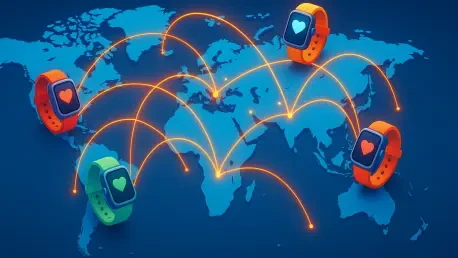

International health organizations must navigate a complex web of privacy laws to create a unified framework for sharing global biometric data across borders. This logistical necessity emerges at a time when the potential of consumer electronics to redefine preventative medicine has never been higher, yet the obstacles to achieving true equity remain formidable. For decades, the global medical community celebrated a steady decline in cardiovascular disease mortality, but that progress reached a worrying plateau as 2026 approached. With heart-related fatalities projected to surpass 23 million annually by 2030, the reliance on traditional, localized biobanks is proving insufficient to meet the demands of a diverse global population. High-income country databases often lack the representation needed to tailor treatments for low- and middle-income regions, where age-standardized mortality is actually on the rise. Smartwatches offer a decentralized alternative, capable of providing real-time physiological insights that were once confined to the walls of a clinic. By capturing millions of data points across varied environments, these devices could bridge the gap in our understanding of cardiovascular health, provided the industry can solve the pressing issues of data sovereignty and technical bias that currently limit their utility. The transition from lifestyle tracking to medical-grade monitoring represents a fundamental change in how the medical community approaches preventative cardiology on a massive scale.
Clinical Validation: Moving Beyond Lifestyle Tracking
The transformation of wearable technology from simple fitness gadgets into sophisticated clinical instruments has been driven by their increasing ability to detect life-threatening conditions before they become critical. Modern smartwatches have demonstrated remarkable proficiency in identifying atrial fibrillation and various forms of cardiomyopathy through continuous, daily monitoring. Because these devices are worn almost constantly, they provide a longitudinal view of heart health that a single clinical visit simply cannot replicate. Comparative studies between consumer-grade heart rate sensors and medical-grade electrocardiograms have shown a high level of concordance, establishing a foundation of trust for researchers who previously dismissed wearable data as anecdotal. This high degree of accuracy allows for the collection of what was once termed “data of convenience” to be treated as legitimate evidence in large-scale observational studies. The capability to monitor heart rate variability and blood pressure trends over several years gives scientists a granular perspective on how environmental factors and lifestyle choices influence long-term cardiac wellness.
Several major global initiatives are currently exploring the feasibility of integrating this biometric data into established public health frameworks to better manage population health. The Apple Heart & Movement Study, a collaboration involving the American Heart Association and Brigham and Women’s Hospital, has provided extensive insights into the links between physical activity and overall heart health across diverse user bases. Meanwhile, Singapore’s “hiSG” initiative serves as a proactive model for the world, where the government facilitates the distribution of smartwatches to residents to study lifestyle behaviors and improve health outcomes. These programs serve as essential proof-of-concept for a future where biometric data is a standard component of medical research rather than an outlier. By linking wearable data with official national health records, these initiatives have created a comprehensive map of human health that identifies subtle physiological shifts long before they manifest as chronic illness. This proactive approach to data collection marks a significant departure from the reactive nature of traditional medicine, offering a path toward more effective early intervention strategies.
Ethical Governance: The Conflict of Commercial Interests
Despite the technical potential of these devices, a fundamental tension remains between the commercial motivations of tech companies and the ethical requirements of clinical research. Most smartwatch data is collected under corporate terms of service that are optimized for marketing and consumer engagement rather than medical rigor or patient protection. For these devices to be utilized as legitimate research tools, manufacturers must adopt more stringent ethical standards regarding participant confidentiality and data handling. Researchers are often forced to work within the constraints of proprietary ecosystems where the primary goal is profit, creating a conflict when trying to apply the principles of informed consent and data transparency. Without a clear distinction between consumer data usage and clinical data contribution, the public may become hesitant to participate in digital health studies, fearing that their most sensitive biological information could be used against them by insurance companies or advertisers. Establishing a bridge between these two worlds requires a new regulatory framework that prioritizes the rights of the participant over corporate interests.
Interoperability continues to be a significant bottleneck in the quest to create a unified and global health database that can benefit all of humanity. Even in high-profile collaborations, a surprisingly low percentage of participants successfully manage to share their full electronic health records through wearable apps due to mismatched data formats. Tech manufacturers often utilize closed ecosystems that do not communicate effectively with the software used by healthcare providers, leading to a fragmented landscape of information. This lack of standardization prevents researchers from seeing the “big picture” and limits the ability to compare data across different demographics and device brands. To overcome these hurdles, the industry must move toward a universal standard for biometric data exchange that ensures information can flow securely and accurately between different stakeholders. Without such a framework, the medical community will remain stuck in data silos, unable to harness the collective power of billions of heartbeats to solve the world’s most pressing cardiovascular challenges.
Technical Limitations: The Physics of Exclusion
A major concern regarding the equity of wearable research lies in the inherent physics of the sensors used to collect physiological data. Most smartwatches rely on photoplethysmography, a technology that uses light to detect blood volume changes in the skin to calculate heart rate and other metrics. However, research has consistently shown that this method is less accurate for individuals with darker skin tones because melanin absorbs the light used by the sensors, potentially leading to skewed results. If these technical biases are not addressed through diverse validation and the implementation of more advanced correction algorithms, the resulting medical insights will be fundamentally flawed. This creates a risk where the advancements in digital health primarily benefit those with lighter skin, while non-white populations receive less reliable health monitoring and intervention. To achieve true equity in cardiovascular research, the engineering behind these sensors must be as inclusive as the populations they aim to serve.
The prevalence of proprietary “black box” algorithms further complicates the scientific validity of data derived from consumer wearables. Different manufacturers use unique and often secret internal logic to calculate vital health metrics such as stress levels, sleep stages, or resting heart rate. This lack of transparency means that a physiological state recorded on one brand of device might be interpreted differently on another, making it difficult for researchers to standardize measurements across a global study. For a database to be scientifically valid, the medical community must demand more transparency from tech companies regarding how these metrics are calculated. Scientists need to understand the underlying logic of these algorithms to ensure that the data they are analyzing is consistent and reliable across all participant groups. Without a move toward open or standardized algorithms, the potential for wearables to contribute to high-level clinical research will be hampered by a lack of comparability and replicability.
Socioeconomic Factors: Bridging the Digital Divide
The greatest threat to equitable cardiovascular research is the widening gap in technology access, often referred to as the digital divide. Ownership of the most advanced smartwatches is heavily concentrated in high-income households, while the individuals at the highest risk for heart-related events—such as older adults and residents of developing nations—often lack access to these tools. People with lower incomes may own older or more affordable models that lack the advanced cardiac sensors required for comprehensive health monitoring. If research initiatives focus only on those who can afford the latest technology, the resulting medical breakthroughs will be tailored to a wealthy, tech-savvy demographic, further entrenching existing health inequities. To prevent this, the scientific community must prioritize inclusive study designs that actively seek out underrepresented populations rather than relying on a pool of affluent early adopters.
To move toward a model of equitable data, researchers and policymakers must explore strategies that remove the financial and technical barriers to participation. This includes the subsidization of high-quality devices for research participants in low-income areas and providing hands-on training for older adults who may struggle with complex digital interfaces. Singapore’s model of government-facilitated device distribution offers a valuable blueprint for how public-private partnerships can improve data representation across an entire population. Furthermore, simplifying data-sharing disclosures and making them more accessible to people with varying levels of technological literacy is essential for ensuring that informed consent is truly inclusive. By addressing these socioeconomic barriers, the medical community can ensure that the benefits of the digital health revolution are shared by everyone, regardless of their income or geographic location. Only through a deliberate effort to reach the most vulnerable populations can smartwatches fulfill their potential as tools for global health equity.
Research Outcomes: Lessons Learned in Global Health
The investigation into the effectiveness of wearables revealed that the most successful next steps involved the standardization of data formats across all major hardware manufacturers. Researchers concluded that the realization of a globally representative database provided the first comprehensive view of cardiovascular health outside of traditional clinical settings. Medical professionals utilized these insights to identify early warning signs of heart failure and hypertension several years before patients presented with symptomatic disease in a hospital environment. By analyzing real-world data from diverse demographics, the scientific community determined which interventions were most effective in specific daily environments rather than relying solely on the results of controlled clinical trials. This shift in methodology allowed for the creation of more sensitive algorithms that detected silent arrhythmias with unprecedented accuracy across different ethnic groups. The integration of wearable data into public health frameworks in developing nations offered a vital tool for early intervention that significantly mitigated the projected rise in cardiovascular mortality.
The transition toward equitable research models required significant collaboration between tech manufacturers and healthcare providers to solve the problem of proprietary data silos. Organizations established transparent disclosure protocols that clearly explained data ownership and privacy protections to a global user base, which increased public trust in digital health initiatives. Subsidization programs for low-income participants ensured that the technological advancements in cardiology were not restricted to a wealthy minority, allowing for a more balanced representation of global heart health. The scientific community also successfully addressed technical biases by validating sensors across all skin tones and standardizing the measurements produced by different device brands. These collective efforts transformed the smartwatch from a simple consumer gadget into a legitimate instrument of medical progress that benefited a wider range of patients. Ultimately, the industry moved from a model of data convenience to a framework of equitable insight, ensuring that the benefits of the digital health revolution reached the individuals who needed them most.