


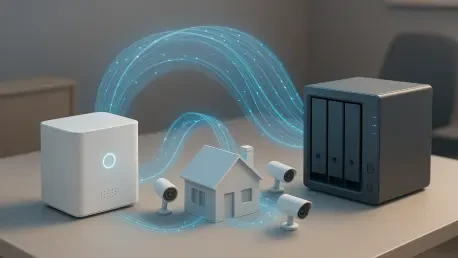

Cloud-based storage raises significant privacy concerns because sensitive footage is stored on remote servers rather than on a user’s own hardware. This fundamental shift in how people view their digital footprints has sparked a massive migration toward self-hosted security solutions that bypass the traditional monthly subscription model. For years, the home security industry relied on recurring revenue streams, often locking essential features like motion history and high-definition viewing behind a paywall. However, the landscape of 2026 shows a different reality where homeowners are reclaiming control over their properties and their wallets. The financial burden of a “security tax”—the perpetual fee required just to keep cameras functional—has become increasingly unpalatable for consumers who seek both privacy and long-term value. By moving away from centralized cloud dependence, individuals are now leveraging advanced edge computing and high-capacity local storage to build robust defensive networks that operate entirely within their own four walls. This evolution is not merely about saving money; it represents a cultural pivot toward data sovereignty and the realization that effective protection should not come with a permanent price tag or an inherent privacy risk.
Flexible Entry-Level Solutions and High-Resolution Powerhouses
The SimpliSafe Wireless Home Security System serves as a critical bridge for those transitioning from professional monitoring to a self-managed environment. This comprehensive kit typically includes entry sensors for doors and windows, motion detectors, and a central base station that acts as the brain of the operation. While many legacy systems require a contract to provide any utility, this hardware allows for real-time smartphone alerts and siren activation without any recurring fees. It is particularly effective for those who prioritize immediate physical deterrents and instant notifications over deep historical video archives. Because the system focuses on a simplified hardware-first approach, it eliminates the complexity of monthly billing while still providing a robust layer of protection against unauthorized entry. This setup is ideal for renters or homeowners who want a modular system they can expand as their needs change, ensuring that the primary focus remains on situational awareness rather than managing complex service tiers or long-term financial commitments to a security provider.
For those demanding the highest possible visual clarity, the EufyCam S3 Pro Kit represents the pinnacle of subscription-free 4K surveillance. These cameras utilize integrated solar panels to provide virtually indefinite power, which effectively removes the maintenance burden of frequent battery charging. The system is centered around a proprietary HomeBase unit that provides expandable local storage up to 16TB, allowing for months of high-definition footage to be stored securely within the home. What distinguishes this system is its sophisticated on-device artificial intelligence, which can differentiate between family members, pets, and strangers without needing to send data to the cloud for processing. This edge-based AI ensures that notifications are both fast and relevant, significantly reducing the frequency of false alarms triggered by swaying trees or passing cars. By investing in high-quality hardware upfront, users can enjoy a professional-grade surveillance experience that pays for itself within a short period by entirely eliminating the need for a cloud storage plan or remote processing fees.
Dedicated Perimeter Protection and Wide-Angle Surveillance
The Eufy Home Alarm Kit shifts the focus from visual surveillance to a dedicated perimeter defense strategy, utilizing high-end sensors to create a secure bubble around the residence. This kit is widely recognized for its extreme battery longevity, with sensors engineered to last up to two years on a single replaceable battery. This reliability is essential for maintaining a consistent defensive posture without the constant need for technical intervention. The system also incorporates advanced geofencing technology, which uses the location of a smartphone to automatically arm or disarm the alarm. This creates a seamless “set it and forget it” experience, ensuring that the home is protected the moment the occupants leave the driveway while avoiding the annoyance of manual keypad entry upon return. By integrating these sensors into a local hub, the system provides a comprehensive view of the home’s entry points and internal movement, delivering peace of mind through localized hardware that does not rely on a subscription-based ecosystem for its core functionality or alert delivery.
When standard camera views are insufficient for covering expansive areas like large driveways or wrap-around yards, the Reolink Argus 4 Pro offers a specialized 180-degree panoramic perspective. This ultra-wide field of view is achieved through a dual-lens system that seamlessly stitches images together, providing a single, continuous frame that eliminates the blind spots common in traditional security cameras. Furthermore, the inclusion of ColorX technology allows the camera to capture full-color night vision in extremely low-light conditions without the need for bright, intrusive spotlights that can annoy neighbors. Footage is stored directly onto an onboard microSD card, which ensures that all outdoor surveillance remains private and accessible only to the owner. This approach allows for comprehensive site coverage with fewer physical devices, reducing both the initial hardware investment and the complexity of the network. The ability to monitor large outdoor spaces in high resolution and full color, while maintaining total control over the data storage, makes this an excellent choice for modern property owners.
Advanced Tracking Capabilities and Private Server Integration
The Tapo 4K Outdoor Camera (C660) provides active control over property monitoring through its mechanical pan-and-tilt capabilities. This feature allows homeowners to remotely manipulate the camera’s view through a mobile application, effectively “looking around” their environment in real time. The hardware is paired with smart tracking technology that automatically detects and follows moving objects, keeping a subject in the center of the frame as they move across the property. This is particularly useful for tracking the movement of delivery personnel or potential intruders, as the camera can maintain visual contact far longer than a fixed-lens alternative. Designed for resilience, the unit combines solar power with a battery backup to ensure continuous 4K recording regardless of the weather conditions or time of day. This level of active surveillance, once reserved for high-end professional installations, is now available to the general public in a format that requires no monthly fees, proving that advanced tracking and high-resolution video do not have to be tied to a service provider’s cloud infrastructure.
For tech-savvy individuals who prioritize the ultimate level of privacy, the Synology CC400W Wi-Fi Cube Camera offers integration with Network Attached Storage (NAS) systems. This configuration allows a user to manage a fleet of cameras through professional-grade surveillance software while storing years of historical footage on a private server located physically inside their home. By utilizing a NAS, the homeowner maintains complete independence from third-party service providers, ensuring that their security data never traverses a company’s cloud network. This setup is highly scalable, allowing for the addition of more storage or more cameras as the property evolves. The use of a private server also enables more complex data management and backup strategies, which are often limited or expensive in a subscription-based model. This approach represents the gold standard for data sovereignty, providing the same features as a corporate security system while keeping all sensitive information under the direct physical and digital control of the user, thereby mitigating the risks of data breaches or service outages.
Budget-Friendly Security and Evolving Industry Standards
The Wyze Cam Pan V4 has emerged as a benchmark for budget-conscious homeowners who refuse to compromise on modern features. Despite its accessible price point, the device offers 4K resolution, weather resistance, and a motorized base for 360-degree coverage. It provides local recording through a built-in microSD slot, and the companion application offers a polished interface for viewing multiple feeds simultaneously. This hardware demonstrates that effective, high-quality home security does not require a large upfront investment or a commitment to ongoing monthly payments. The democratization of such technology means that even entry-level devices are now equipped with the processing power to handle motion detection and local storage locally. This shift has forced the entire industry to rethink its value proposition, as consumers can now secure their homes with versatile, high-performance hardware that delivers a premium experience without the traditional recurring costs associated with big-name security brands. The availability of these affordable yet powerful tools has made comprehensive home protection more accessible to a broader demographic than ever before.
The transition toward subscription-free security systems established a clear trend where local storage and edge-based artificial intelligence became the dominant industry standards. Homeowners successfully moved away from the vulnerability of remote servers, choosing instead to invest in hardware that prioritized privacy and long-term economic sustainability. Solar power technology matured to the point where battery maintenance became a secondary concern, and local processing power reached a level where real-time person detection was possible without any external assistance. Moving forward, the most effective strategy for securing a home involved conducting a thorough audit of the property’s layout and network capacity before selecting hardware that matched those specific environmental needs. This period marked the end of the mandatory security fee, as a wide variety of hardware options allowed every individual to find a reliable, cost-effective solution tailored to their personal requirements. Individuals who prioritized local storage and on-device processing achieved a higher level of security while maintaining complete control over their digital lives, ultimately proving that professional-grade protection is most effective when it is entirely self-contained.







